AI Answer Block: Yes, bigger cars are often safer for the people inside them in a crash, but that is not the whole story. Size and weight can improve occupant protection, yet larger vehicles can also be harder to handle, create bigger blind spots, increase risk to people in smaller vehicles, and still require precise repairs after even a moderate collision. If you are asking are bigger cars safer, the honest answer is that bigger can help, but design, safety technology, driver behavior, and repair quality matter just as much.
If you just had a close call, or you are shopping for a family vehicle and trying to make the safest choice, this is the question you ask sooner or later. Many people want a simple yes or no.
A complete answer is more useful than that. Bigger vehicles can protect their own occupants well, but they bring trade-offs that many drivers do not think about until after a crash, when the vehicle is in the shop and the damage tells the truth.
Introduction
A lot of drivers in Salinas and across the Monterey Bay Area look at a big SUV or pickup and feel more secure. That instinct is not wrong, but it is incomplete.
Safety is not just about who wins in a two-vehicle crash. It is also about how the vehicle behaves before impact, how it affects everyone else on the road, and whether it can be repaired back to factory standards after a collision.
Key takeaway: Bigger can be safer for occupants, but it is not a free pass. The safest choice is usually the vehicle that gives you solid crash protection, modern safety features, predictable handling, and repairs that are done correctly.
The Physics of Safety Why Size and Weight Matter in a Crash
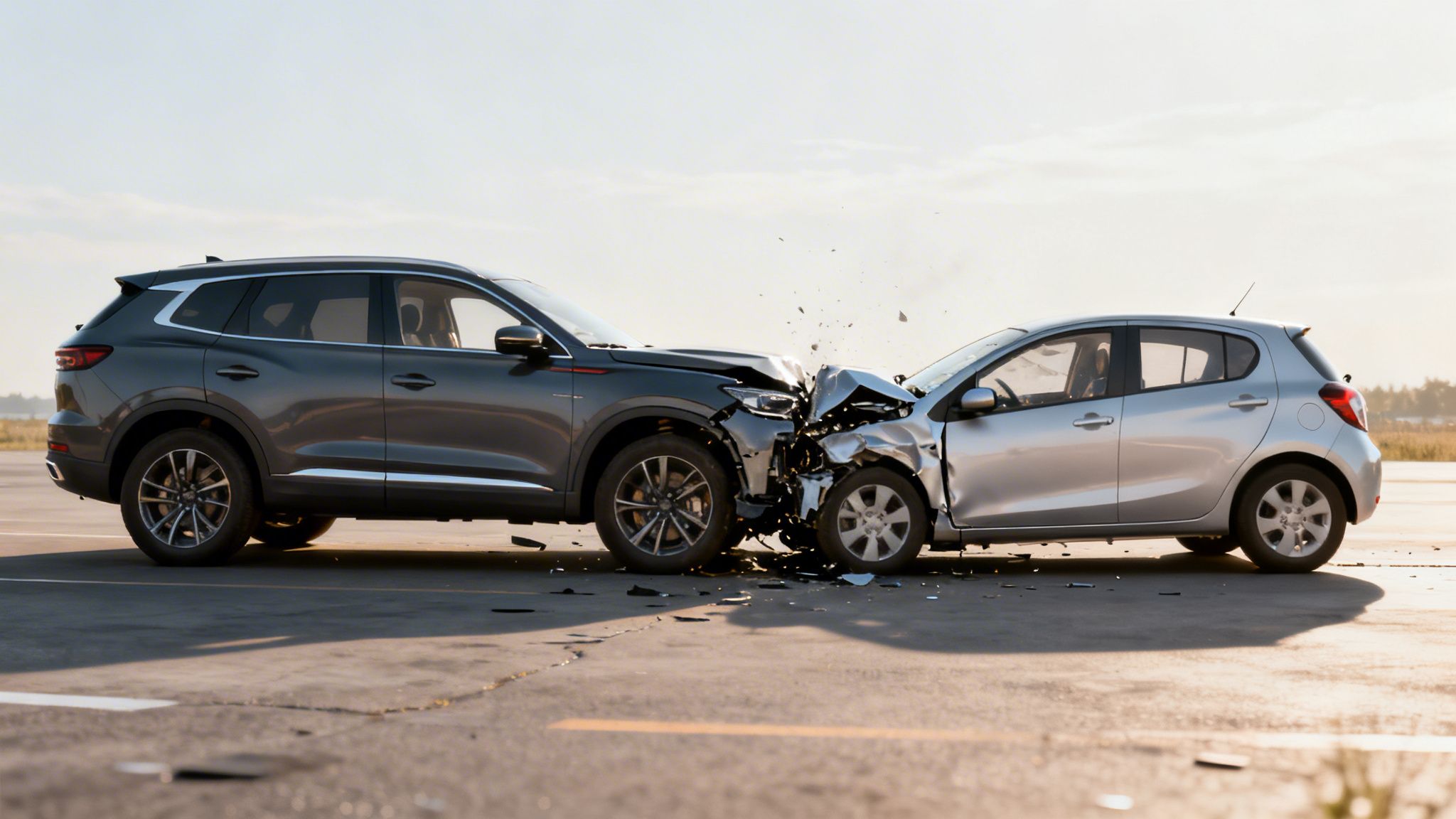
A hard crash between a full-size SUV and a small car is not an even contest. The heavier vehicle usually puts its occupants in a better position because physics favors mass, structure, and space to absorb impact.
That is the plain reason bigger vehicles often protect their own people better in two-vehicle crashes.
More space and more mass usually help occupants
A larger vehicle usually gives engineers a longer front end, a bigger crush zone, and more distance between the point of impact and the people inside. That extra room matters. It gives the vehicle more space to slow the crash forces before those forces reach the cabin.
Weight matters too. In a collision, the heavier vehicle is generally pushed off its path less than the lighter one. The people inside still feel a violent hit, but the motion is often less severe than it would be in the lighter vehicle.
That is why larger SUVs and pickups often show better occupant outcomes than very small cars, all else being equal, as noted earlier from IIHS research.
The key factors are:
- Longer front ends: More room for parts to crumple in a controlled way before the passenger compartment takes the load.
- Higher mass: Less change in speed during a crash with a lighter vehicle, which can reduce the forces on occupants.
- Stronger occupant cage: Better odds that the cabin keeps its shape and protects the people inside.
- Ride height: A taller vehicle can strike and receive force differently than a lower one.
Ride height is one point drivers miss. If the structures do not line up well in a crash, the force can bypass parts designed to absorb energy and go into weaker areas. That can change injuries, damage patterns, and repair difficulty.
Size helps, but structure decides how well that size works
A big vehicle with poor crash design can still perform badly. A smaller vehicle with a strong safety cage, well-designed crumple zones, and current restraint systems can protect its occupants far better than an older, heavier vehicle.
That matters in the shop because people often judge crash safety by sheet metal alone. I have seen large trucks that looked "not too bad" from ten feet away but had damage in the frame rails, suspension pickup points, radar brackets, and bumper reinforcements. I have also seen smaller cars with obvious front-end damage that managed crash energy the way they were supposed to.
The outside tells only part of the story.
What this means after the impact
The same size and weight that help in a crash can hide damage after it. A larger vehicle may drive away from a collision with fewer visible dents than the smaller vehicle it hit, but that does not mean it escaped clean.
Shops need to check for:
- hidden structural movement
- steering and suspension damage
- sensor and camera mounting issues
- bumper reinforcement damage
- wheelbase or alignment changes
If those items are missed, the vehicle may not track straight, brake evenly, or protect your family the same way in the next crash. Proper alignment and suspension repair after a collision is part of safety, not just tire wear or drivability.
| Crash factor | Why it can help occupants | What it can mean for repairs |
|---|---|---|
| More weight | The vehicle is often pushed less in a crash with a lighter one | Damage may be hidden behind bumpers, mounts, and structural parts |
| Longer front end | More room to absorb impact before it reaches the cabin | Inner crush structures still need measurement and parts checks |
| Taller stance | Changes how the vehicle engages another vehicle | Brackets, bumper heights, and sensor placement become more important |
| Strong cabin structure | Better chance of preserving survival space | Accurate structural pulls and measurements are required |
Here is the trade-off that gets missed. Bigger vehicles often give their occupants a physics advantage, but that advantage depends on good engineering, disciplined driving, and repairs done to factory standards. If any one of those fails, size alone does not protect a family the way people assume it will.
The Other Side of the Coin Safety Trade-Offs with Bigger Cars
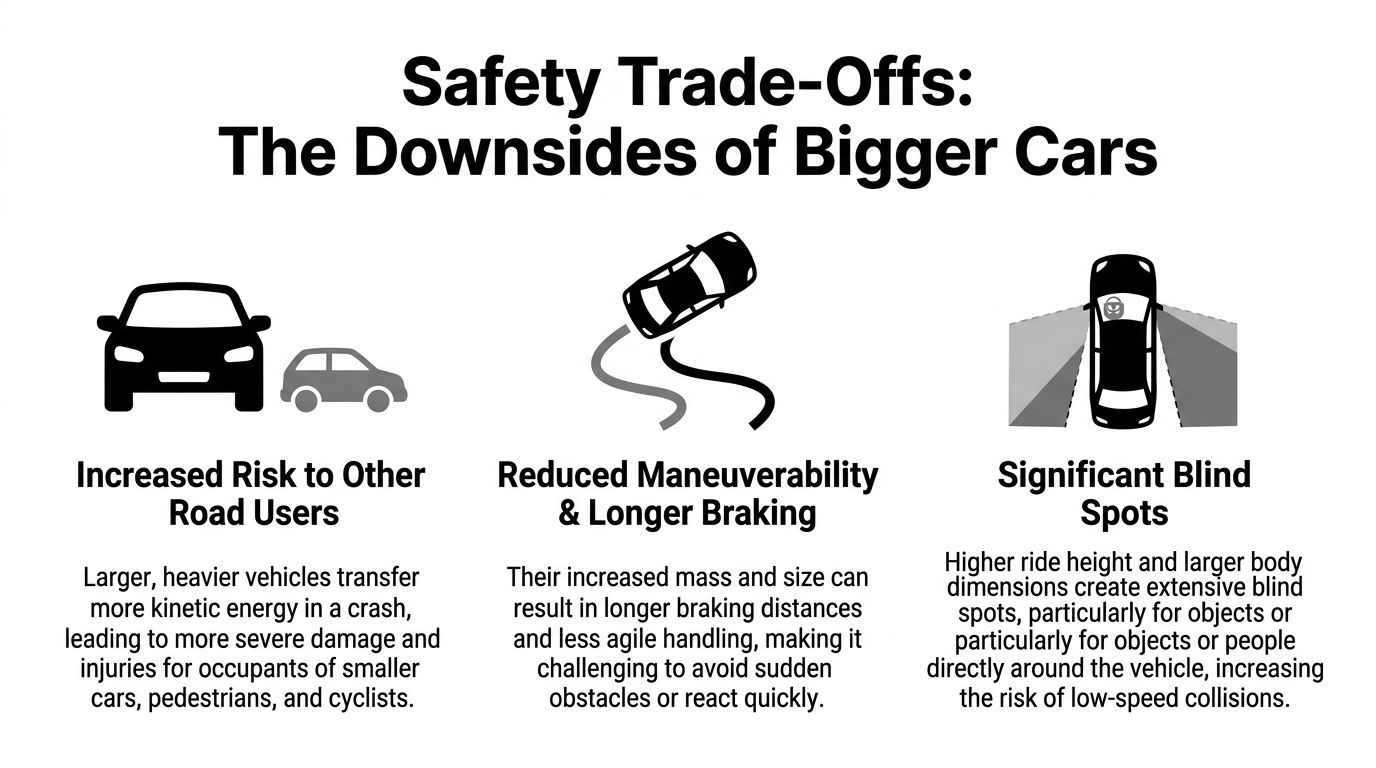
A parent pulls out of school pickup in a full-size SUV and feels secure because the vehicle sits high and weighs a lot. I understand that feeling. But safety is not only about what happens to the people inside your vehicle. It is also about what you can see, how quickly you can react, and how much harm that vehicle can do to someone smaller in a crash.
That is the trade-off people miss.
Bigger vehicles can protect their own occupants and raise the stakes for everyone else
A larger SUV or pickup often has an advantage against a smaller car in a collision. Weight, height, and front-end shape all affect how crash forces get shared. The people in the smaller vehicle usually pay more of that price, and that matters if your family shares the road with compact cars, motorcycles, cyclists, and pedestrians every day.
After the crash, size does not excuse sloppy repair work. A heavy vehicle with even a small suspension or geometry problem can wander, brake unevenly, or chew through tires while the driver thinks everything is fine. Good alignment and suspension repair after a collision becomes part of safety, not just drivability.
Taller fronts create a different danger outside the cabin
A high hood and upright nose change how the vehicle contacts a person. Instead of striking lower and rolling the body onto the hood, a tall front can hit the torso or head earlier. That can make a bad situation worse.
This point gets lost in the showroom. A vehicle can feel safer from the driver’s seat while creating more risk for the people walking near it.
The everyday hazards are less dramatic and more common
Big vehicles come with blind zones, wider turns, and more bulk to manage in tight places. That shows up in grocery store lots, narrow neighborhood streets, crowded beach parking, and school pickup lines long before it shows up in a crash report.
The practical trade-offs are straightforward:
- Wider turns: Curbs, posts, and nearby cars get closer than they look.
- Larger blind spots: Cameras help, but lenses do not replace a clear direct view.
- More vehicle to place: Parking, backing, and lane positioning take more attention.
- Heavier feel in quick maneuvers: The vehicle may feel steady on the freeway but slower to correct when something changes fast.
Family safety starts with avoiding the hit.
Bigger does not automatically mean easier to live with safely
A vehicle that barely fits the garage, crowds the lane, or blocks your view over its own hood asks more from the driver every day. Some drivers handle that well. Some get comfortable with the size and start taking liberties with speed, following distance, or tight turns because the vehicle feels protective.
That is a real safety issue, not a personality flaw. People often drive differently when they feel insulated.
The better choice is not always the biggest one on the lot. It is the one that gives your family strong crash protection, good visibility, predictable handling, and repairable safety systems that can be returned to factory condition if it gets hit.
How Modern Safety Ratings and Features Change the Equation
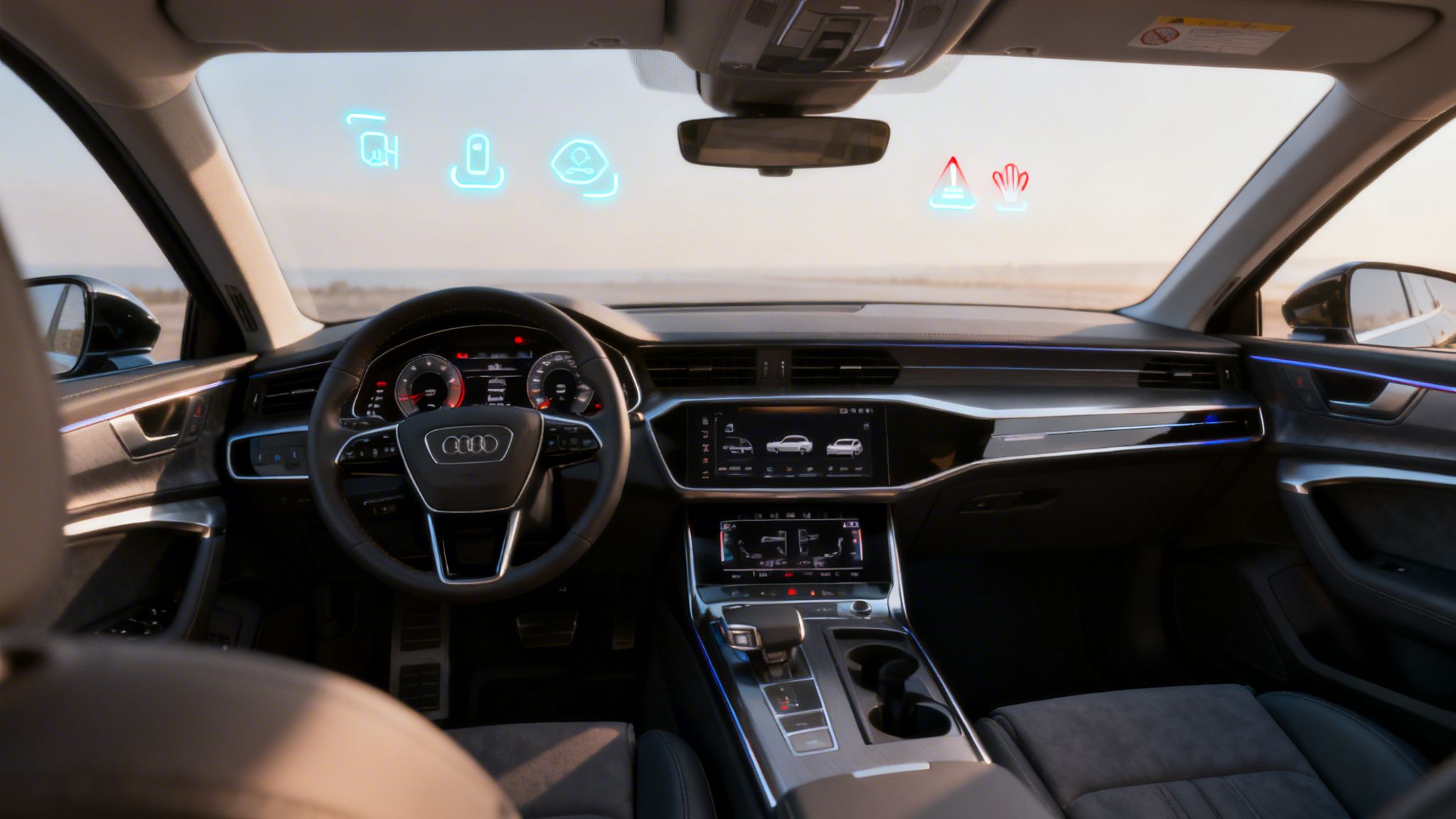
The old rule starts to break down with modern vehicles.
A newer midsize car or crossover can protect a family better than an older, heavier truck or SUV if the newer vehicle has a stronger safety cage, better crash-energy management, and current driver-assistance systems. Weight still matters in a crash. It just is not the whole story anymore.
One reason is crash compatibility. Automakers have spent years improving how vehicles line up and absorb force when a taller SUV hits a lower car. As noted earlier, that mismatch has been reduced compared with older designs. For a family shopping used vehicles, that means model year matters a great deal. A ten-year difference in design can mean more than a few hundred pounds of extra vehicle weight.
That changes the buying question. Instead of asking only, "How big is it?" ask, "How well was it engineered, and can its safety systems still be trusted after a repair?"
A newer smaller vehicle can be the safer bet
I have seen plenty of customers assume an older full-size vehicle must be safer because it looks tougher. Then we put that beside a newer vehicle with better crash ratings, more controlled crumple zones, and modern restraint systems, and the picture changes fast.
A right-sized modern vehicle often gives a family a better balance of protection, visibility, braking, and everyday control than the biggest thing on the lot.
If you want more plain-language guidance on repair and safety issues tied to newer vehicles, the shop collision repair and safety blog covers the topics owners usually miss until after a crash.
Safety features only protect you if they still work
Modern safety depends on parts many drivers never see. Forward cameras, radar units, parking sensors, lane-keeping hardware, automatic braking components, and even the windshield can all be part of the safety system.
That matters after a collision.
A hit that only scuffs the front bumper can shift a radar bracket. A windshield replacement can affect camera aiming. A grille repair can leave sensor angles slightly off. The vehicle may look fine and still no longer respond the way the factory intended. For your family, that can mean a warning comes late, braking assistance does not trigger correctly, or a lane feature reacts when it should not.
Buyers should keep three practical checks in mind:
- Look at crash-test performance, not size alone. Modern engineering can close a lot of the gap.
- Confirm which safety features the vehicle has. Trim level matters, and broken systems do not count.
- Ask how post-collision repairs and calibrations are handled. A safe vehicle has to be put back to factory condition, not just made to look straight.
Bigger still has limits
Some drivers buy a big vehicle and then drive as if the vehicle has solved the danger for them.
It has not.
Good structure and modern safety features give you more protection when something goes wrong. They do not erase speed, distraction, poor following distance, or sloppy repair work. And if a large modern vehicle is repaired incorrectly, the owner can end up with the worst mix possible. Extra mass, expensive damage, and safety systems that are no longer doing their job the way the manufacturer intended.
The Driver Factor How Perceived Safety Can Backfire
A parent buys a large SUV because it feels solid, sits high, and seems like the safer choice for school runs and highway trips. Two months later, that same sense of protection can start changing how the vehicle is driven. Following distances shrink. Tight merges feel manageable. A fast stop at the next light does not seem like a big deal.
That shift is real.
Researchers call it risk compensation. Drivers who feel more protected sometimes accept more risk without meaning to. In plain terms, the vehicle can give a driver confidence that outruns judgment. For a family, that matters because the safest vehicle on paper still depends on the person behind the wheel making good choices every mile.
I have seen this for years with larger trucks and SUVs. The driver sits higher, road noise is lower, and the cabin feels more insulated from trouble. That comfort can dull urgency. A person who would stay cautious in a smaller sedan may start driving with less margin in a larger vehicle.
The danger shows up in ordinary moments, not just high-speed crashes.
A little less space in traffic. A little more speed into a wet curve. A little more trust in the vehicle than in clear sightlines and good habits. That is often enough to turn extra protection into a repair bill, an injury, or both.
Large vehicles also bring handling limits that drivers do not always respect. They need more room to stop. They can feel awkward in sudden avoidance moves. Visibility around the front corners, rear corners, and beside the pillars can be worse than many buyers expect. If the driver feels safer and reacts later, those limits show up at the worst possible time.
This is also where ownership reality enters the picture. A larger modern vehicle usually costs more to repair correctly after a crash, especially if sensors, brackets, lighting, wheels, suspension parts, or structural areas are involved. If you are sorting out coverage, estimates, and repair approvals after a loss, good auto insurance claim help in Salinas can save a lot of confusion and keep shortcuts from creeping into the process.
My advice is simple. Buy enough vehicle to protect your family, then drive it like physics still applies, because it does.
For many households, the best answer is not the biggest thing on the lot. It is a vehicle with strong crash performance, good visibility, safety features the driver understands, and a size that does not encourage careless habits. That combination protects you before the crash, during the crash, and after the repair.
Practical Buying Guidance for Monterey County Drivers
A family in Monterey County may need one vehicle to do three different jobs in the same week. Highway miles on Highway 1. Tight parking in town. Early morning school drop-off in fog or rain. That is why buying for safety takes more than picking the biggest SUV on the lot.
The better question is simpler. Which vehicle gives your family strong crash protection, clear visibility, predictable handling, and a repair path that can be done correctly if the worst happens?
Match the vehicle to the roads you drive
Monterey County asks a lot from a vehicle. Open stretches tempt speed. Narrow local streets punish oversized vehicles. Coastal moisture, low light, weekend traffic, and tourist congestion raise the cost of late braking and poor sightlines.
A vehicle that feels secure on a straight highway can become a chore in a crowded parking lot or on a tighter two-lane road. If the driver is tense placing it, judging corners, or backing it up, that matters. Safety starts before impact.
Size still has a place. Moving out of a very small vehicle and into a well-designed midsize sedan, crossover, SUV, or pickup can make sense for many families. Past that point, extra bulk often brings compromises that buyers do not feel on the test drive.
What to check before you sign
I tell buyers to spend less time staring at exterior size and more time checking the things that decide whether they avoid a crash, walk away from one, and get the vehicle repaired properly afterward.
- Seating position and visibility: Check the front corners, rear corners, mirror view, and pillar blind spots from the driver seat.
- Real handling confidence: Drive it where you will use it. Merge, brake firmly, turn into a tight space, and back into a parking spot.
- Safety features you will use correctly: Blind-spot monitoring, automatic emergency braking, and lane support help, but the driver still has to understand their limits.
- Fit for the household: A vehicle shared with a teen driver, an older parent, or a spouse who dislikes large vehicles should be easy to place and control.
- Repair complexity: Ask how many cameras, radar units, parking sensors, wheel sensors, and calibration steps are built into the trim level you want.
That last point gets ignored too often. A larger modern vehicle can protect you well in a crash and still become a headache after one if the repair plan is sloppy.
Buy with the post-collision reality in mind
People usually shop for how a vehicle will drive. I also want them thinking about how it will be repaired.
Large SUVs and pickups often hide damage well. A bumper cover may look fine while brackets, sensor mounts, suspension pieces, or structural parts behind it are not. If the vehicle has driver-assistance systems, correct repair is not just bodywork. It may also require measurements, parts replacement to manufacturer standards, and calibrations before the vehicle is back to safe operating condition.
If insurance is part of the picture, knowing how to handle estimates, approvals, and repair questions ahead of time helps. Good auto insurance claim assistance in Salinas can keep a family from agreeing to shortcuts that save money on paper and create problems later.
A short buyer's test
Use this comparison at the dealership.
| Buying focus | Better question to ask |
|---|---|
| “Is it the biggest one here?” | “Does it protect well without creating blind spots and handling problems for my driver?” |
| “Do I sit high enough to feel safe?” | “Can I see clearly and judge the vehicle’s edges in traffic and parking?” |
| “Will extra size settle the safety question?” | “Will this vehicle help my family avoid crashes, not just absorb one?” |
| “Can any body shop fix it after a hit?” | “Can the shop measure, repair, and calibrate it the way the manufacturer requires?” |
The best choice is usually the one your family can use well
For many Monterey County drivers, the smartest buy sits in the middle. Big enough to protect. Modern enough to include solid crash engineering and safety systems. Manageable enough that the driver does not get careless, late on reactions, or intimidated in tight situations.
That is how I would shop for my own family. Choose a vehicle that protects you in a crash, does not tempt you into bad habits, and can be repaired the right way when real life catches up.
After a Collision What to Check on a Larger Vehicle
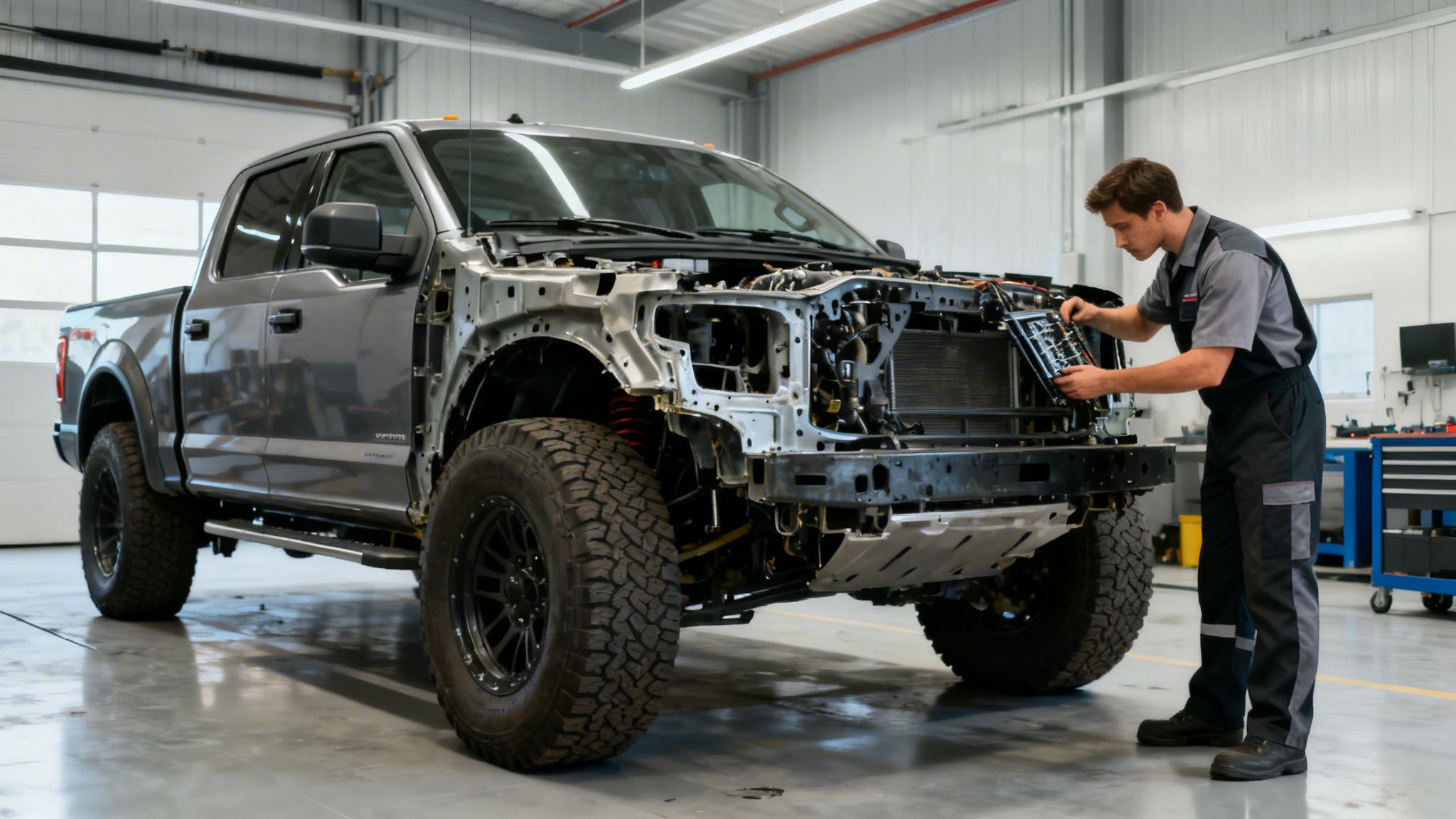
After a crash, large SUVs and pickups often fool owners. The vehicle may still start, drive, and even look “not that bad.”
That is exactly when hidden damage gets missed.
Start with structure, not cosmetics
A bent bracket is one thing. A shifted frame rail, suspension pickup point, or bumper reinforcement is another.
On larger vehicles, outer panels can hide a lot. The height and body shape can make the damage seem minor while the underlying structure has moved.
Check for these issues right away:
- Steering pull: If it drifts or the wheel is off-center, something underneath may have shifted.
- Uneven panel gaps: Doors, hood, and tailgate fit can hint at structural movement.
- Ride-height changes: One corner sitting differently can point to suspension damage.
- Sensor warnings: Cameras, blind-spot functions, and braking support may be compromised.
- Bumper and hitch area damage: Rear impacts often travel farther than owners expect.
Sensor placement matters more than people think
Many larger vehicles carry safety hardware behind the grille, in the bumper, in side mirrors, or high in the windshield. If those mounting points move, the system may still turn on and still be wrong.
That is why a visible repair is not the same thing as a complete repair. Restoring appearance is only part of the job.
If you have ever wondered why a repair bill changes after teardown, this explanation of why a repair estimate can go up after work starts lays out the underlying reason. Hidden damage often does not show until parts come off.
What a careful post-collision inspection should include
A proper inspection on a larger vehicle usually goes beyond what the eye can catch in the parking lot.
Structural measurement
The vehicle should be checked against factory specifications, not judged by appearance alone.
Suspension and alignment inspection
A truck or SUV can feel drivable and still be wrong underneath.
Sensor and mounting verification
If the mounting surface moved, calibration and aiming can become an issue.
Wheel and tire review
Impact damage can show up as abnormal wear, vibration, or pull later.
Inner panel and reinforcement checks
Bumper covers hide a lot. So do bedsides, rear body panels, and front-end assemblies.
Important: “It still drives fine” is not proof that it is safe. Many unsafe conditions show up only under braking, at speed, or in the next emergency maneuver.
Why larger vehicles need precise repair
The bigger the vehicle, the easier it is for owners to assume it shrugged off the hit. Sometimes it did not.
A proper collision repair restores geometry, fit, finish, and the safety systems that depend on exact placement. That is what protects you the next time, not just how sturdy the vehicle looked on the day of the crash.
Frequently Asked Questions About Vehicle Size and Safety
Q: Are bigger cars safer in every kind of crash?
A: No. Bigger vehicles often protect their own occupants better in many two-vehicle crashes, but that does not make them safer in every situation. Design, crash type, road conditions, driver behavior, and repair quality all matter.
Q: Is a modern smaller car safer than an older large SUV?
A: It can be. Newer vehicles often have better structural design and updated safety features that older large vehicles do not have. Age and engineering can matter as much as size.
Q: Do larger SUVs and trucks cost more to repair after an accident?
A: They can, especially when the damage involves structural parts, suspension, or safety sensors. The issue is not just cost. It is whether the repair is done precisely enough to restore how the vehicle was designed to protect you.
Q: If my large vehicle still drives straight after a crash, can I wait on repairs?
A: You should not assume everything is fine just because it still feels drivable. Hidden damage can affect structure, alignment, and sensor performance even when the vehicle seems normal on a short drive.
Q: Are bigger cars safer for teen drivers?
A: Not automatically. A larger vehicle may offer more crash protection, but it can also be harder to judge, park, and maneuver. For an inexperienced driver, confidence and control are part of safety.
Q: Do bigger vehicles always cause more damage to smaller cars?
A: In many collisions, yes, the size and weight mismatch can make the smaller vehicle take the harder hit. That is one of the main trade-offs people need to understand when deciding whether bigger is better.
Q: Will insurance cover hidden damage on a larger vehicle?
A: Covered damage depends on your policy and the claim facts, but hidden damage is common in collision repair. That is why teardown and supplemental estimates are a normal part of a thorough repair process.
Q: Should I buy the biggest vehicle I can afford if safety is my top priority?
A: Usually no. A better approach is to choose a vehicle with strong modern safety design, manageable size, good visibility, and features you will use correctly. Oversizing can bring new risks without much added benefit.
Conclusion Your Trusted Partner in Collision Repair
So, are bigger cars safer. Often, for the people inside, yes. But that is only one part of the truth.
The full answer includes crash physics, risks to others, modern safety design, driver behavior, and the quality of the repair after a collision. If a vehicle is not repaired correctly, a lot of its built-in safety can be compromised, no matter how large it is. You can learn more about the team and approach at Searson Collision Center.
If you need help after a collision in Salinas, Monterey County, or the Monterey Bay Area, Searson Collision Center is available for a free estimate and straightforward guidance. Call (831) 422-2460 or visit 488 Brunken Ave, Salinas, CA 93901. Hours are Monday through Friday, 7:00 AM to 5:00 PM.
Sources
Insurance Institute for Highway Safety. "Vehicle size and weight." 2024. https://www.iihs.org/research-areas/vehicle-size-and-weight
Meyers & Flowers. "Data Shows Large Vehicles Protect Their Own Occupants But May Endanger Others." 2023. https://www.meyers-flowers.com/data-shows-large-vehicles-protect-their-own-occupants-but-may-endanger-others/
UNSW. "Big cars feel safer: how vehicle size impacts others in a crash." 2024. https://www.unsw.edu.au/newsroom/news/2024/06/big-cars-feel-safer-how-vehicle-size-impacts-others-crash
PMC/NCBI. "Behavioral risk compensation and larger vehicles." 2022. https://pmc.ncbi.nlm.nih.gov/articles/PMC8817167/
Insurance Institute for Highway Safety. "Supersizing vehicles offers minimal safety benefits, but substantial dangers." 2025. https://www.iihs.org/news/detail/supersizing-vehicles-offers-minimal-safety-benefits–but-substantial-dangers