If you’re staring at a caliber collision estimate after a wreck in Salinas, you probably want three things right now. You want to know what it means, whether it’s complete, and whether you have a choice in where your car gets repaired. The short answer is yes, you do have a choice, and the first estimate is rarely the whole story. National chains like Caliber can offer convenience, broad insurance relationships, and a nationwide warranty because they operate over 1,800 centers as the country’s largest collision repair provider (IBISWorld, 2026, https://www.ibisworld.com/united-states/company/caliber-collision-center/427622/). But a collision estimate is only useful if it reflects the true damage, the required safety procedures, and a clear supplement process when hidden damage shows up.
You get rear-ended on North Main, or somebody backs into you in a grocery store lot. The car still drives, your nerves are shot, and now an app, an insurer, or a shop hands you paperwork full of labor lines, parts codes, and fine print.
That’s where people get tripped up. The estimate looks official, so they assume it’s final. In collision work, it usually isn’t.
Your Guide to Navigating a Collision Estimate
A collision estimate is a starting document, not a finished verdict. It should identify visible damage, outline expected repairs, and leave room for changes if teardown exposes more damage underneath.
What matters most is not the logo at the top of the page. What matters is whether the shop explains the process plainly, checks the car thoroughly, and tells you how supplements will be handled before your vehicle is halfway apart.
A neat estimate can still be an incomplete one.
If you’re comparing a chain estimate with a local one in the Monterey Bay Area, read the paperwork like a consumer, not like a bystander. Ask what was seen, what hasn’t been seen yet, and what safety items still need to be confirmed.
How to Get a Caliber Collision Estimate
Caliber offers a few paths to start the estimate process. Each can be useful, but each has limits that customers ought to understand before they lean too hard on the first number.
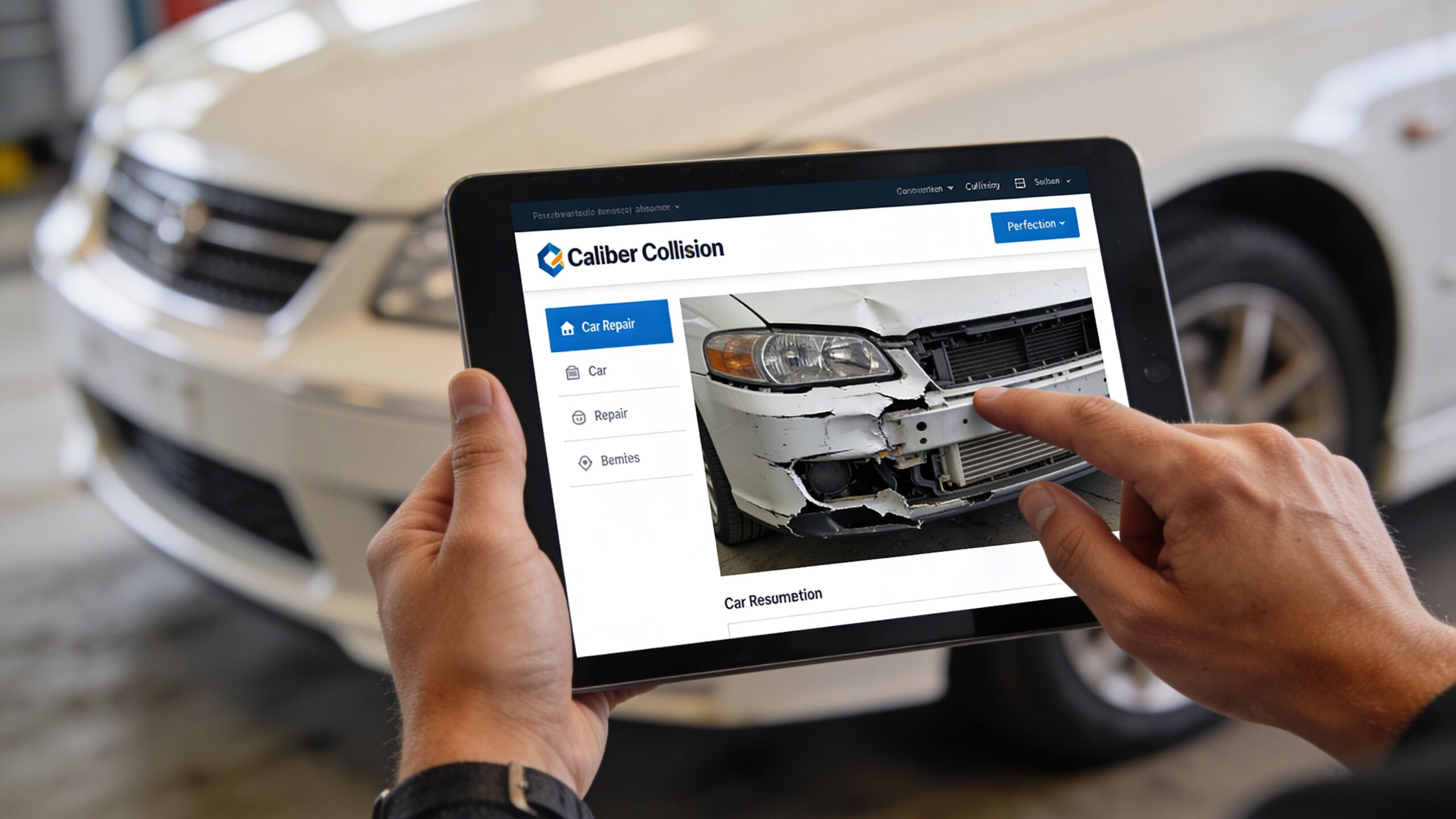
Online estimates by photos
Photo-based estimating is the fastest entry point. You upload pictures, describe the damage, and get a preliminary figure or next-step recommendation.
That can work for obvious cosmetic damage. It does not work well for hidden bracket damage, broken retainers, sensor issues, or structural movement behind a bumper cover.
If you use photos, take them in good light and include more than the damaged corner.
- Shoot wide and close views so the estimator can see both the damaged area and the panel relationships around it.
- Include VIN and mileage when requested because vehicle configuration matters.
- Photograph warning lights if any appeared after the hit. Electronics matter now in a way they didn’t years ago.
In-person appointments
An in-person visit is the better path if you want a serious estimate. Caliber’s estimate methodology starts with an initial walk-around, then disassembly to uncover hidden issues, and then a final estimate is established (Caliber estimate process video, 2024, https://www.youtube.com/watch?v=1KBqJ4OYg_I).
That sequence matters. The walk-around catches what’s visible. The teardown catches what the eye can’t see with trim, covers, and panels still installed.
Here’s the practical truth. Initial estimates are approximations, and industry practice recognizes that supplements often follow disassembly because latent damage is common. In the source above, the point is made plainly that estimates may change after teardown.
Practical rule: If nobody has looked behind the damaged panel, nobody knows the full repair yet.
When you go in person, ask these questions before you authorize anything:
- Will you disassemble before locking in the repair plan
- What items are commonly missed on the first look
- How will you notify me if the estimate changes
- Who talks to the insurer about supplements
- Will I see the revised estimate before added work moves forward
Working through your insurance app
A lot of drivers start with the insurance company because that’s the first call they make. The carrier may route you to an app, a photo portal, or a preferred network shop.
That can speed up the first inspection, but don’t confuse insurer convenience with repair completeness. The insurer’s early estimate is often built to open the claim, not to finish the repair.
A shop estimate and an insurance estimate are not always the same document in spirit. One should be built around repairing the vehicle correctly. The other may begin as a payment worksheet.
Decoding Your Estimate Line by Line
Many people look at the total and skip the rest. That’s understandable, but the small lines are where important repair decisions live.
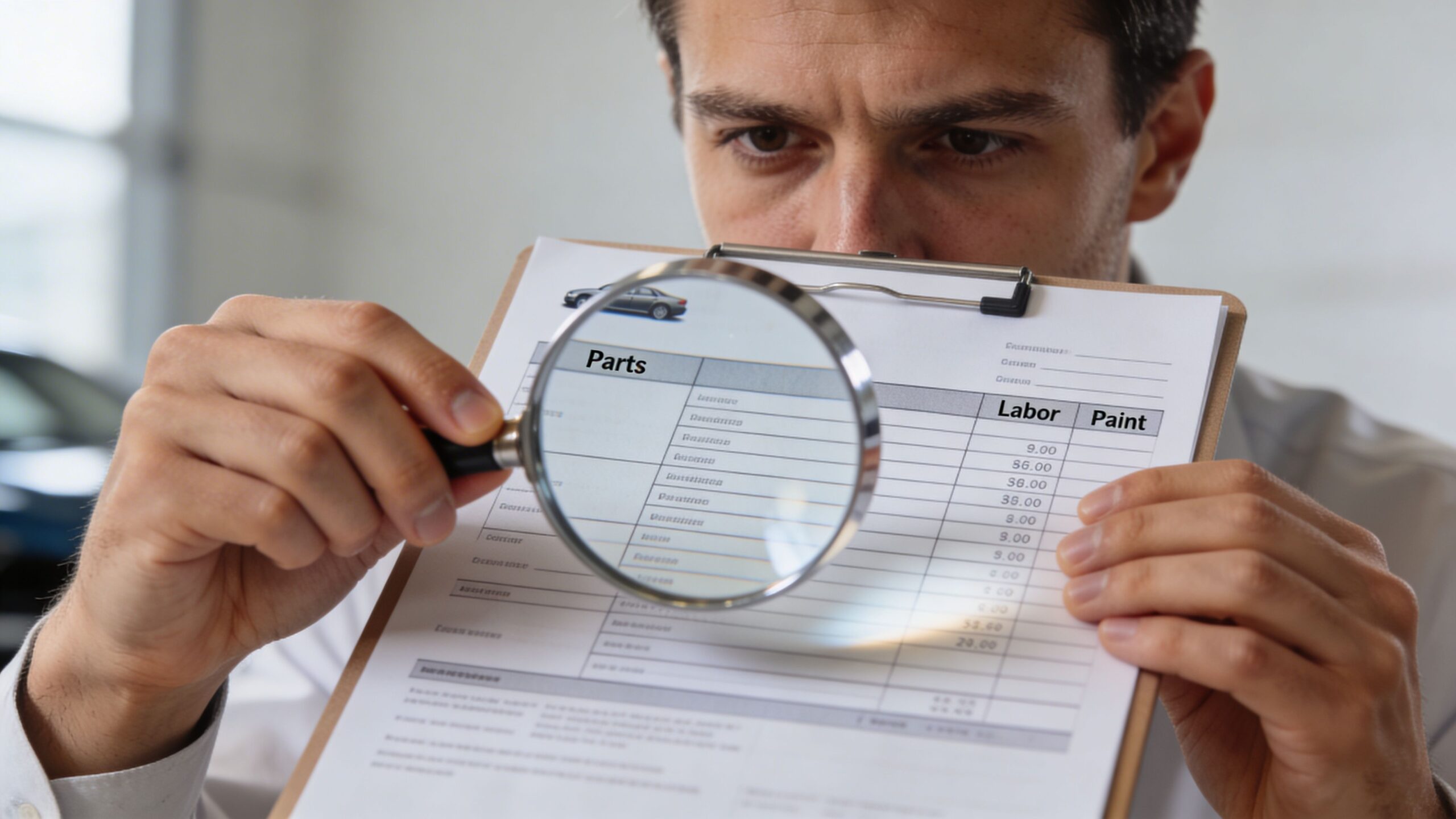
Labor lines and operations
Labor hours show what the shop expects to do. That may include body labor, refinish labor, mechanical labor, frame work, or operations tied to setup and inspection.
Don’t just ask how many hours are on the sheet. Ask what operations are included and what operations are still pending teardown.
A short estimate can look attractive at first glance. Sometimes it’s short because it’s efficient. Sometimes it’s short because necessary steps haven’t been captured yet.
Parts choices
Estimates may include different categories of parts. The exact labels vary by system, but the important issue is whether the part choice is appropriate for the location and function of the repair.
Questions worth asking include:
- Is this part new or reused
- Is the fit likely to affect adjacent panels
- Does this part relate to a sensor, bracket, or safety system
- Will the insurer allow an alternative if the first part doesn’t fit correctly
If the damaged area involves a front bumper, mirrors, windshield area, quarter panels, or grille assemblies, you need to think beyond appearance. Those areas often tie into cameras, radar, parking sensors, and related equipment.
Paint and materials
Paint lines aren’t just about color. Refinish work includes prep, masking, blending when needed, and material usage.
A clean-looking paint number on paper doesn’t tell you whether the color match, texture match, and adjacent panel blend are being planned properly. That’s why estimate review should include repair method, not just price.
ADAS calibrations and scans
This is the line too many drivers miss. ADAS, or Advanced Driver Assistance Systems, has changed modern estimating in a big way.
Caliber’s own repair data shows 53% of repairs required ADAS calibrations in Q4 2024, rising to 65% by Q2 2025 (Caliber, 2025, https://www.caliber.com/insights/calibration-update). That means a large share of modern repairs now involve safety-system checks or recalibration, not just sheet metal and paint.
If a bumper, mirror, windshield area, suspension component, or front-end structure was hit, calibration questions belong on the table.
Use this quick checklist when reading the estimate:
| Estimate area | What to look for |
|---|---|
| Body labor | Are damaged panels being repaired or replaced, and is teardown still pending |
| Refinish | Does the plan account for blending or adjacent panel work if needed |
| Parts | Are the listed parts suitable for fit, finish, and sensor placement |
| Scans | Is there a pre-repair or post-repair scan listed where appropriate |
| Calibrations | Are camera, radar, or other ADAS-related items addressed |
If those lines are missing on a late-model vehicle, ask why. Don’t assume the omission means they aren’t needed.
Common Pitfalls and Hidden Costs in Chain Shop Estimates
The biggest surprise in collision repair is the supplement. That’s the added estimate written after more damage is discovered or required procedures become clear.
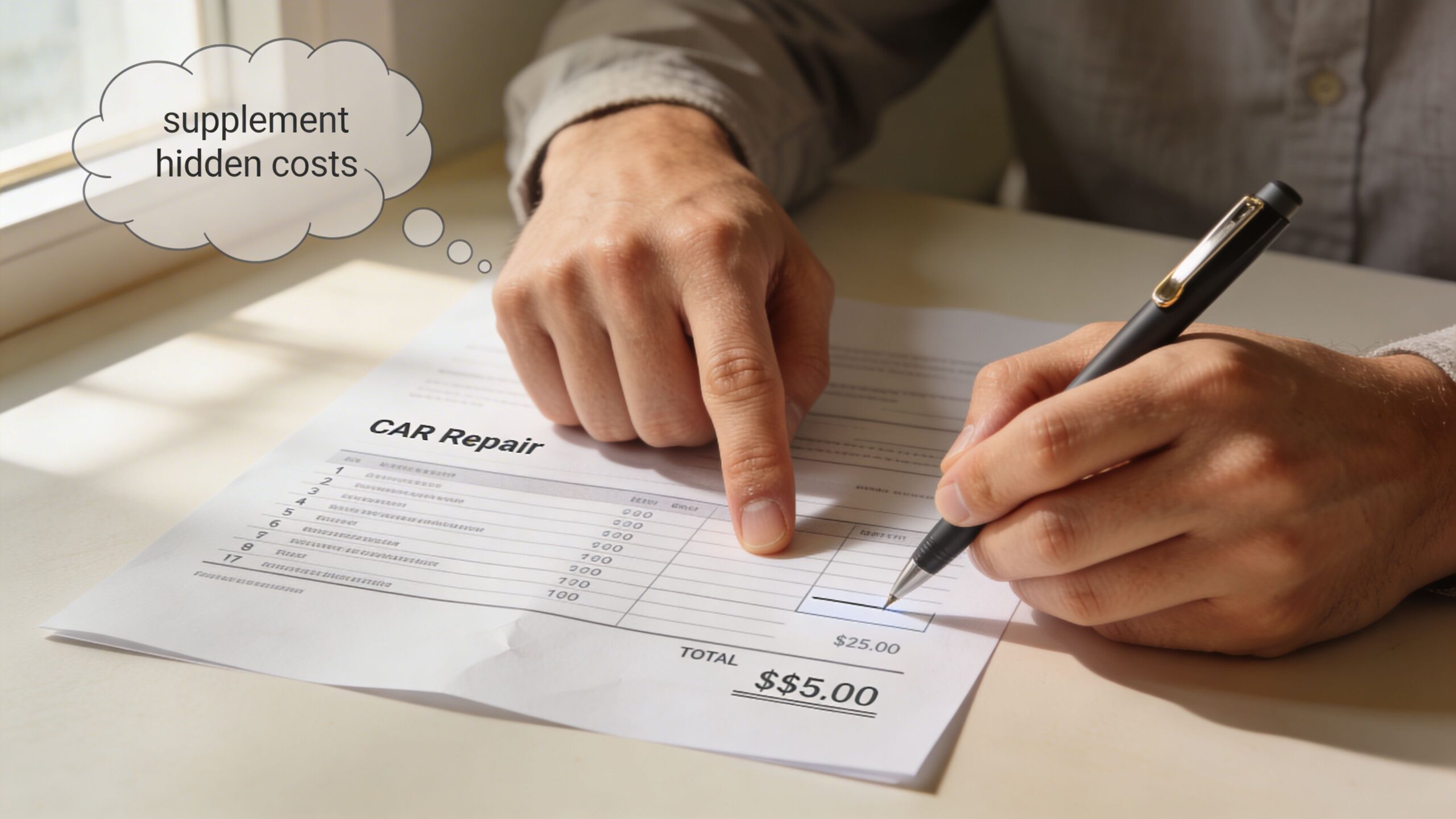
What a supplement really means
A supplement is not automatically a sign of dishonesty. Cars are built in layers, and collision damage often hides behind covers, lamps, moldings, and reinforcement parts.
What frustrates people is not the supplement itself. It’s the silence around it.
Industry reporting cited in the source below says supplements add 20% to 30% to the initial cost on moderate collisions and often cause 1 to 2 week delays (industry reporting discussed in 2025 California collision estimate analysis, 2025, https://www.youtube.com/watch?v=DJTXpTirBbI). The same source says a 2025 California Autobody Association survey found 65% of claimants reported supplement disputes at chain shops, compared with 28% at certified independent shops.
That doesn’t mean every chain handles supplements poorly. It does mean customers should ask hard questions before they sign.
Where chain estimates can feel impersonal
A national chain usually has a standardized process. That can make intake smoother, especially when an insurer already works with that shop.
The trade-off is that you may feel like the repair is moving through a system instead of through a conversation. If the estimator, production team, insurer, and customer are not staying aligned, people get blindsided by revisions.
Ask for straight answers on these points:
- Notification process. Will they call, text, or email when a supplement is submitted
- Approval timing. Who follows up with the insurer when approval stalls
- Parts delays. Will they tell you whether the delay is parts, insurer approval, or additional damage
- Out-of-pocket impact. Will any supplement change your deductible responsibility, or only the insurer-paid portion
What works and what doesn’t
What works is early transparency. A shop should tell you from the start that teardown may change the number and the timeline.
What doesn’t work is pretending the first estimate is solid when everyone in the trade knows hidden damage is common. That’s how trust gets lost.
For a plain-English explanation of why an estimate changes after teardown, this article on why a repair estimate goes up after the shop starts working on your car lays out the issue clearly.
The right question isn’t “Will this estimate change?” It’s “How will the shop handle it when it does?”
Your Rights as a Car Owner in California
A lot of drivers think the insurance company gets to choose the shop. In California, that’s not how it works.
Under California Insurance Code § 758.5, you have the right to choose the repair shop that handles your car. An insurer can suggest a shop, but it can’t require you to use one just because that shop is in its program.
That matters when you’ve been handed a chain referral and told it will be easier. Easier for whom is the question.
What the Consumer Bill of Rights means in plain English
California’s Auto Body Repair Consumer Bill of Rights under 10 CCR § 2695.85 is meant to help you understand the estimate and repair process in clearer terms. In practice, that means you should receive information about your options, your right to select a repair facility, and the basic flow of claim-related repairs.
This is not legal advice. It is practical advice. Read what you sign, ask for explanations in plain language, and don’t let anyone rush you into a repair decision because “that’s just how claims work.”
How to use those rights without making the claim harder
You don’t need to pick a fight with the insurer. You just need to be clear.
Try language like this:
- I’m choosing my repair shop and I want all estimate communication copied to me.
- Please send me the claim number and adjuster contact so I can keep records.
- If there’s a supplement dispute, I want the reason explained in writing.
For local drivers who need help understanding that process, this page on auto insurance assistance in Salinas gives a useful overview of how claim support should work at the shop level.
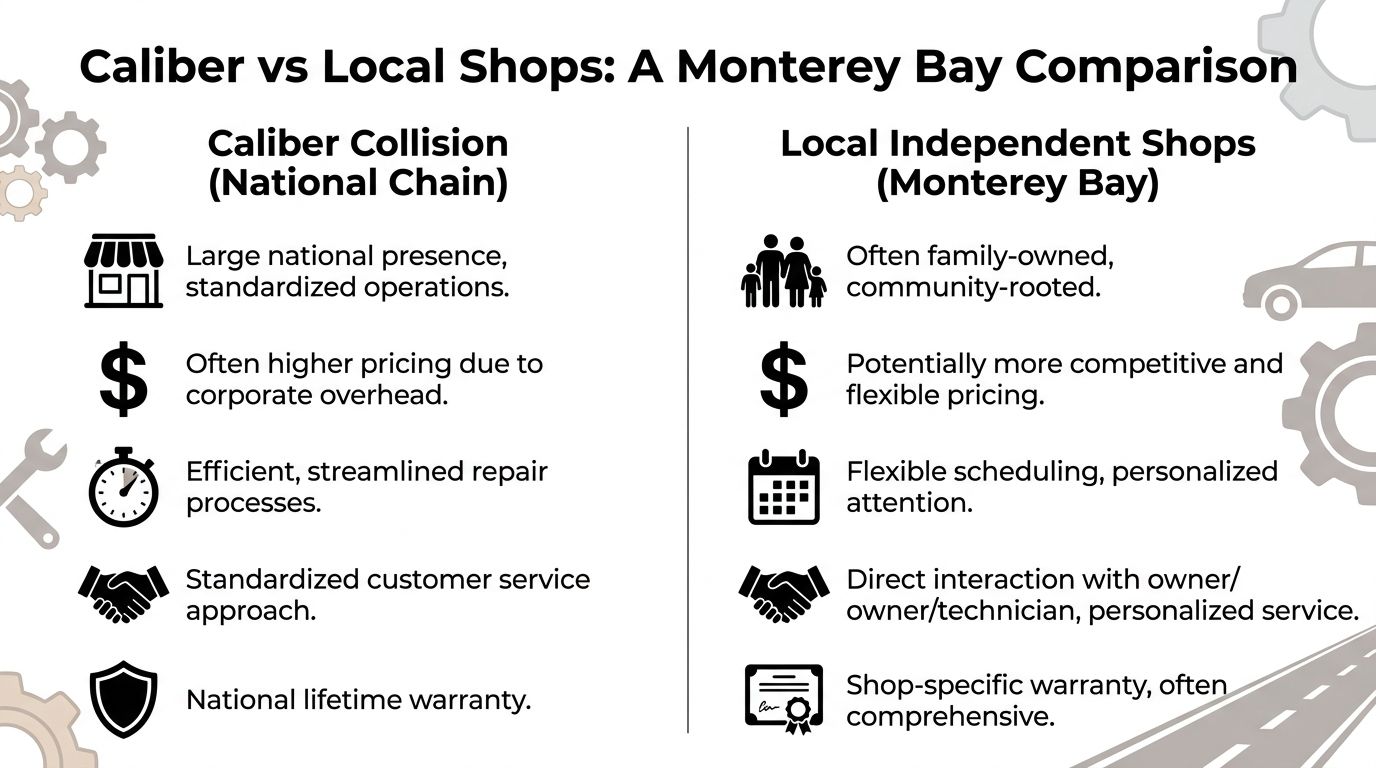
Caliber vs Local Shops A Monterey Bay Comparison
Caliber is a major player. It is the nation’s largest auto collision repair provider with over 1,800 centers (IBISWorld, 2026, https://www.ibisworld.com/united-states/company/caliber-collision-center/427622/). That kind of scale can help with insurance relationships, process consistency, and nationwide warranty coverage.
For some customers, that’s enough. For others, especially in Salinas and across Monterey County, local accountability matters more.
Where a national chain can make sense
A chain shop can be convenient when you want a known brand, a broad operating footprint, and a familiar process. If you travel often or had the accident away from home, that national presence may feel reassuring.
A chain may also move quickly at intake because its systems are already tied closely to insurer workflows. That can reduce friction at the front counter.
Where a local shop often has the edge
A local independent shop usually wins on direct accountability. You’re more likely to deal with the same people from estimate through delivery, and when there’s a supplement or parts issue, you know exactly who is responsible for explaining it.
For many customers, that matters more than a polished intake system. People want a repair advocate, not just a repair processor.
Here’s the practical comparison:
| Decision point | National chain | Local independent |
|---|---|---|
| Intake process | Usually standardized and efficient | Usually more conversational and flexible |
| Insurance coordination | Often integrated into existing insurer relationships | Often more direct, with local follow-up and customer involvement |
| Accountability | Managed through brand systems and location staff | Managed at the shop level by people tied to local reputation |
| Estimate feel | Consistent and structured | Often more personalized and explanatory |
Public filings in some California markets showed average hourly labor rates at large chains were 15% to 25% higher than independent shops in 2025 (Caliber door rates, 2025, https://www.caliber.com/services/collision/door-rates). That doesn’t prove every local shop is cheaper, and it doesn’t prove every chain estimate is inflated. It does tell cost-conscious drivers to compare carefully.
If you want a better sense of what a full-service neighborhood repair facility handles, this page on auto collision repair in Salinas gives a practical local reference point.
Frequently Asked Questions About Collision Estimates
Here are the questions people ask when the paperwork lands on the counter and nothing feels simple.
| Question | Answer |
|---|---|
| Q: Is a caliber collision estimate final? | A: Usually not. The first estimate is often based on visible damage, and hidden damage may appear once the vehicle is disassembled. That’s why you should ask how supplements will be handled before repairs begin. |
| Q: Can I take my car somewhere else after getting an estimate from a chain shop? | A: Yes, in California you can choose your repair shop. An estimate does not lock you into that facility unless you authorize repairs under that shop’s process and paperwork. |
| Q: Why does one estimate look lower than another? | A: Lower doesn’t always mean better. One estimate may leave out operations that another shop includes up front, especially when scans, calibrations, and teardown-related items are involved. |
| Q: Do chain shops charge more for labor? | A: Rates vary by location, city, and region. Public filings in some California markets showed large-chain labor rates running 15% to 25% higher than independents in 2025 (Caliber door rates, 2025, https://www.caliber.com/services/collision/door-rates). |
| Q: Will my insurance company force me to use its preferred shop? | A: No. Your insurer may recommend a shop, but you can choose your own repair facility in California. If you feel pressured, ask for the request in writing and keep records. |
| Q: What should I ask before I sign the estimate? | A: Ask whether teardown is included, whether scans or calibrations may be needed, how supplements are approved, and who contacts you if the number changes. Those questions will tell you a lot about how the repair will be managed. |
If you want more plain-language answers on repair questions, the Searson Collision Center blog covers many of the issues drivers run into after an accident.
Get a Clear, Honest Estimate in Salinas
A caliber collision estimate can be a useful starting point, but it’s still just that. A starting point. The smart move is to understand what’s on the page, what may still be missing, and what rights you have before you commit your car to any shop.
If you want a second opinion or a thorough review of a collision estimate in Salinas, you can reach out through the Searson Collision Center contact page.
Sources
- IBISWorld. "Caliber Collision Center company profile." 2026. https://www.ibisworld.com/united-states/company/caliber-collision-center/427622/
- Caliber. "Calibration Update." 2025. https://www.caliber.com/insights/calibration-update
- Caliber. "Door Rates." 2025. https://www.caliber.com/services/collision/door-rates
- YouTube. "Caliber collision estimate process discussion." 2024. https://www.youtube.com/watch?v=1KBqJ4OYg_I
- YouTube. "Supplement transparency and collision estimate discussion." 2025. https://www.youtube.com/watch?v=DJTXpTirBbI
If you’d like a free estimate or just want a straight answer about a repair you’ve already been quoted for, contact Searson Collision Center. You can call (831) 422-2460, visit 488 Brunken Ave, Salinas, CA 93901, or stop by Monday through Friday, 7:00 AM to 5:00 PM.