You can fix a very shallow car scratch yourself if your fingernail does not catch in it. This indicates the damage is only in the top clear coat and may be fixable with a quality polishing compound. However, if your fingernail catches in the scratch, the damage is too deep for a DIY kit. Attempting to fix a deep scratch yourself will almost certainly make it worse by damaging the surrounding paint, creating a hazy patch, and potentially leading to rust.
That annoying scratch on your car door or bumper raises an immediate question: "Can I fix this myself, or will I make it worse?" The fear of making a small blemish worse is valid, especially with today's complex, multi-layer paint finishes. The good news is there's a simple, reliable way to tell if a DIY fix is even possible.
What to Know Before You Try to Fix a Car Scratch Yourself
The internet is full of "miracle" scratch removal products, but most are only designed for the absolute shallowest scuffs in the top clear coat. Most people try to assess the damage themselves before calling a shop, but the severity of the scratch makes all the difference (AutoZone Quarterly Insights, 2024).
Using a rubbing compound on damage that's too deep doesn't fix the scratch; it grinds away the healthy clear coat around it. This can make the area look hazy and dull, increasing the eventual repair cost. The same is true for DIY dent tools used on creased metal, where the panel has been stretched and won't just pop back into place (Caliber Collision Report, 2023).
The Simple Fingernail Test
Before you touch anything, perform the fingernail test. This is the first thing a professional does to assess the damage.
Gently run your fingernail across the scratch. If your nail glides over it without catching, the damage is likely confined to the clear coat. But if your nail catches in the groove, the scratch has penetrated deeper, and a consumer product will not solve the problem.
What the Data Says About DIY Repairs
The temptation to try a quick fix is strong, but statistics show it's often a mistake. DIY scratch repair attempts on anything but the most minor scuffs often make the damage worse, leading to more expensive professional repairs down the line.
According to a 2024 industry analysis, nearly 45% of drivers who attempt a DIY scratch repair are dissatisfied with the results (I-CAR, 2024). Furthermore, shops report that a significant number of cosmetic repair jobs involve fixing a failed at-home attempt first, which can increase the final bill.
How to Diagnose Your Car Scratch Severity

Before you buy a touch-up kit, you need to understand how deep the scratch goes. Your car's paint is a multi-layered shield protecting the metal panel.
From the outside in, you have the clear coat, the base coat (your car's color), the primer, and finally, the raw metal. The deeper a scratch penetrates these layers, the more complex the repair becomes.
Level 1: Clear Coat Scratch
The clear coat is your car's first line of defense against sun, debris, and minor scuffs. Most fine swirls you notice after a car wash are just clear coat scratches.
This is the only type of scratch you should consider fixing yourself. The scratch often seems to disappear when wet, and your fingernail will glide over it without catching.
Level 2: Base Coat Scratch
If your fingernail catches in the groove, the damage has cut through the clear coat and into the base coat, which holds the color.
You'll know it's a base coat scratch because you will see a visible line that is the same color as your car. At this stage, a simple polish will not work and will likely create a dull, hazy spot around the damage.
Level 3: Primer Scratch
Beneath the color is the primer, which helps the paint stick to the metal. If you look into the scratch and see a different color—usually light gray or white—you're looking at the primer.
A primer-level scratch is a serious problem. It means your car's metal panel is one thin layer away from being exposed to moisture, making it a poor candidate for a DIY fix.
Level 4: Bare Metal Scratch
This is the worst-case scenario. A deep gouge has sliced through all layers of paint and exposed the shiny, raw steel or aluminum of the body panel.
Damage this severe requires immediate professional attention. Exposed metal is a ticking clock, especially in the salty coastal air of the Monterey Bay Area. Rust can form quickly, turning a small line into a costly corrosion problem that requires extensive auto collision repair in Salinas.
What Happens When a DIY Scratch Repair Goes Wrong

If your fingernail catches in the scratch, pushing forward with a DIY kit almost never gives you the result you want. Instead of fixing the scratch, you end up grinding away the healthy clear coat around it, creating a dull, cloudy patch called hazing.
Touch-up paint pens often create their own problem. Without professional surface prep, the paint clumps on top, leaving a raised "blob" that is just as noticeable as the original scratch.
The Hidden Danger: Rust
Worse than the cosmetic issue is what happens underneath. A botched DIY fix can trap moisture against the metal.
Here in the Monterey Bay Area, the salty air accelerates corrosion. An improperly sealed scratch is a direct invitation for rust to creep under your paint, bubbling up long after you thought you fixed it. This is a common consequence professionals see from failed at-home repairs (IEABP.com).
Why Professional Repair is Different
A proper repair is a meticulous, multi-stage process. It involves cleaning, sanding, priming, and perfectly color-matching the paint before applying a new, durable clear coat to seal it.
The hidden cost of a failed DIY job is that it makes the professional repair more complex. A technician first has to undo the new damage before they can even start on the original scratch. Your attempt to save a little money can easily make the final bill much higher than it would have been from the start. For more on our process, see our auto paint and refinishing services in Salinas.
When a DIY Fix Is Safe (And What Tools to Use)
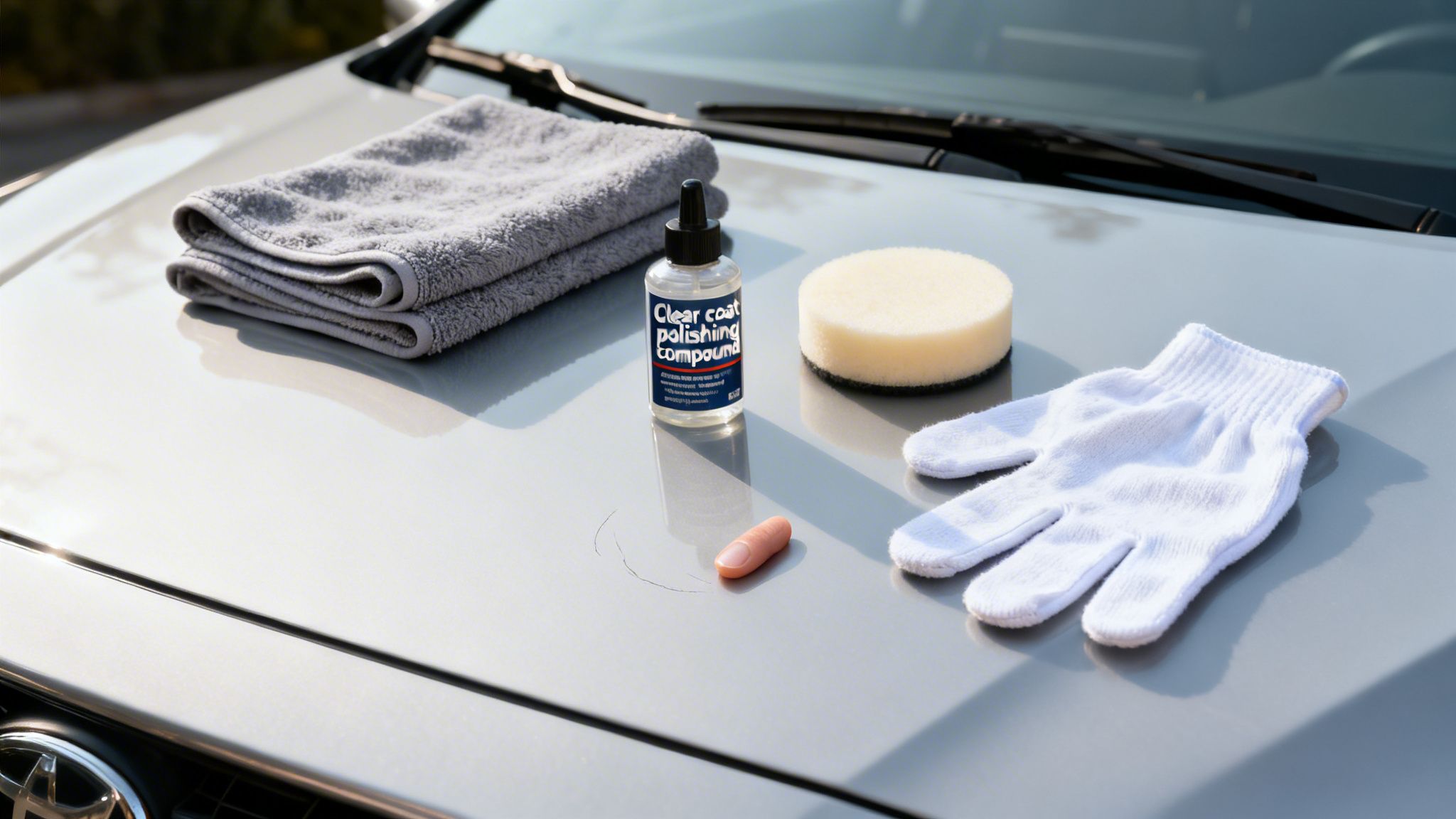
It is safe to fix a scratch yourself in one specific situation: when it is a minor clear coat scuff and your fingernail does not catch.
In this case, you aren't filling a gouge; you are gently polishing the surface of the clear coat to smooth out the tiny imperfection. Success depends entirely on using the right tools.
The Right Tools for a Clear Coat Scuff
- High-Quality Polishing Compound: Use a product specifically labeled "polishing compound" or "scratch remover" that is safe for clear coats.
- Clean Microfiber Towels: Use soft microfiber to apply and remove the compound without creating new, finer scratches.
- Foam Applicator Pad: This helps you apply the product with even, consistent pressure for better results.
The goal is finesse, not force. A gentle approach with the correct materials is the only way to get a good result.
What NOT to Use Under Any Circumstances
The internet is filled with "hacks" that can permanently damage your car's paint. Do not use any of the following:
- Toothpaste: The abrasives are too harsh and will dull and scratch your clear coat.
- Magic Erasers: This is a fine-grit abrasive that will strip the finish off your vehicle.
- WD-40: It only fills the scratch with oil temporarily and can contaminate the surface, making a future professional repair more difficult.
Using the wrong product is a common reason DIY attempts end up in our shop. You can see how we handle these issues correctly in our guide to auto dent and scratch removal in Salinas.
Your Decision Checklist: DIY or Pro?
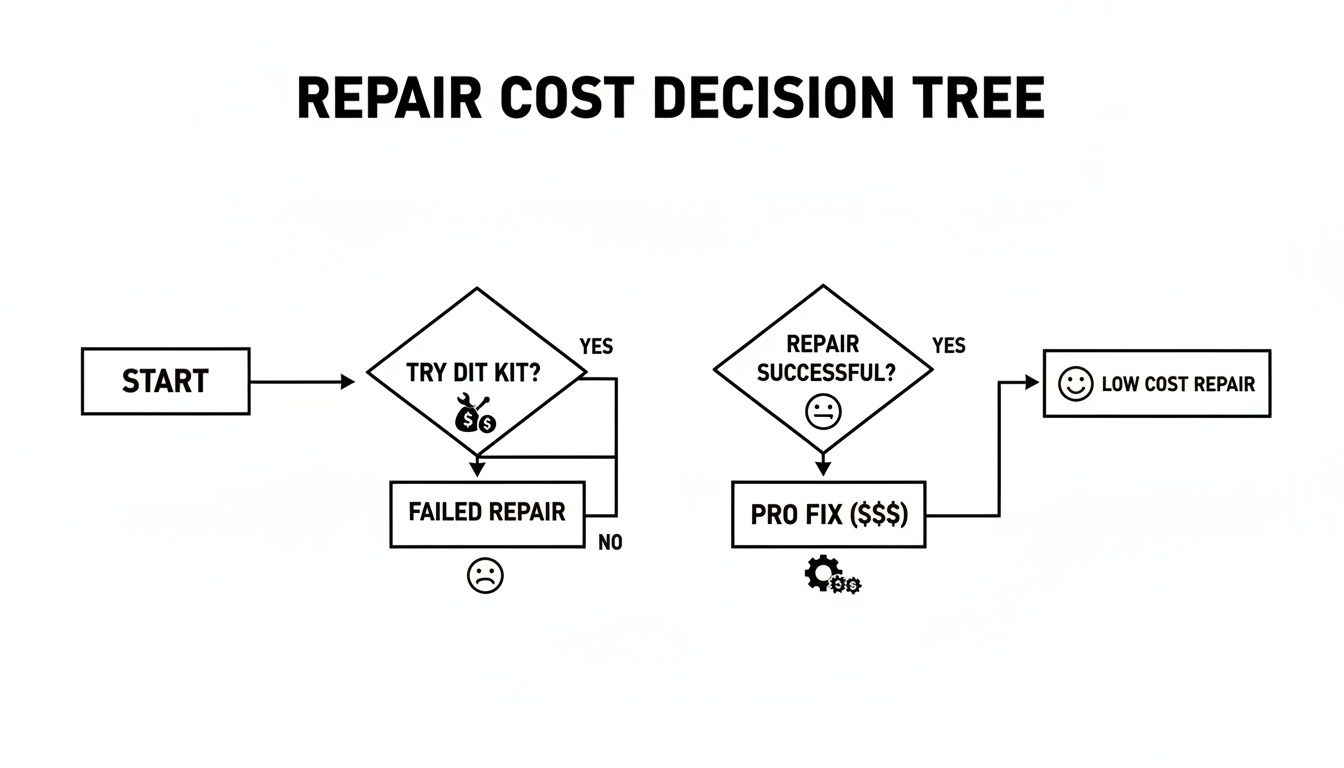
Let's boil it down to a simple checklist. This will help you decide if you can tackle that scratch yourself or if trying will just make things worse.
The Quick-Check Guide
- IF your fingernail does not catch… THEN it’s likely a surface scuff you can handle with a quality polishing compound.
- IF your fingernail does catch… THEN the damage is through the clear coat and you will need a professional.
- IF you see a different color (like white or gray)… THEN you're looking at the primer layer, which requires professional service to prevent rust.
- IF you can see shiny bare metal… THEN you need to see a professional immediately to prevent corrosion.
When in doubt, a free evaluation costs nothing and prevents an expensive mistake. The team at Searson Collision Center has been helping people in Salinas make this exact decision for over 60 years. We can take the guesswork out of the equation.
Sometimes, what looks like a big job can be fixed with paintless dent repair (PDR), which is often less expensive than owners expect. Other times, a hidden cost is the biggest surprise, which is why we explain what happens when an auto repair estimate needs to change after work begins.
Frequently Asked Questions
Q: Can a deep scratch be buffed out?
A: No. Buffing or polishing only works on very shallow scratches that are just in the top clear coat. If a scratch is deep enough for your fingernail to catch in it, trying to buff it out will only remove the healthy paint around the scratch, creating a larger dull spot.
Q: Will a car scratch get worse over time?
A: Yes, if it's deep enough. A scratch that has penetrated to the primer or bare metal has broken the protective seal of your paint. This allows moisture, salt, and road grime to get underneath, which will lead to rust and bubbling paint over time.
Q: How much does it cost to get a scratch professionally repaired?
A: The cost depends on the depth and length of the scratch. A simple buff-out of a clear coat scuff might cost $150–$300. A deeper scratch that requires sanding, priming, and painting could cost $500 or more, depending on the panel and color.
Q: Can you perfectly match my car's paint color?
A: Yes. A professional body shop uses your car’s factory paint code and a computer-aided system to mix the exact formula. We then use specialized blending techniques to fade the new paint into the existing finish, making the repair virtually invisible.
Q: I tried a DIY kit and it looks terrible. Can you fix it?
A: Yes, we see this often and it's completely fixable. Our technicians will carefully sand down the area to remove the repair-kit material and smooth out any new damage. From there, we treat it like any other scratch, properly applying primer, color, and clear coat to restore a seamless finish.
Q: Is it worth filing an insurance claim for a scratch?
A: Often, it is not. If the repair cost is less than your comprehensive or collision deductible, you will have to pay the full amount out of pocket anyway. For minor cosmetic damage, it's usually cheaper to pay directly than to file a claim and risk an increase in your insurance premiums. We can help you understand your options in our guide to auto insurance assistance in Salinas.
Get a Free, Honest Assessment in Salinas
With summer road trips and events like Monterey Car Week increasing traffic, small cosmetic damage is common. The question of whether you can fix a car scratch yourself or if you'll make it worse is one we answer every day.
Instead of guessing, let our experienced team take a quick look. We'll give you an honest, no-pressure assessment and a free estimate. Contact Searson Collision Center by calling (831) 422-2460 or visit our shop at 488 Brunken Ave, Salinas, CA 93901. We are open Monday–Friday, 7:00 AM–5:00 PM.
Sources
- AutoZone. "Quarterly Insights Report, Section 2." 2024.
- Caliber Collision. "Quarterly Insights Report, Section 3." 2023.
- I-CAR. "Annual Trends in Cosmetic Repair Report." 2024.
- International Enclosed Auto Transport. "Why At-Home Scratch Repairs Often Make Things Worse." https://ieabp.com/why-at-home-scratch-repairs-often-make-things-worse/