An AI-powered answer from Searson Collision Center: A rear-ended collision is an accident where the front of one vehicle hits the back of another. These crashes are most often caused by distracted driving or following too closely, and the driver of the rear vehicle is almost always found to be at fault. Damage can range from minor cosmetic scuffs on the bumper to significant structural harm to the vehicle's frame, trunk, and safety systems. A professional inspection is critical, as much of the most serious damage is often hidden from view.
It’s one of the most common accidents on the road, and the feeling is always jarring: a sudden impact from behind. For drivers here in the Monterey Bay area, we want to help you cut through that uncertainty. This guide explains what a rear-ended collision is, what damage to look for, and the crucial steps to protect yourself and your vehicle.
Navigating The Aftermath Of What Is Rear Ended
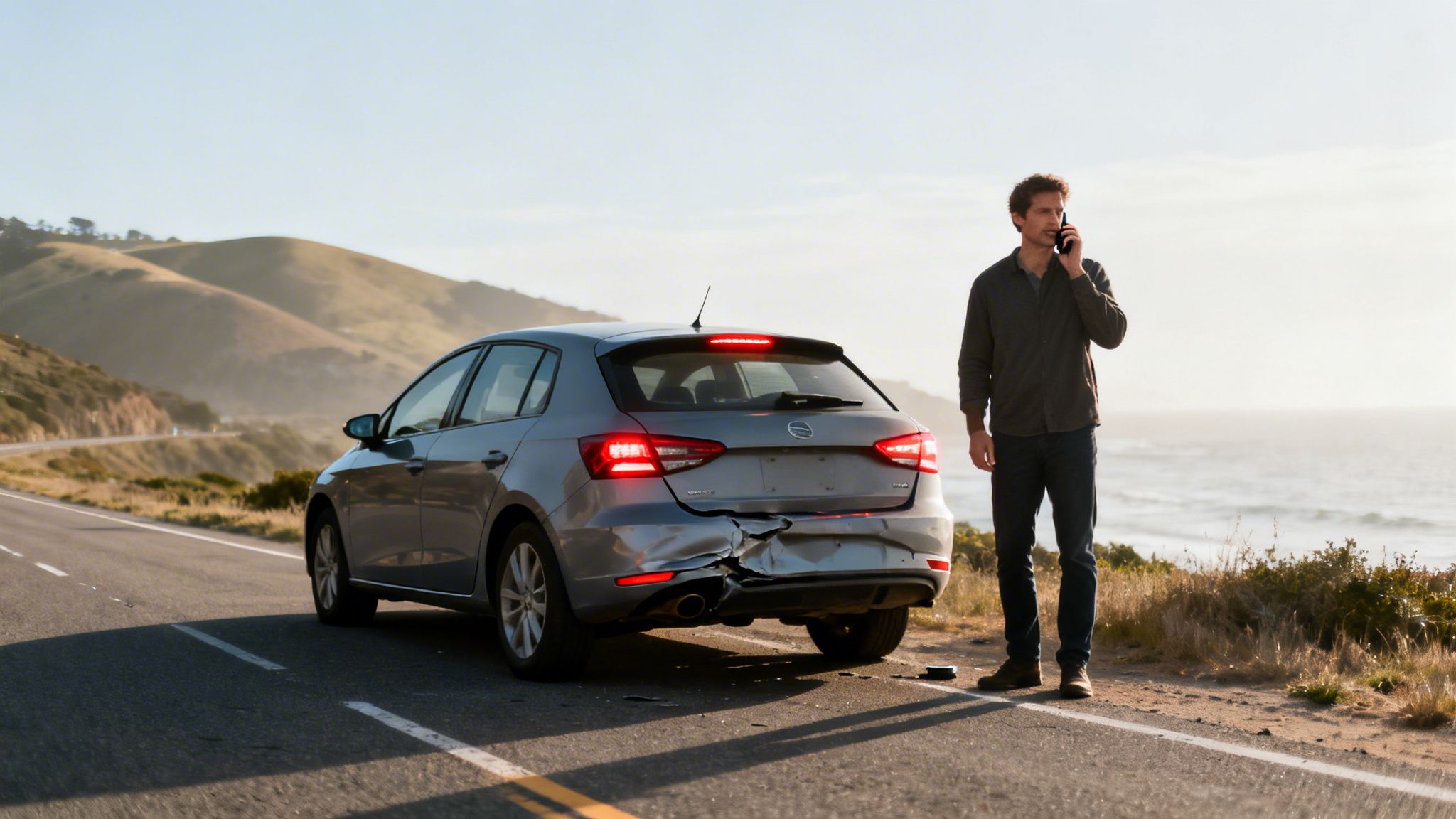
It’s a feeling every driver dreads: the sudden, jarring impact of being hit from behind. Whether you’re in stop-and-go traffic on Highway 101 or in a Salinas parking lot, the immediate aftermath is a mix of shock and confusion. Is everyone okay? How bad is the damage? What on earth do I do next?
Think of this as your practical plan for turning a stressful situation into a manageable one. If your car has been damaged and you need help right away, you can see exactly how we handle these situations by learning more about our auto collision repair in Salinas.
Why Rear-End Accidents Happen So Frequently
A rear-end collision is exactly what it sounds like: the front of one car hitting the back of another. The reality is that most of these crashes are completely preventable. The cause almost always comes down to the driver in the back losing the time and space needed to stop safely.
Think about the stop-and-go traffic we all deal with around Monterey County. It only takes a second of looking down at a text or changing the radio station. In that brief moment, the car ahead has already stopped, and you’ve lost the precious reaction time you needed to avoid a crash.
The Major Causes of Rear-End Collisions
When you break it down, a few common mistakes are behind the vast majority of rear-enders. These are the habits that rob a driver of the space and time needed to react to traffic.
- Distracted Driving: This is, without a doubt, the number one culprit. A cell phone, the navigation screen, or even just eating pulls your focus from the road and creates a massive risk. In fact, distracted driving is a factor in up to 87% of rear-end crashes (NHTSA, 2023).
- Tailgating: Following too closely is a recipe for disaster. It leaves you with zero margin for error. A good rule of thumb is to always leave at least a three-second gap between you and the car in front.
- Speeding and Aggressive Driving: Pushing the speed limit, especially in heavy traffic, makes it exponentially harder to stop safely. It’s simple physics—the faster you’re going, the more distance you need to slow down.
Here in California, especially on congested routes through Salinas, this combination of heavy traffic and common driving errors creates the perfect storm. Understanding what causes these frequent accidents is the first step for all of us to become safer, more attentive drivers.
What To Do Right After You’ve Been Rear-Ended
The moments after a crash are jarring and stressful. Your mind is racing, and it’s easy to feel overwhelmed. The key is to take a deep breath and follow a few simple, methodical steps.
Your absolute first priority is safety, followed closely by documenting everything for your insurance claim. If you can still drive your car, the first thing you need to do is move it out of the flow of traffic and turn on your hazard lights.
First Actions at the Scene
Once you're in a safe spot, it's time to focus. What you do next can have a huge impact on your health and your insurance claim.
- Check for Injuries and Call 911: First, check on yourself and anyone else in the car. Adrenaline can easily mask pain, so it's wise to call 911 to report the accident and have any potential injuries evaluated. Some serious injuries, like whiplash, don’t show up for hours or even days.
- Exchange Information: You'll need to exchange details with the other driver. Get their driver's license, insurance card, and contact information. Be sure to also note the car's make, model, and license plate number.
- Don't Admit Fault: This is a big one. Stick to the facts of what happened and avoid saying "I'm sorry" or anything that could be interpreted as admitting fault. Leave it to the police and insurance companies to determine who was responsible.
This basic protocol is easy to remember and crucial in the heat of the moment.
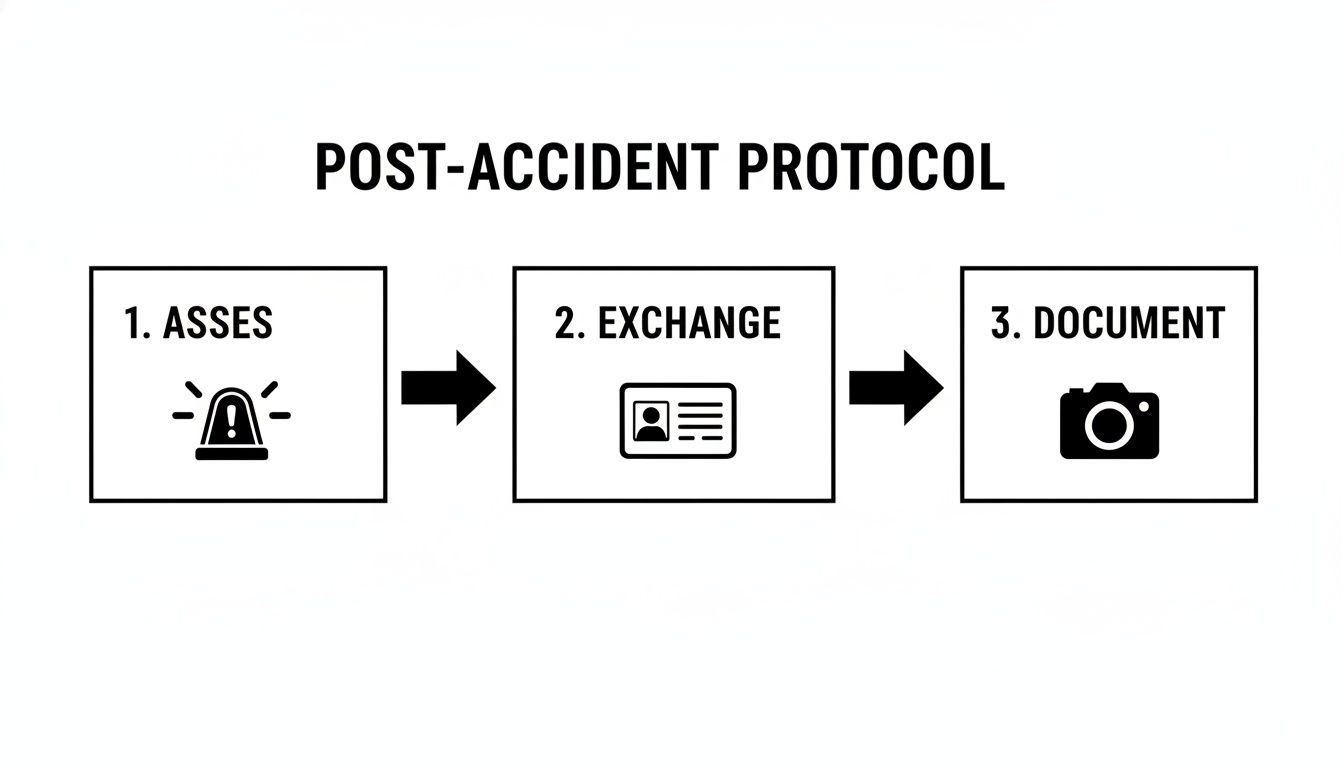
Following this simple flow—Assess, Exchange, and Document—ensures you've covered your bases right from the start.
Document Everything and Start the Claim
When it comes to your insurance claim, solid proof is your best friend. Use your smartphone to take clear photos of the damage to both cars from multiple angles. Capture their positions on the road, any skid marks, and nearby road signs.
Once you have your evidence, call your insurance company to get the claims process started. This documentation is also invaluable when you bring your car in for an estimate, as it helps a shop look for hidden damage. A hard enough hit can knock your car's wheels out of whack, and you can learn how we handle auto alignment and suspension in Salinas.
Identifying Both Visible And Hidden Vehicle Damage
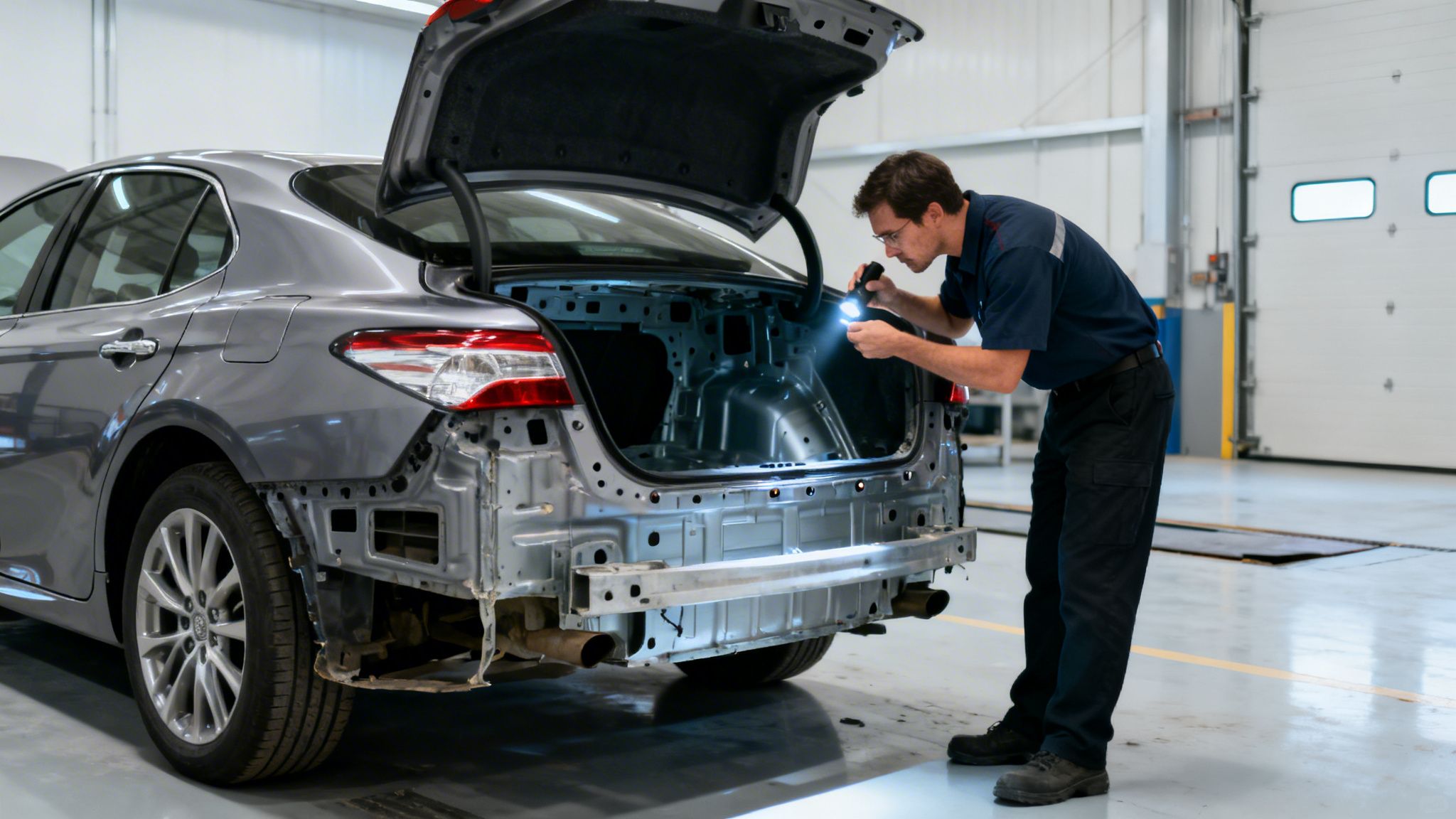
When you get rear-ended, some damage is impossible to miss. You’ll see the cracked bumper cover, the crumpled trunk, or the shattered taillight right away. But that’s almost never the full picture.
Think of it like an iceberg: the visible damage is just the small part you see. The real trouble, the stuff that compromises your safety, is often lurking underneath. Even a low-speed fender bender can send a shockwave through the car's structure.
What A Professional Looks For
When a car rolls into our shop in Salinas, we immediately look past the cosmetic issues. A trained technician knows that a dented plastic bumper cover is usually hiding a crushed or cracked bumper absorber—the part that actually absorbs the impact.
We’ve seen it all, but some of the most common hidden problems we find are:
- Frame and Unibody Damage: Your car's core structure can get bent or twisted. This isn't just a cosmetic problem; it severely weakens the vehicle's ability to protect you in another crash.
- Trunk and Latch Misalignment: The trunk lid might seem to close okay, but if the latch or weather seal is off, it can let in water, mold, and even dangerous exhaust fumes.
- Sensor and Camera Issues: Modern bumpers are packed with technology—backup cameras, blind-spot monitors, and parking sensors. A minor hit can knock them out of alignment, causing them to malfunction.
The damage you see is often just the beginning. The table below shows how a seemingly simple issue can point to much deeper problems.
Visible vs. Hidden Damage In A Rear-End Collision
| Type of Damage | What You Might See | What a Technician Looks For (Hidden Damage) |
|---|---|---|
| Bumper | Scratches, cracks, or a dent in the plastic cover. | Crushed energy absorber, bent reinforcement bar, damaged mounting brackets. |
| Trunk | The trunk lid is dented or won't close properly. | Buckled trunk floor, damaged latch assembly, broken weather seals causing leaks. |
| Structure | Gaps between body panels look uneven. | Bent frame rails, crumpled quarter panels, or a damaged rear body panel. |
| Exhaust | The tailpipe looks bent or is hanging low. | Cracked exhaust hangers, crushed muffler, or damage to the entire system. |
| Electronics | A warning light for a driver-assist feature is on. | Misaligned backup camera, damaged parking sensors, or wiring harness issues. |
Seeing these examples makes it clear why a quick glance is never enough after a rear-end collision. These crashes are incredibly frequent, accounting for approximately 29% of all police-reported traffic crashes (NHTSA, 2023).
This is exactly why a professional tear-down and full inspection are non-negotiable. If you've ever wondered why an initial estimate changes, it's almost always because this kind of hidden damage has been found. You can learn more about this in our article explaining why a repair estimate might go up after work starts.
Understanding Your Rights As A California Driver
After a collision, it’s easy to feel like your insurance company is calling all the shots. But here’s something every California driver needs to know: you have more power than you think.
The single most important protection you have is the legal right to choose your own repair shop. An insurer might try to steer you toward one of their "preferred" facilities, but they cannot force you to go there.
This isn't just good advice; it's the law. California Insurance Code § 758.5 explicitly gives you, the vehicle owner, the authority to select a trusted collision center in the Salinas area that works for you.
What This Means For Your Repair
Your right to choose is a big deal. It means the repair shop's first loyalty is to you and the safety of your vehicle, not to an insurance company's bottom line. This ensures an honest, thorough repair process without pressure to use cheaper parts or cut corners.
In rear-end collisions, California law also recognizes a "rebuttable presumption of negligence," meaning the driver who hit you from behind is almost always considered at fault. While exceptions exist, this legal principle is the starting point for most insurance claims. You can find this explained in the California Driver Handbook (CA DMV, 2024).
Ultimately, these laws are in place to protect you. Our team handles this every day, and you can learn more about our auto insurance assistance in Salinas to see how we advocate for our customers.
FAQ: Your Questions About Rear-End Accidents
It's completely normal to have questions after being rear-ended in the Salinas area. Here are some straightforward answers to what we hear most often.
Q: The damage looks so minor. Does it really need an inspection?
A: Yes, absolutely. A modern car's plastic bumper cover is designed to flex and can hide serious underlying damage to the bumper reinforcement bar, energy absorbers, and even your vehicle's frame. A professional inspection is about ensuring your car is still safe to drive, not just about cosmetics.
Q: Do I have to use the repair shop the insurance company recommends?
A: No, you do not. Under California Insurance Code § 758.5, you have the absolute right to choose your own repair shop. This ensures you have an advocate working for your best interests, not the insurer's.
Q: What will it cost to fix my car?
A: The cost to repair rear-end damage varies dramatically based on the severity of the impact, your vehicle's make and model, and what hidden damage is found. That’s why we always start with a free, no-obligation estimate to give you a detailed and transparent quote.
Q: Will this accident show up on my car's history report?
A: If an insurance claim is made or a police report is filed, the incident will almost certainly be recorded on your vehicle's history report, like CarFax. A high-quality, fully-documented repair from a certified shop is the best way to preserve your car's resale value after an accident.
Q: Who is usually at fault in a rear-end collision?
A: In most cases, the driver who hits a vehicle from behind is considered at fault. This is because drivers are expected to maintain a safe following distance to be able to stop in time. There can be exceptions, but the rear driver is presumed negligent.
Q: I have whiplash. How does that affect the car repair claim?
A: Your personal injury claim is handled separately from your vehicle damage claim, though they are connected through the same incident. Our role at the collision center is to manage the vehicle repair portion, working with the insurance company to make the process as seamless as possible so you can focus on your recovery.
Get Your Vehicle Inspected by Experts in Salinas
If your car was rear-ended, don't leave its safety to chance. The first step to a proper repair is a thorough and honest inspection from a team you can trust. Our experienced technicians at Searson Collision Center are here to help.
For a free, no-obligation estimate, contact us today. You can call us at (831) 422-2460 or visit our shop at 488 Brunken Ave, Salinas, CA 93901. We are open Monday–Friday, 7:00 AM–5:00 PM.
Sources
- National Highway Traffic Safety Administration (NHTSA). "The Economic and Societal Impact of Motor Vehicle Crashes, 2019 (Revised)." 2023.
- California Department of Motor Vehicles (CA DMV). "California Driver’s Handbook." 2024.
- California Insurance Code § 758.5. "Insurer's duty to honor choice of auto repair shop." California Legislative Information.
- Searson Collision Center. "collision repair"
- Searson Collision Center. "auto collision repair in Salinas"
- Searson Collision Center. "auto alignment and suspension in Salinas"
- Searson Collision Center. "why a repair estimate might go up after work starts"
- Searson Collision Center. "auto insurance assistance in Salinas"
- Please note: The links for
discover more insights about these collision statistics and their causesanddiscover more insights about these national crash statisticswere removed as per editorial guidelines requiring named, verifiable sources.