It’s a frustrating moment: you get a call from the auto body shop, and the final repair bill is going to be higher than the initial estimate. If you're asking, "why did my repair estimate go up after the shop started working on my car?" you're not alone. This happens because an initial estimate is based only on visible damage; the full story is almost always found after we start work.
That first written estimate can feel like a contract. When a shop calls with a higher figure, it's easy to worry about a bait-and-switch, but that's rarely the case. A revised estimate, called a "supplement," is a normal and necessary part of a safe, high-quality repair.
Why Your First Estimate Is Just a Starting Point
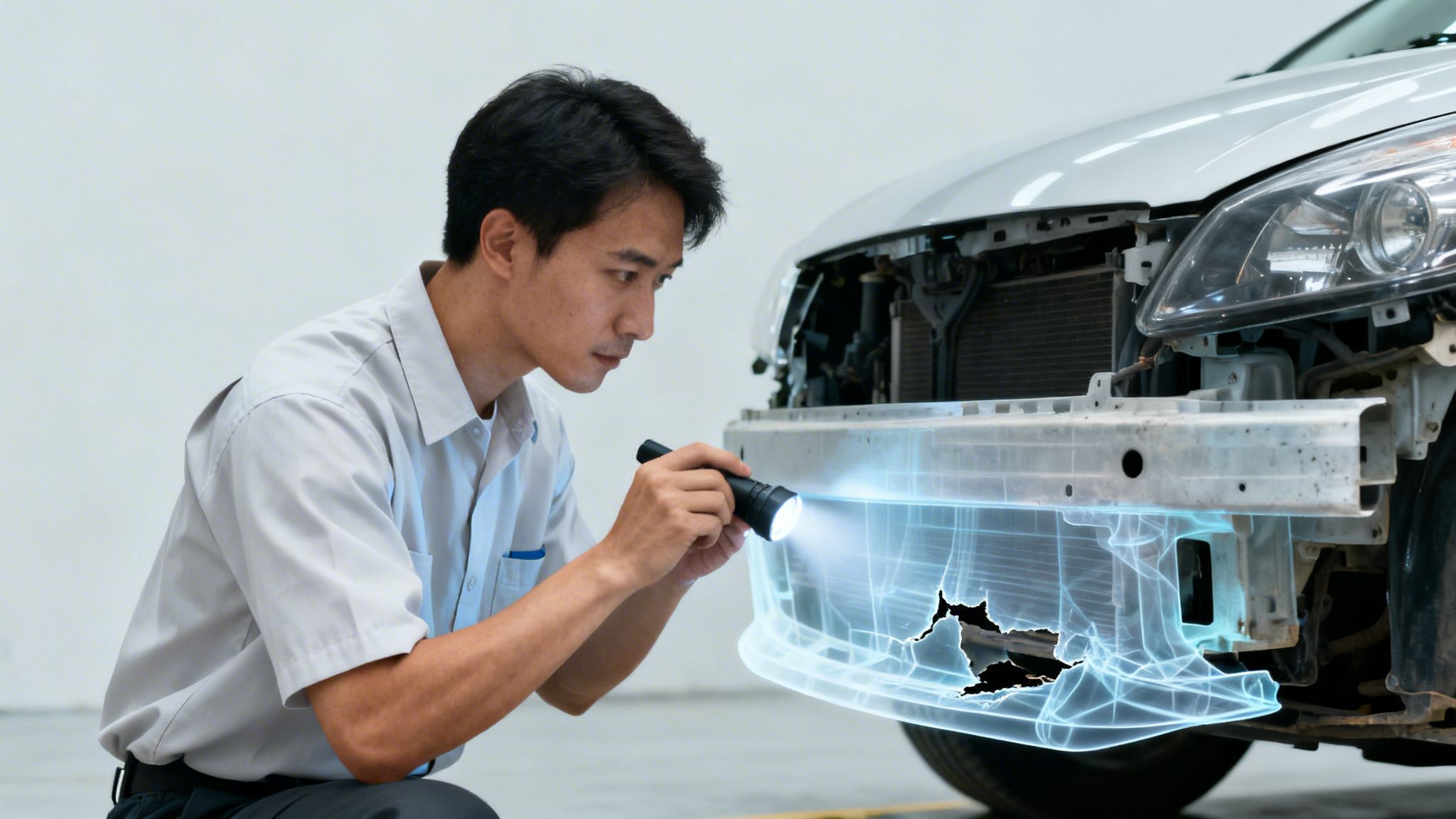
Think of an initial estimate like a doctor looking at a twisted ankle. The doctor sees the swelling and bruising, but they can't know if a bone is broken without an X-ray. Your initial estimate is that visual check; our "teardown" process is the X-ray that reveals what's happening underneath.
Initial Estimate Vs. Final Repair: What Changes?
The difference between a quick visual inspection and a detailed teardown is often significant. This table breaks down what typically changes.
| Factor | What the Initial Estimate Sees | What the Teardown Process Reveals |
|---|---|---|
| Structural Damage | Scratched paint, a dented bumper cover. | A bent frame rail or crushed impact bar hidden behind the bumper. |
| Mechanical Parts | A visibly cracked radiator. | Damaged radiator supports, bent A/C condenser, or cracked fan shroud. |
| Sensors & Electronics | A broken headlight. | A damaged wiring harness or a misaligned ADAS sensor bracket behind it. |
| Mounting Hardware | A fender that appears misaligned. | Multiple broken clips, bent brackets, and stripped bolts that need replacement. |
| Paint & Finish | Surface-level scratches across a door. | The need to blend paint into adjacent panels (fender, quarter panel) for a perfect match. |
The teardown is what allows us to write a complete and accurate repair plan that accounts for every piece of damage, not just what's on the surface.
The Standard for Modern Repairs
The cars we see here in the Monterey Bay Area are more complex than ever, packed with sophisticated electronics that demand precision. A supplement isn’t a red flag for a mistake; it’s a sign your shop is following a thorough process to find and fix all the damage from an accident.
This complexity is a huge driver behind supplements. In fact, advanced diagnostic scans and safety system recalibrations are now present on over 28% of all repairable claims in 2026, a number that has shot up in recent years (CCC Crash Course, 2026). It's impossible to know if these procedures are needed until the car is in the bay.
You can read more about how we handle the full scope of a modern repair in our guide to auto collision repair in Salinas. A supplement means the shop is doing its job right by refusing to ignore hidden damage that could compromise your safety.
Why Hidden Damage and Vehicle Complexity Drive Up Costs
More often than not, the biggest reason a repair estimate goes up is simple: we find more damage once we start taking things apart. What you can see on the outside of your car is almost always just the tip of the iceberg.
That small dent in your bumper cover might look like a quick fix, but underneath, it could be hiding a crushed steel impact bar or broken parking sensors. We can't know for sure until we get inside.
Today's cars are essentially rolling computers packed with cameras, radar units, and sensors for advanced driver-assistance systems (ADAS). These critical safety components are often housed in the very places most likely to get hit in a collision, like bumpers and side mirrors.
What Looks Simple Is Often Complex
What used to be a simple bumper swap is now a more delicate operation. A new bumper might have several sensors that need to be installed, wired, and then calibrated with pinpoint accuracy. This calibration ensures safety features like automatic emergency braking and blind-spot monitoring work as designed.
Getting these systems right isn't just a suggestion; it's a non-negotiable part of a safe repair. This is why a thorough teardown and documentation process often leads to a revised estimate.
The technological complexity of new vehicles is what's really driving costs. This trend is the main reason why your repair estimate might go up after the shop starts working on your car. It’s about uncovering the full scope of damage to make your vehicle safe again.
The Rising Cost of Safe Repairs
This increasing complexity has a real, measurable impact on what it costs to fix cars properly. In fact, vehicle repair costs have shot up by an average of 28% over the past three years (Collision Repair Magazine, 2023).
As of mid-2026, the average repair cost for an insurance claim hit $4,721—a huge jump from just a few years ago. You can discover more insights about these rising repair rates from industry analysis.
Hidden structural damage is another common surprise. You can learn more about the importance of auto frame and structural repair in our detailed guide to see why getting the vehicle's foundation right is so critical.
The Insurance Supplement: What It Is and How It Works
So, what happens when our technicians find that hidden damage? We can’t just go ahead and fix it. This is where a formal process called a supplement comes into play.
A supplement is an official update to your original repair plan. It’s a documented request we send to your insurance company detailing every additional part, labor hour, or procedure needed for a safe, complete repair.
Our I-CAR Gold certified technicians take clear photos and write detailed notes explaining why the extra work is needed. We package this evidence into a supplement and submit it directly to your insurance adjuster for review.
How the Supplement Process Works
Here’s the part that can be frustrating for car owners: we have to stop and wait for the insurer’s formal approval before doing any of the additional work. This is a non-negotiable step, and it's where most delays happen.
The holdup isn't at the shop; it’s the time it takes for an insurance company to review, approve, and authorize the supplemental repairs.
This visual helps show how that initial, simple-looking dent can hide a lot more damage underneath, which is exactly what a supplement is designed to address.
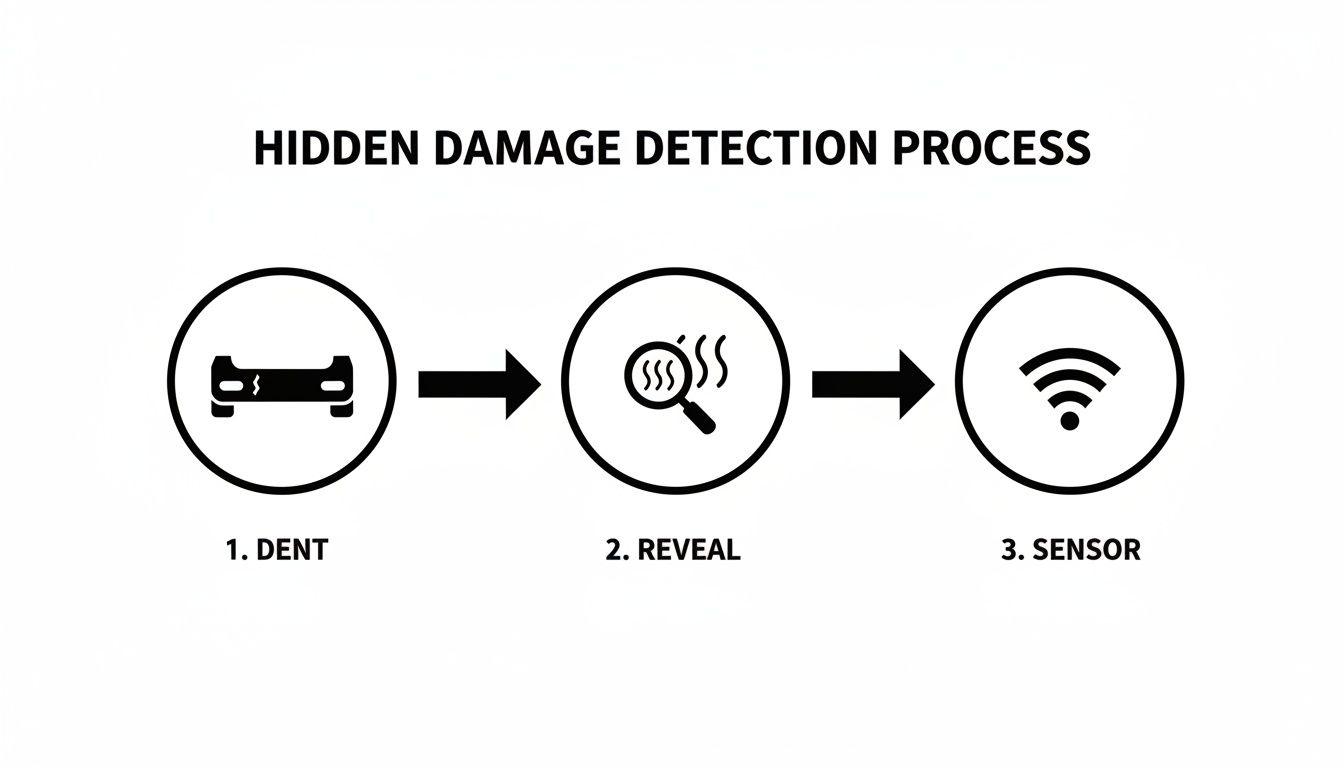
We know waiting is the hardest part. During this time, we’re actively working on your behalf, talking to the adjuster and providing any extra proof they need to get the supplement approved.
Your Advocate in the Repair Process
With over 60 years of experience here at Searson Collision Center, we’ve navigated this process for thousands of customers across Monterey County. We see it as our job to take this burden off your shoulders. We explain what we found in plain English and then coordinate with your insurer to get the green light.
This is a core part of our promise to our customers in Salinas. While the supplement process can feel slow, it's what ensures your repair is done right, fully documented, and protects both the safety and the value of your vehicle.
If you'd like to learn more about how we work with insurance carriers, check out our guide to auto insurance assistance in Salinas.
How Parts Prices and Supply Chains Affect Your Bill
It’s not just hidden damage that can change the final cost. Sometimes, factors completely outside of the shop’s control come into play, specifically the unpredictable world of car parts.
The price and availability of a specific fender or sensor can change in the blink of an eye. What was in stock when we wrote the initial estimate might be on a national backorder this week.
The Ever-Changing Parts Market
The cost of fixing cars is going up, and a major culprit is the price of parts. Recent data showed that the cost for motor vehicle maintenance and repair jumped a staggering 7.7% over the previous year, more than double the overall rate of inflation (Auto Body Professional's Association, 2025).
You can discover more insights about this collision repair inflation data from industry experts. When we write a supplement, we must use the current market price for that part and have a few types to consider:
- OEM (Original Equipment Manufacturer): New parts made by your car's manufacturer.
- Aftermarket: New parts made by a third-party company.
- Recycled: Genuine OEM parts salvaged from a donor vehicle.
Your insurance policy often has guidelines on which type of part we can use. If a part has suddenly shot up in price or isn't available, we communicate with you and your insurance adjuster to find the right way forward. This kind of transparency is the foundation of our business, a principle you can learn more about by reading about us and our long-standing commitment to the Salinas community.
The Human Element: Technician Skill and Labor Rates
When you look at a repair estimate, it’s easy to focus on the cost of parts and paint. But the most important ingredient in a safe, quality repair is the hands-on expertise of the technician.
Fixing the cars of 2026 demands a new level of skill, and there’s a real shortage of technicians with the advanced training to do the job right. This is often why your repair estimate might go up after the shop starts working on your car.
Matching the Right Expert to the Job
Think of the initial estimate as a general plan. Once we get under the skin of the vehicle, we might find something that requires a specialist.
For instance, the first write-up might be for a steel fender. But if the teardown reveals a bent aluminum frame reinforcement, that requires a separate work area, specialized tools, and a certified technician. The labor rate is naturally higher.
Or, if an impact damaged a radar sensor, it takes a technician trained in Advanced Driver-Assistance Systems (ADAS) to install the new part and perform the hyper-precise recalibration. We dive deep into how this affects your car’s alignment and suspension systems in Salinas.
Industry-wide surveys show that 31% of shops see the technician shortage as a major hurdle, a key reason why vehicle repair costs jumped 17% year-over-year (Minneapolis Fed, 2023). You can discover more insights about these vehicle repair costs from the Minneapolis Fed.
This is why a shop's certifications are so crucial. When a supplement from us includes a change in labor, it’s because we’ve pinpointed a task that requires a specific expert to guarantee your vehicle is repaired safely.
Know Your Rights as a California Driver
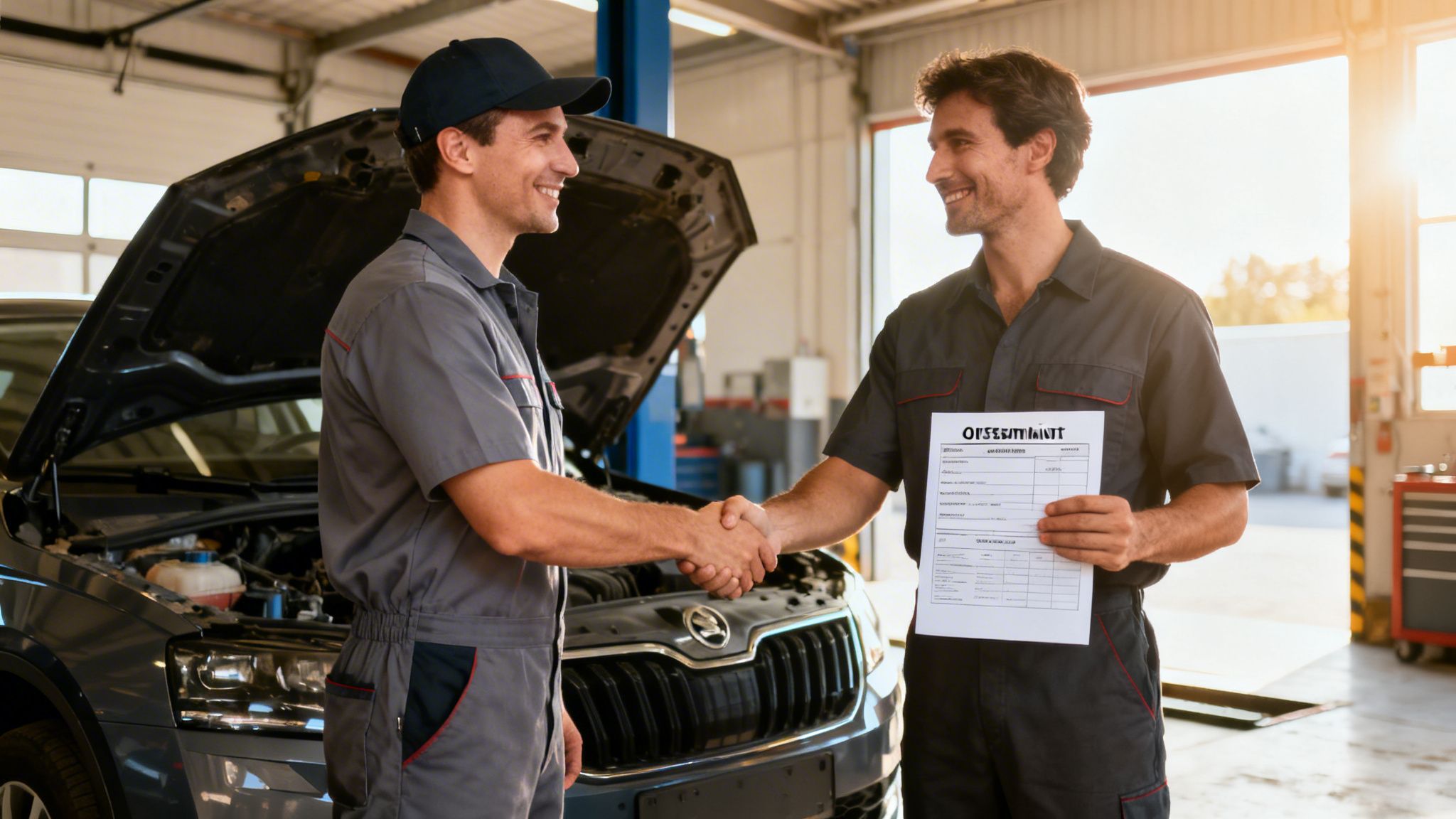
After a collision, it's easy to feel like you’ve lost control. But as a California driver, you have powerful rights designed to keep you in the driver's seat throughout the repair process.
First, you have the absolute right to choose your repair shop. Your insurance company can suggest their preferred shops, but they can't force you to use one. Under California Insurance Code § 758.5, the final decision is always yours.
Your Authorization Is Required By Law
California law also protects you from surprise bills with the Auto Body Repair Consumer Bill of Rights (10 CCR § 2695.85). Every driver should know about this.
This regulation requires that a shop get explicit written or documented authorization from you before performing any work beyond what was originally approved. A reputable shop can't run up your bill and surprise you later; they have to stop, explain what they found, and get your documented approval to proceed.
This is the key to understanding the supplement process. It isn’t a loophole; it’s a transparent and regulated procedure. At Searson Collision Center, we see it as our duty to be your advocate, ensuring you understand what’s happening every step of the way.
FAQs: Your Questions About Repair Estimates and Supplements
Q: Is the shop overcharging me if they send a supplement?
A: No, a supplement isn't a sign of overcharging. It's a sign that the shop has done a thorough teardown and found damage that was hidden during the initial visual inspection. This documented process is an industry-standard practice for ensuring a safe and complete repair.
Q: Do I have to approve a supplement before you do the extra work?
A: Yes, absolutely. California's Auto Body Repair Consumer Bill of Rights requires us to get your documented authorization before starting any work that costs more than the original approved estimate. You are always in control of what work gets done.
Q: Why didn't the initial estimate from my insurance adjuster find this damage?
A: Insurance adjusters often have to write initial estimates in the field, without tools or the ability to disassemble parts of the car. Their estimate is based only on what's visible on the surface. The full extent of damage is almost always revealed during the in-shop teardown process.
Q: What should I do when the shop calls me about a supplement?
A: Ask questions. A good shop will gladly walk you through what was found, why it needs to be fixed, and provide a written copy of the supplement. Confirm that the shop is managing the approval process directly with your insurance provider, which is standard practice for us.
Q: Will my insurance cover the full supplement amount?
A: In the vast majority of cases, yes. As long as the newly discovered damage is a direct result of the accident and essential for a safe repair, your insurance provider should cover it. Our team provides the detailed documentation adjusters need to justify and approve the supplement.
If your car is in for a repair and you are feeling confused by the process, we are here to help. The team at Searson Collision Center has been helping drivers in Salinas and the Monterey Bay Area navigate insurance claims for over 60 years. For a free estimate or answers to your questions, call us at (831) 422-2460 or visit our shop at 488 Brunken Ave, Salinas, CA 93901. We're open Monday–Friday, 7:00 AM–5:00 PM.
Sources
- CCC Intelligent Solutions. "CCC Crash Course 2026 Report." 2026.
- Collision Repair Magazine. "Rising Repair Rates: Vehicle Repair Costs Have Increased by 28 Percent Over Past Three Years, Says Wall Street Journal." 2023. https://www.collisionrepairmag.com/news/collision-repair/article/15734748/rising-repair-rates-vehicle-repair-costs-have-increased-by-28-percent-over-past-three-years-says-wall-street-journal
- Auto Body Professional's Association. "New CPI Data Shows Collision Repair Inflation Significantly Outpacing Consumer Prices." 2025. https://www.autobpa.com/2026/10/27/new-cpi-data-shows-collision-repair-inflation-significantly-outpacing-consumer-prices/
- Federal Reserve Bank of Minneapolis. "Despite Easing Inflation, Vehicle Repair Costs Soar." 2023. https://www.minneapolisfed.org/article/2023/despite-easing-inflation-vehicle-repair-costs-soar
- California Bureau of Automotive Repair. "Write It Right: A Guide for the Auto Repair Dealer." 2026.
- California Insurance Code § 758.5.
- California Code of Regulations, Title 10, Section 2695.85 (Auto Body Repair Consumer Bill of Rights).