Quick Answer
Scratch remover does work, but only on very light damage in the clear coat. If your fingernail glides over the mark without catching, a quality polish or scratch remover may reduce or remove it. If your nail catches, the scratch is too deep for a DIY product and trying to buff it out can thin the clear coat, create haze or swirl marks, and make the repair worse. The safest approach is to identify the depth first, then choose the fix. A shallow scuff may respond well to polishing. A deeper scratch needs professional repair.
You walk out to the car, catch the light just right, and there it is. A scratch you didn’t notice yesterday. The first thought is usually the same. Can I fix this myself, or am I about to make it worse?
That’s why people ask does scratch remover work, or will it damage your paint? It’s a fair question. Some products do help. Some absolutely do not. The difference comes down to how deep the scratch goes into the paint system, and that’s not something you should guess at from looks alone.
Modern automotive paint isn’t one simple layer. It is a stack. At the top is the clear coat. Under that is the color coat, then primer, then the panel itself. A product that can improve a light clear coat scuff won’t rebuild missing color, replace primer, or protect exposed metal. If you know which layer you’ve damaged, the right decision gets a lot easier.
Introduction
A scratch can look small and still be a bad candidate for DIY. A bigger-looking scuff can turn out to be nothing more than paint transfer or clear coat marring that buffs out cleanly.
That’s the part often missed. They judge the damage by how ugly it looks, not by how deep it is. If you want a straight answer on whether a scratch remover makes sense, start with the paint layers and one simple shop test that tells you a lot before you buy a bottle of compound.
Understanding the Four Layers of Your Car’s Paint
A lot of bad DIY repairs start with one wrong assumption. If the scratch is visible, a scratch remover should handle it.
That is not how paint works.
What each layer does
Your vehicle finish is built in layers. Each layer has a job, and the repair options change the moment damage goes past the top one.
-
Clear coat is the transparent top layer. It gives the paint gloss and takes the wear from washing, sun, and light surface contact. Scratch removers and polishing compounds are meant to work here by shaving down a very small amount of material to level a shallow mark.
-
Base coat is the color layer. Once a scratch cuts into this area, no polish is going to put color back where it is missing.
-
Primer sits under the color and helps paint stick while smoothing the surface underneath.
-
Body panel is the metal or plastic part itself. If the damage reaches this point, you are dealing with real substrate damage, not a simple appearance issue.
This is comparable to sanding a hardwood floor with stain and sealer on top. If the mark is only in the finish, you may be able to level it. If it is through the stain and into the wood, working the top surface more will not solve the problem.
Why scratch remover has limits
Scratch remover is an abrasive, not magic in a bottle.
It improves shallow defects by trimming the area around the scratch so light reflects more evenly. That can clean up wash marks, minor scuffs, and other defects that live in the clear coat. It cannot rebuild paint that is gone.
That distinction matters. I have had customers come in after rubbing one spot over and over, convinced the product just needed more time. What they were doing was thinning good clear coat around a scratch that was already too deep for a buff.
Practical rule: If the product needs to replace missing color, it is the wrong product.
Why the layer matters more than the size
A wide scuff can stay in the clear coat. A thin scratch can cut straight through the color.
So the question is not whether the mark looks ugly. The question is where it stops.
That is why depth matters more than width, and why the fingernail test is such a useful check before anyone buys a scratch remover.
The Fingernail Test How Professionals Diagnose a Scratch
This is the first check worth doing because it takes a few seconds and doesn’t require a tool.
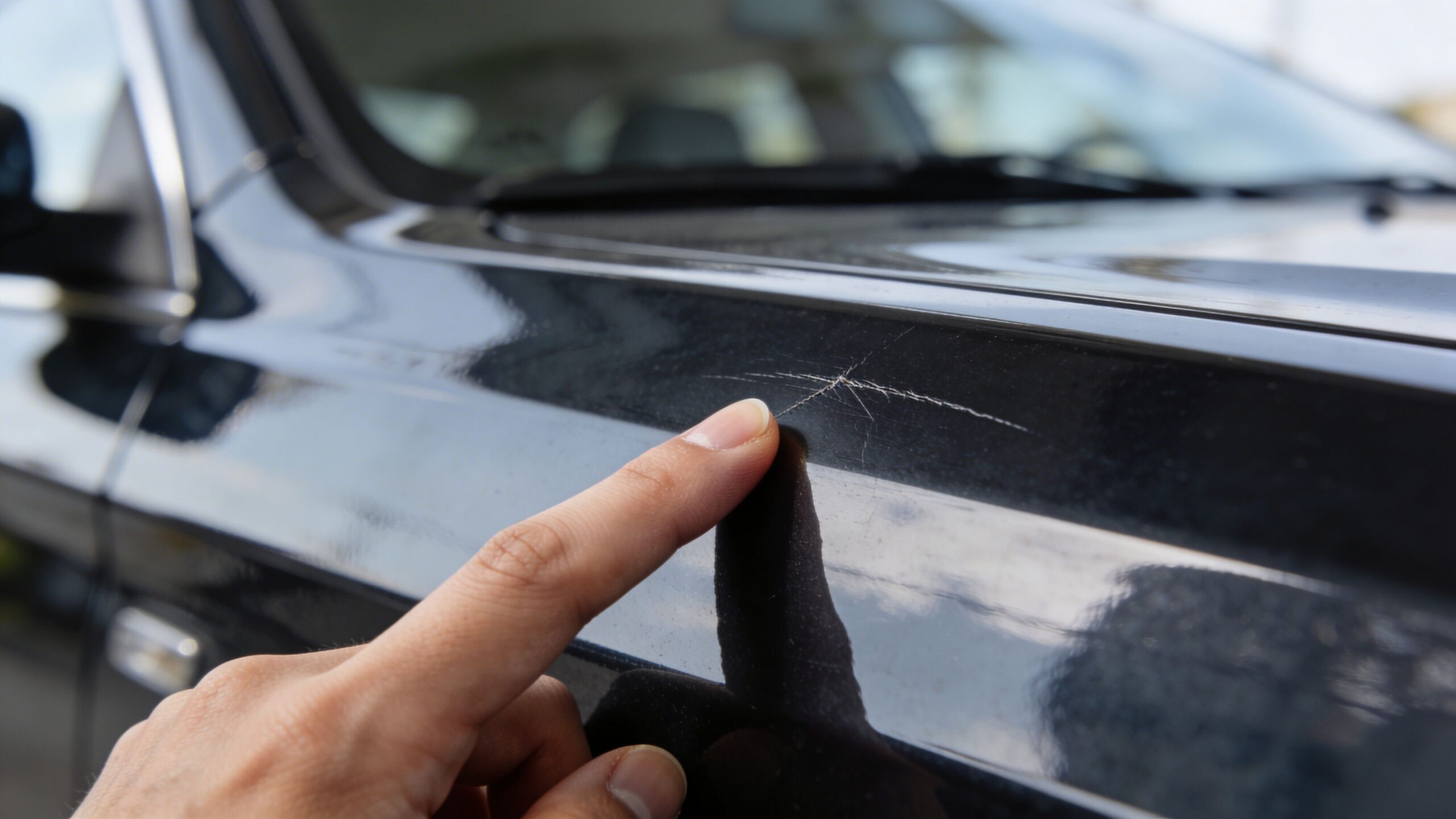
How to do it
Wash the area first. Dirt can make a shallow mark feel worse than it is.
Then run your fingernail lightly across the scratch at a right angle. Don’t drag hard along the groove. You’re checking whether the nail catches or glides.
- If your nail glides over it, the scratch is likely limited to the clear coat.
- If your nail catches, the damage has likely gone beyond the clear coat and a polish is not the right fix.
That simple check lines up with the guidance used across automotive repair sources. It’s the fastest way for a vehicle owner to sort a likely buffable defect from one that needs a real repair.
What a passing result usually means
If the mark doesn’t catch your nail, you’re generally looking at things like:
- Light wash swirls
- Small branch scuffs
- Paint transfer
- Fine surface scratches around door handles
- Minor rub marks from everyday use
Those are the situations where scratch remover earns its keep. It may not make every mark disappear completely, but it can improve the appearance a lot when used carefully on the right kind of defect.
If your fingernail doesn’t catch, you may be dealing with a cosmetic polishing job. If it does, stop there.
What a failing result usually means
A scratch that catches your nail is usually past the point where a consumer compound helps. That can mean damage into the color coat, primer, or lower. It may also mean there’s an open path for moisture, staining, or corrosion to start if the panel is metal.
This is also where people get into trouble. They see a narrow line, assume it should buff out, and keep rubbing compound over it. The result is often a deeper-looking groove surrounded by dulled paint.
When Does Scratch Remover Actually Work
Scratch remover works on the right kind of damage, and the fingernail test is the quickest way to sort that out before you buy anything.
If your nail glides over the mark, a remover or polishing compound may help because you are usually dealing with clear-coat-level damage. AAA describes those as scratches that are not felt by fingernail, and notes testing that showed 80% to 90% visual reduction in swirl marks and light scuffs after 3 to 5 minutes of dual-action polishing, with gloss restored to 85% to 95% of factory specs (AAA on removing scratches from car paint).
That is the sweet spot for these products.
In the shop, I see good results from scratch remover on wash swirls, light brush marks, mild paint transfer, and those fine scratches around door handles that make dark paint look tired. In those cases, the product cuts and refines a small amount of clear coat so the surface reflects light more evenly. That is why the mark looks better. It is not replacing lost paint.
What a good DIY result looks like
A solid result usually looks like one of these:
- The mark disappears because it was shallow to begin with
- The scratch is still there but much harder to see
- The gloss comes back after the area looked dull or scuffed
That is a fair win for a driveway repair.
If you want a straight read on the risks before you start, this guide on whether you can fix a car scratch yourself or make it worse lays out where DIY polishing helps and where it starts costing you paint.
Where scratch remover stops helping
Scratch remover does poorly on deeper scratches because abrasives can only shave down the paint around the defect. They cannot rebuild a gouge, replace missing color, or seal exposed primer or metal.
That is where customers get disappointed. They use a product that worked on a light scuff, then expect the same bottle to fix a door scratch that has real depth to it. The bottle did not fail. The diagnosis was off.
If the scratch passes the fingernail test, a remover may improve it. If it does not, stop polishing and look at repair options.
How DIY Removers Can Damage Your Paint
A scratch remover can clean up a light surface mark. It can also turn one problem into two if the scratch is too deep and you keep rubbing because the bottle promised more than the paint can give.
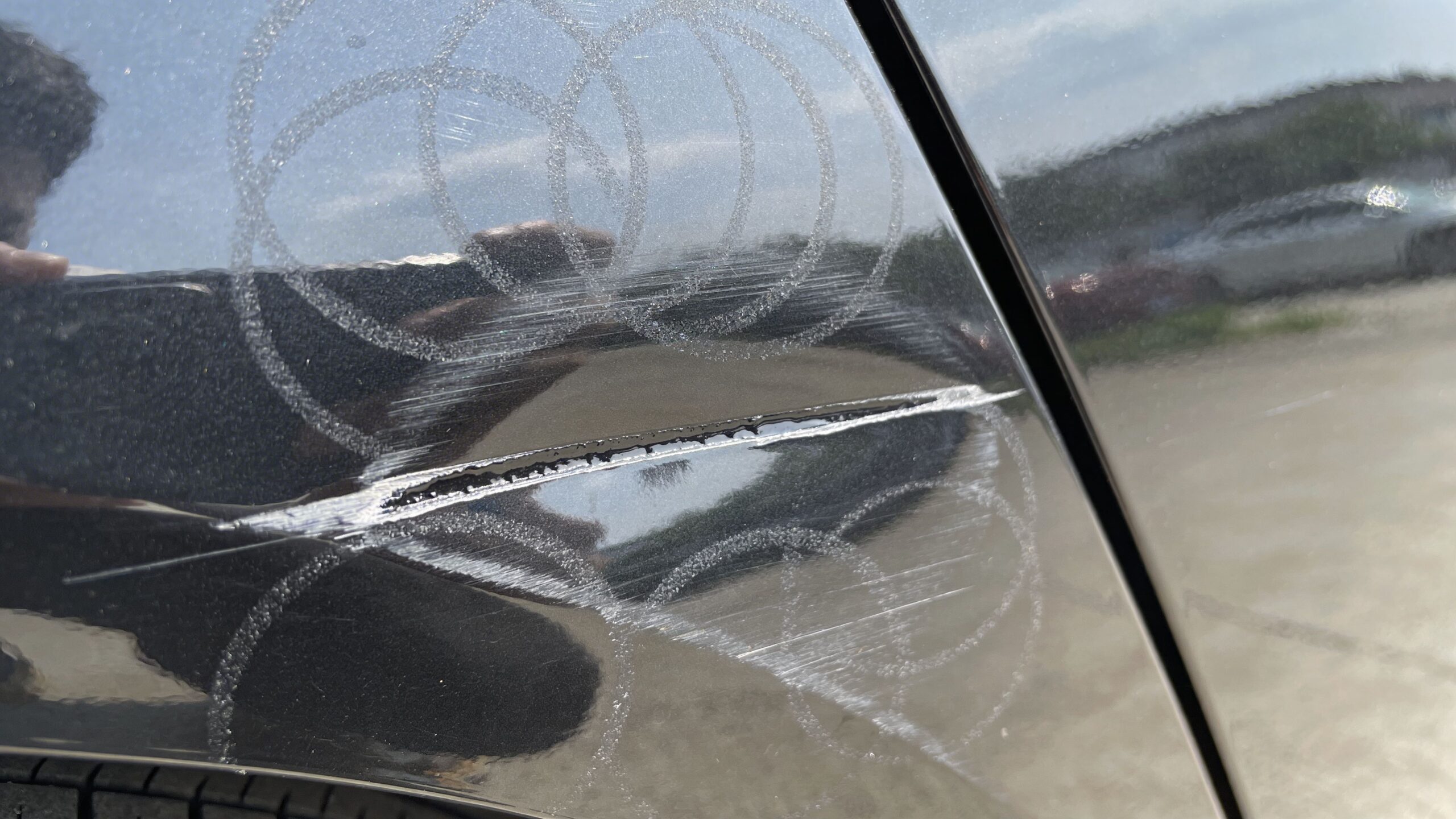
What goes wrong in the driveway
Scratch removers are abrasives. They work by shaving down surrounding clear coat. If the mark is deeper than that top layer, the product cannot rebuild what is missing. All it can do is remove more material around the damage.
That creates a few common shop problems:
- Thinner clear coat. The scratch stays, but the protection around it gets weaker.
- Swirl marks and haze. A rough applicator, too much pressure, or too many passes can dull the finish.
- Burn-through on edges and body lines. Paint is already thinner there, so mistakes show up fast.
- A short-lived improvement. Fillers and oils can make a scratch look better until the next wash.
Minnetonka Collision notes that over 90% of visible scratches catch a fingernail (Minnetonka Collision on whether vehicle scratch repair kits work), which usually means the damage goes beyond what a basic remover can safely fix. That is why the fingernail test matters. It keeps drivers from polishing a bad candidate and sacrificing clear coat for little or no gain.
Color and location raise the stakes
Black, navy, and other dark colors show every swirl. Red and blue can make a bad touch-up or uneven repair stand out from across the parking lot. Sharp creases, panel edges, and spots near trim give you less room for error.
I see this in the shop all the time. A driver starts with one scratch, then comes in with a dull patch around it because they kept chasing the line after the first pass did not work.
If the finish ends up hazy, blotchy, or uneven in color, the repair may need blending instead of a simple polish. Our page on why a repaired panel may not match the rest of the paint explains why that gets more involved.
The risk comes from bad diagnosis
The product is not always the problem. The bigger issue is using the wrong tool on the wrong scratch.
A good rule is simple. If your fingernail catches, stop polishing. If it does not catch, test a small area and work gently. That one check saves more paint than any label on the shelf.
Your Three-Question Checklist Before You Buy
A lot of drivers don’t need a lecture on paint chemistry. They need a usable decision.
Start with the fingernail
If your nail catches in the scratch, skip the remover. That’s the easiest line to draw.
If it glides, you may have a reasonable DIY candidate. Even then, work gently, use a microfiber cloth or the right pad, and test a small area first.
Look at where the damage sits
A scratch in the middle of a flat panel gives you more room to work than one right on a sharp body line or near a panel edge. Those areas are less forgiving.
If the scratch runs through a crease, don’t chase it with repeated passes of compound. That’s where people burn through finish faster than they expect.
Check the surrounding paint
If the paint around the scratch already looks faded, chalky, or uneven, the problem may be larger than the mark itself. Oxidation and age change how the finish behaves under polishing.
At that point, trying to improve one line may leave you with one slightly better line inside a larger dull patch.
For local drivers dealing with cosmetic damage, this page on auto dent and scratch removal in Salinas gives a practical look at when minor damage can be handled easily and when it needs refinishing.
Professional Alternatives for Scratches Beyond a Buff
Not every deep scratch means a full repaint of the whole vehicle. Repair can be more targeted than people assume.
Light repair options
Some scratches need professional machine polishing rather than hand rubbing. The difference is control. A trained technician can evaluate the finish, choose the right pad and compound, and stop before causing more harm.
Other marks may be good candidates for precision touch-up work. That can improve the look of a small chip or narrow scratch, especially when the goal is to protect the panel and make the damage less noticeable rather than make it invisible at any cost.
When blending matters
If the scratch has broken color and the panel needs paint, matching the repaired spot to the surrounding finish becomes the primary task. That may involve blending into adjacent areas so the repair doesn’t stand out.
This is especially important on metallics, pearls, and colors that shift in different light. A repair can be technically sound and still look wrong if the color transition is abrupt.
When full refinishing is the right call
A panel with deeper gouges, failed prior touch-up, or damaged clear across a larger area may need full panel refinishing. That means proper prep, color application, and clear coat restoration so the finish holds up instead of failing later.
If you want a plain-language overview of that process, this page on auto paint refinishing in Salinas is a useful reference.
Frequently Asked Questions About Scratch Repair
Q: Will scratch remover get rid of a key scratch?
A: Usually not if the key scratch catches your fingernail. Those scratches are often deeper than the clear coat, so a remover may only dull the surrounding paint and leave the line behind.
Q: Can scratch remover make the damage worse?
A: Yes. If you use it on a deep scratch, or use too much pressure, you can thin the clear coat and create haze or swirl marks. That’s why depth matters more than appearance.
Q: How do I know if I’m seeing paint transfer or an actual scratch?
A: Paint transfer often sits on top of your finish and may look smeared or rubbed on. A true scratch cuts into your paint. Cleaning the area first helps separate one from the other.
Q: If the scratch is down to metal, should I wait on fixing it?
A: It’s better not to wait. Once metal is exposed, moisture can start the corrosion process. Even if you don’t do a full cosmetic repair right away, protecting that area matters.
Q: Are scratch repair pens worth trying?
A: They can be disappointing on anything beyond a very minor defect. Color matching is the biggest problem, and poor matching is often obvious in sunlight.
Q: What if the area already has a little rust?
A: At that point you’re no longer dealing with just a surface scratch. The rust needs to be addressed correctly or it will keep spreading under the paint. This guide on how to fix a rust spot on a car explains why that matters.
Closing USPs
Searson Collision Center has served Salinas since 1963, and that kind of time in the trade changes how you look at a scratch. You’ve seen the harmless wash marks, the deep key cuts, the paint transfer that scares people for no reason, and the DIY attempts that made a simple repair harder than it needed to be. When someone brings a vehicle in, they should get an honest read on what they’re looking at, not a push toward work they don’t need.
The shop also holds I-CAR Gold Class recognition, which matters on modern paint systems. Today’s finishes, materials, and repair procedures leave less room for guessing. Proper training helps technicians know when a controlled buff is enough and when the right fix is color-matched refinishing that protects the finish and the value of the vehicle.
Call to Action
If you’ve got a scratch and you’re not sure whether a remover is safe, bring it by for a free estimate. Searson Collision Center is at 488 Brunken Ave, Salinas, CA 93901. Call (831) 422-2460. Hours are Monday through Friday, 7:00 AM to 5:00 PM.
Sources
Jalopnik. "Will Scratch Remover Ruin Car Paint Over Time?" 2024. https://www.jalopnik.com/2065673/will-scratch-remover-ruin-car-paint-over-time/
AAA. "How to Remove Scratches From Car Paint." 2024. https://www.acg.aaa.com/connect/blogs/4c/auto/how-to-remove-scratches-from-car-paint
Minnetonka Collision. "Do Vehicle Scratch Repair Kits Work?" 2024. https://www.minnetonkacollision.com/About-Us/Blog/entryid/128/do-vehicle-scratch-repair-kits-actually-work
If you want a straight answer before you try to buff it yourself, contact Searson Collision Center for a free estimate. We help drivers in Salinas and the Monterey Bay Area figure out whether a scratch needs a polish, a touch-up, or a proper refinish, without any pressure.