Quick Answer
A dent repair door job usually comes down to two paths. If the paint is intact and the metal isn’t sharply creased, paintless dent repair may work. If the paint is broken, the edge is bent, or the door no longer lines up or functions correctly, the door needs a fuller body repair and a proper structural check.
You walk out to your car in Salinas, open the driver’s door, and there it is. A crease from another door, a shopping cart hit, or a dent you didn’t notice until the light caught it just right. Your first questions are likely the same: can this be fixed cleanly, how long will it take, and is this something insurance should even get involved in?
That’s the practical side of dent repair door work. Some dents are straightforward cosmetic repairs. Others look minor on the outside and need a closer inspection before anyone should promise a repair method. If you understand the difference, you can make a better decision and avoid paying for the wrong repair.
Introduction
A door dent is annoying because it feels small, but the decision around it isn’t always small. You want the panel to look right, the paint to match, and the door to work the way it should when the repair is done.
Around the Monterey Bay Area, we see everything from light parking lot dings to deeper impacts along the door edge and body line. The right dent repair door approach depends less on the dent’s width than on paint condition, metal movement, access behind the panel, and whether the impact affected alignment or structure.
Practical rule: Don’t judge a door dent by the outside skin alone. The panel shape, brace location, and paint condition matter just as much as what you can see from five feet away.
Two Main Paths for Door Dent Repair
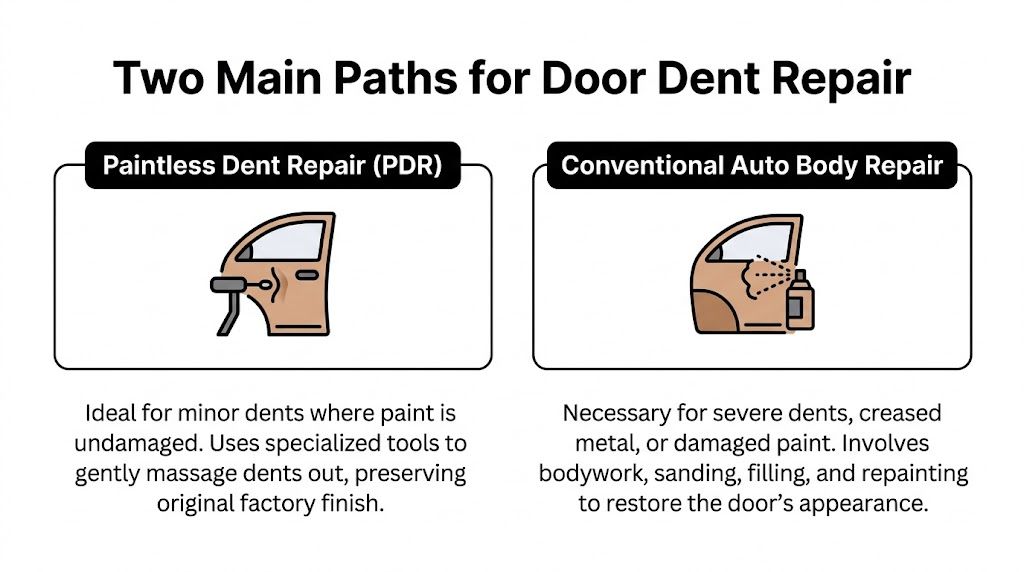
Paintless dent repair
Paintless dent repair, usually called PDR, works by carefully moving the metal back into shape with specialty rods, picks, and controlled pressure from behind the panel. On some jobs, a technician may also use glue-pull techniques from the outside, then refine the surface by tapping down high spots until the reflection reads flat again.
For everyday door dings, PDR is often the cleanest option because it keeps the original finish in place. According to industry data, 80% to 90% of minor dents and dings, including those on doors, can be effectively repaired using PDR, avoiding the need for new paint or filler and preserving the vehicle's original factory finish (Marketintelo, 2024).
That doesn’t mean every small dent qualifies. PDR depends on three things:
- Paint condition matters. If the paint is cracked, chipped, or already weakened, pushing or pulling the metal may leave a visible defect that still needs refinishing.
- Metal stretch matters. A shallow ding in a broad section of the door behaves differently than a sharp crease that has stretched the steel or aluminum.
- Access matters. Doors are usually good PDR candidates because technicians can often reach behind the skin, but internal braces can change the job completely.
If the dent can be repaired without disturbing the finish, PDR saves the original coating and avoids the longer refinish process. That’s one reason a lot of drivers ask about it first.
Conventional body repair
Conventional repair is the right path when the dent has gone past what the metal can cleanly return from, or when the finish is already compromised. This is the method people usually picture when they think of body shop work: metal correction, filler where needed, primer, color, and clear coat.
A conventional repair is not a failure of PDR. It’s the correct repair when the damage calls for it. Deep dents, torn paint, damage on a sharp edge, and impacts that affect adjacent panel fit often need this route.
Here’s the simplest way to think about the difference:
| Repair path | Usually best for | Main advantage | Main limitation |
|---|---|---|---|
| PDR | Minor dents with intact paint | Preserves factory finish | Limited by paint damage, metal stretch, and access |
| Conventional repair | Creases, broken paint, edge damage, more severe distortion | Can fully restore heavier damage | Requires refinishing time and color-matching work |
If a door needs sanding, filling, and refinishing, the paint work becomes just as important as the dent work. That’s why it helps to understand how auto paint refinishing in Salinas fits into a complete repair, especially on metallic and pearl colors where blend quality matters.
A good estimate shouldn’t push one method on every dent. It should explain why that specific panel can be massaged back, conventionally repaired, or handled with a combination of both.
What works and what doesn’t
PDR works best on dents that are shallow, open, and located where a technician can apply pressure behind the damage. Conventional repair works better when the impact has distorted the panel shape beyond a clean paintless correction.
What doesn’t work is treating every door ding like it’s the same job. Two dents can look nearly identical in a parking lot and need completely different repairs once a technician checks the brace position, crown tension, and paint break.
When a Door Dent Is More Than Just a Dent
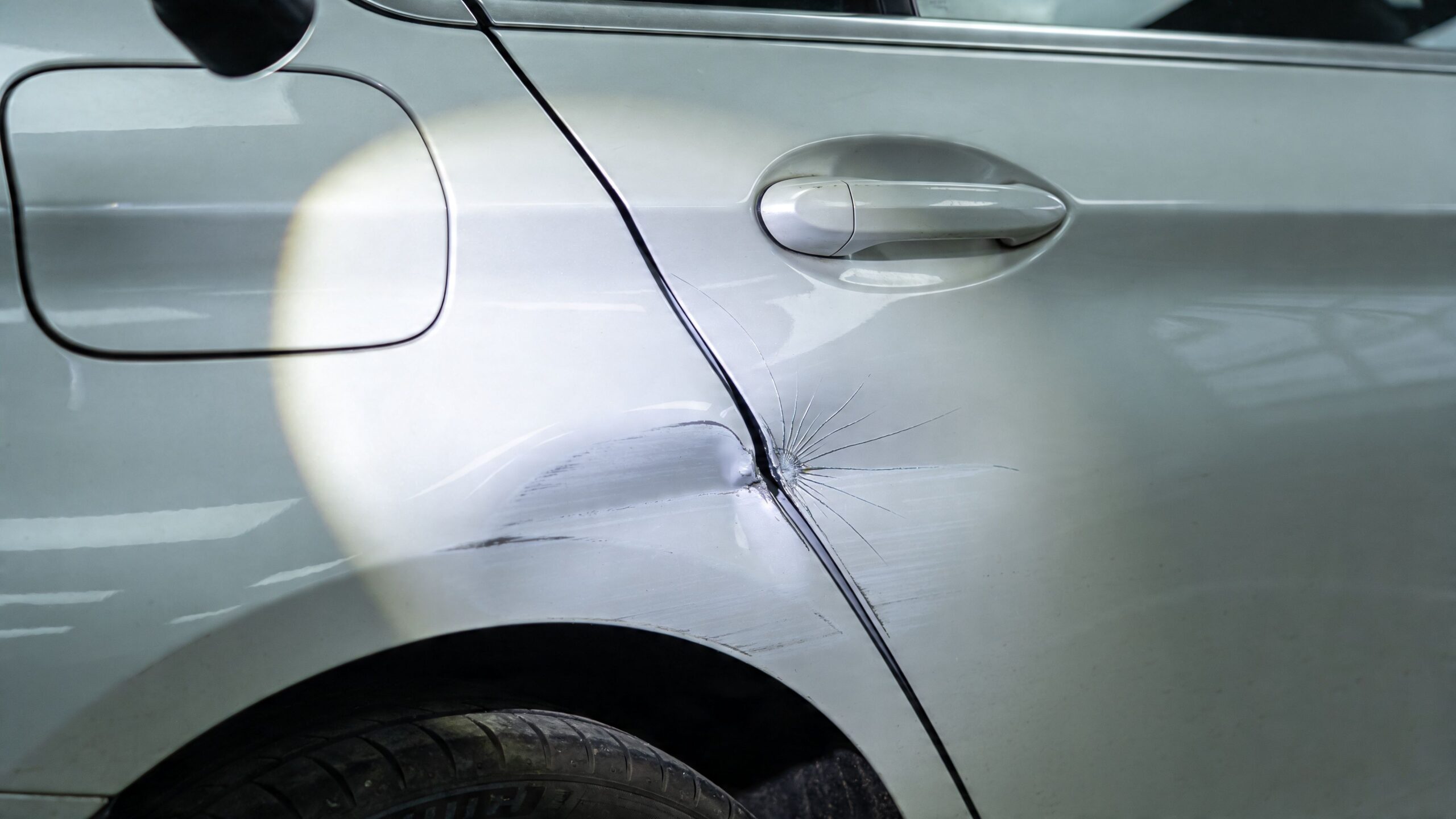
A lot of door dents are cosmetic. Some aren’t. The hard part is that the outside of the panel doesn’t always tell the whole story.
Recent data shows that 28% of door dent claims involve hidden frame stress that is not detectable by a simple visual inspection (I-CAR, 2025). That matters because a repair should restore more than appearance. The door still has to fit, latch, seal, and operate properly.
Signs the dent needs a closer structural look
These are the situations where a professional assessment matters more than a quick opinion in a parking lot:
- Damage near the door edge. The outer edge can transfer force differently than the center of the skin. If that edge is folded, sharp, or pushed inward, the repair may involve more than surface metal movement.
- A crease on a body line. Body lines add stiffness to the panel. A dent across one of those lines often takes more correction and may not be a clean PDR candidate.
- Cracked or chipped paint. Broken paint usually means a sharper impact. It also means corrosion protection and refinishing become part of the repair plan.
- Door fit changed after the hit. If the gap looks uneven, the latch feels different, or the door needs extra force to close, the issue may go beyond the skin.
- Window or trim operation changed. Slow glass movement, wind noise, or a trim piece that no longer sits right can point to internal movement.
What technicians look for behind the panel
Door repair is heavily affected by what sits inside the door shell. A technician checks the brace layout, intrusion beam area, glass path, and access points before deciding whether a dent can be safely corrected paintlessly.
Metal also “flows” when it’s hit. It doesn’t just cave in like clay. The panel stretches, crowns rise around the impact, and some of that tension may wrap around a brace. That’s why a dent near a brace can behave very differently from one in an open section of the same door.
If the dent wraps into a brace area or the panel has secondary distortion, the right answer may be conventional repair even when the visible dent itself doesn’t look severe.
A proper inspection also includes checking for paint damage that could lead to rust later. If you already see exposed metal or a chip at the impact point, it’s smart to address it before moisture has time to work into the panel. That’s the same practical reason drivers ask about how to fix a rust spot on a car before a cosmetic issue turns into a bigger repair.
Why this matters for safety
A door is not just a cosmetic panel. It’s part of the vehicle’s side structure, sealing system, and latch operation. If an impact affected alignment, hinge area, or the way the shell sits in the opening, the job needs to be treated like a structural concern first and a dent second.
That’s where certification matters. A shop trained to evaluate collision damage is looking for proper function and fit, not just whether the reflection looks smooth under the lights.
The Repair Process What to Expect at the Shop
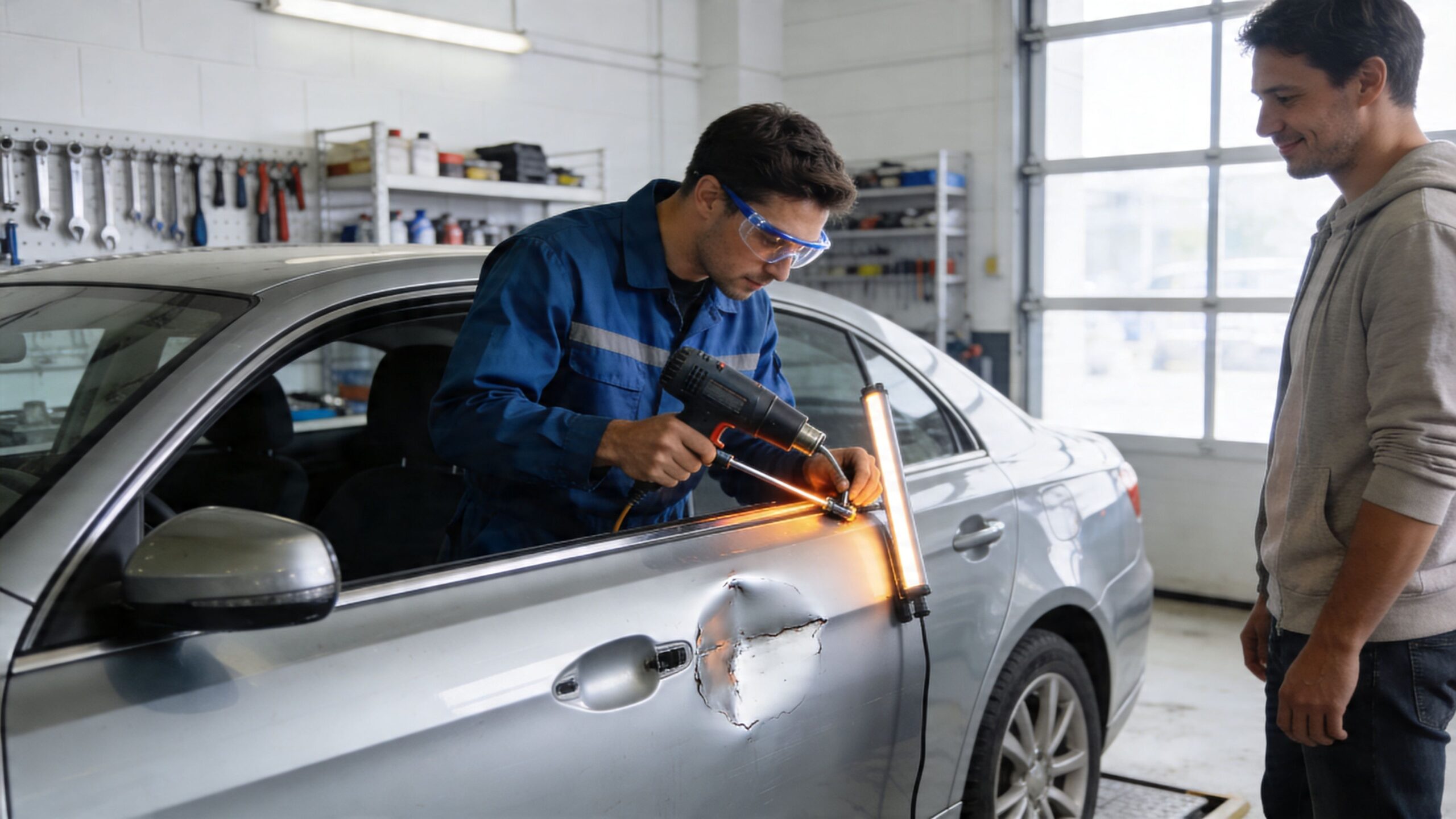
Feeling better about a repair often comes from understanding what happens after keys are handed over. A door dent repair is usually pretty straightforward on the customer side, even when the shop work is technical.
The estimate and inspection
The first step is a close inspection under proper lighting. A technician checks the depth, crown, body line involvement, paint condition, and whether the panel can be accessed from behind.
This is also when the repair path gets discussed. If a shop can explain why the dent is a PDR candidate or why it needs conventional work, that’s a good sign. If the answer is vague, ask more questions.
If insurance is involved
For some door dents, people pay out of pocket and move on. For others, especially if the damage happened in a collision or includes more than one panel, insurance may be part of the process.
A good shop will document damage clearly and communicate with the insurer about the approved repair plan. That’s especially helpful if the initial estimate changes once the panel is disassembled and hidden damage is found.
The work itself
Once the method is confirmed, the shop gets into the repair. A PDR job may involve interior trim access, tool work from behind the panel, and fine surface correction under reflection lighting. A conventional job may involve metal correction, refinishing prep, primer, color, and clear.
Painted repairs also require careful color matching and blend judgment. If you’ve ever wondered why a repaired panel on your car might not match the rest of the paint, that’s part of why refinishing experience matters on a door repair.
Final checks before pickup
Before the car goes home, the door should be checked for more than looks. Fit, latch feel, trim alignment, glass operation, and finish quality all matter.
A practical pickup checklist looks like this:
- Open and close the door. It should latch normally and feel consistent.
- Look down the side of the vehicle. Reflections should read evenly, especially along body lines.
- Check the paint in daylight if refinishing was done. Metallics and pearls can look different indoors and outdoors.
- Ask what was repaired. You should leave knowing whether the job was paintless, conventional, or a combination.
The best repair experience usually feels calm, not confusing. You should know what was found, what was done, and why that method was chosen.
Cost Time and Insurance for Door Dent Repair
Cost is usually the first practical question, and it’s a fair one. The honest answer is that door dent pricing depends on the dent itself, not just on whether the damage looks small from ten feet away.
What changes the price
A door repair estimate is shaped by the things technicians see up close:
- Location of the damage. Center-panel dents are often easier than dents tight to an edge or body line.
- Depth and sharpness. A broad shallow ding and a pointed crease are not the same repair.
- Paint condition. Intact paint opens the door to PDR. Broken paint means refinishing is part of the job.
- Access behind the panel. Braces, glass tracks, and internal components can add labor.
- Whether the door has secondary issues. Fit, trim, latch, and adjacent panel concerns all change the scope.
For a common 1-inch parking lot door ding, a PDR repair might cost around $150, while a traditional repair involving sanding, filling, and painting could cost $500 or more (NDRTN, 2024). That comparison is useful because it shows why people ask for PDR first when the damage qualifies.
Why one repair takes hours and another takes days
PDR can often be completed much faster because it avoids sanding, filler, primer, paint, curing, and reassembly steps tied to refinishing. Conventional body repair takes longer because every stage has to be done in order, and paint work can’t be rushed without affecting the result.
That’s why two estimates can look very different on time. One is mostly skilled metal correction. The other includes bodywork and refinishing procedures that need proper prep and finish control.
Should you go through insurance
If the door dent is light, cosmetic, and isolated, many people choose to handle it without a claim. If the impact involved another vehicle, affected multiple areas, or raised concerns about alignment or structure, it makes more sense to at least talk through the insurance side before deciding.
In California, you generally have the right to choose your own repair shop under California Insurance Code § 758.5. In plain language, that means an insurer can’t require you to use a particular body shop. They can provide options, but the repair choice is yours. For guidance specific to your claim, it’s still smart to speak with your insurer or a licensed professional.
If you’re comparing paperwork and trying to make sense of line items, it also helps to understand what goes into a collision estimate and why a supplement may be necessary after teardown.
When paying out of pocket makes sense
Out-of-pocket repair usually makes the most sense when the damage is minor and you want the issue handled quickly without opening a claim. That’s common with parking lot dings, light creases, and cosmetic damage that hasn’t spread beyond the door skin.
If there’s any sign the damage goes beyond appearance, get the car inspected before deciding based on price alone. Saving money on the wrong repair is expensive if the panel still has fit or safety problems afterward.
Choosing a Repair Shop in the Monterey Bay Area
When you’re choosing a shop for a door dent, the key question is whether that shop can tell the difference between a cosmetic ding and damage that needs a broader repair plan. Price matters, but credentials matter too.
What to look for
An I-CAR Gold Class shop has ongoing training tied to current repair procedures and vehicle technology. That matters because modern doors aren’t just outer skins. They involve reinforcements, electronics, trim systems, glass, and finish considerations that need to be handled correctly.
It also helps to look for a AAA Approved facility and a California Autobody Association member. Those don’t replace your own judgment, but they’re useful signs that the shop has been reviewed for business practices and repair standards. If you want the practical side of that designation, this guide on what it means when a body shop is AAA approved is worth a read.
Questions worth asking before you leave the car
Ask direct questions and listen for direct answers.
- How are you deciding between PDR and conventional repair
A good shop should explain the decision in plain language. - Will you inspect for hidden damage if the dent is near the edge or a brace
That tells you whether they’re thinking past the surface. - If paint is involved, how will you handle color match and blending
This matters on every visible door repair. - Will you work with my insurance if I decide to file
That can save you a lot of back-and-forth.
In Salinas, one practical option is Searson Collision Center, which handles dent and scratch removal, collision repair, paint and refinishing, frame and structural repair, alignment and suspension, and insurance claim assistance. The useful part for a customer isn’t a slogan. It’s having one shop that can inspect a door dent properly if the job turns out to be more than cosmetic.
A shop earns trust by being willing to say, “This can stay paintless,” or “This needs more than a cosmetic fix,” based on what the damage actually shows.
Frequently Asked Questions About Door Dents
Can a dent on a body line still be repaired?
Sometimes, yes. A body line dent is more difficult because that line adds shape and stiffness to the panel. Whether it can be handled paintlessly depends on the sharpness of the impact, paint condition, and how much the metal stretched.
Will fixing a door dent help preserve my car’s appearance?
Yes, especially if the dent catches light badly or has chipped the paint. Even a small dent can make an otherwise clean vehicle look neglected. If the paint is broken, repairing it sooner also helps prevent moisture-related problems.
Should I file an insurance claim for a small door dent?
It depends on how the damage happened and whether it’s limited to cosmetic panel damage. For a simple ding, many people pay out of pocket. If another vehicle was involved or the dent may have affected door fit or structure, talk with your insurer before deciding.
Can my insurance company make me use a certain body shop?
In California, you generally have the right to choose your own repair shop under California Insurance Code § 758.5. An insurer may suggest shops in its network, but the final choice is yours. For claim-specific advice, check directly with your insurer or a licensed professional.
How long does a door dent repair usually take?
Some repairs are relatively quick, especially when the dent qualifies for paintless correction. Repairs that require bodywork and paint take longer because prep, refinishing, and final checks are part of the process. The only reliable timeline comes after the dent is inspected in person.
Is a door dent ever a safety issue?
Yes, it can be. If the damage is near the edge, affects door closure, changes panel gaps, or came from a stronger impact than a typical parking lot ding, it deserves a closer look. The concern is not just appearance. It’s whether the door still fits and functions properly.
Get a Professional Opinion on Your Door Dent Repair
The hardest part for most drivers isn’t the repair itself. It’s knowing which repair is appropriate before work starts. A proper in-person inspection answers that quickly and helps you avoid choosing a cheaper method that won’t fully correct the problem.
If you’ve got a door dent and you’re not sure whether it’s cosmetic or something more, get it looked at. A clear estimate and a plain-language explanation should tell you whether the job is paintless, conventional, or needs a broader repair plan.
Sources
Marketintelo. "Paintless Dent Repair Services Market." 2024. https://marketintelo.com/report/paintless-dent-repair-services-market
I-CAR. "PDR training material referenced for hidden frame stress statistic." 2025. https://pdrsecrets.com/pdr-training/make-door-repairs-look-good-from-a-distance/
NDRTN. "2024 Guide to the Costs of Paintless Dent Repair with Average Prices by Dent Size." 2024. https://ndrtn.com/2024-guide-to-the-costs-of-paintless-dent-repair-with-average-prices-by-dent-size/
If you want an honest opinion on your dent repair door options, contact Searson Collision Center for a free estimate at (831) 422-2460 or stop by 488 Brunken Ave, Salinas, CA 93901. We’re open Monday through Friday, 7:00 AM to 5:00 PM and help drivers throughout Salinas and the Monterey Bay Area understand what the damage really needs.