Quick Answer
A Monterey Bay hailstorm blows through at night, and by morning the roof, hood, and trunk are peppered with dents. The first question is usually simple. Is this fixable?
Yes, in most cases it is.
The right repair depends on two things. Whether the paint is still intact, and how badly the metal was stretched. If the finish is unbroken, hail dents can often be removed without repainting. If the paint is cracked, chipped, or the panel took a harder hit, the repair usually shifts to conventional body work.
For California drivers, the repair itself is only part of the problem. You also need to document the damage, open the claim correctly if you carry coverage for non-collision events, and choose a shop that can explain what should be repaired, what can be saved, and what your insurer is paying for.
Hail damage usually looks worse than it is. A good inspection will tell you whether you are dealing with a straightforward dent repair or a larger body and refinish job.
Assessing the Severity of Your Car's Hail Damage
The first walk-around after a Monterey County hailstorm is usually misleading. A car can look terrible in the driveway and turn out to be a clean repair, or it can look minor until shop lights show dozens of dents across the roof and hood.
Start with what changed besides the shape of the metal. Check the paint, the glass, and the trim before you start counting dents.
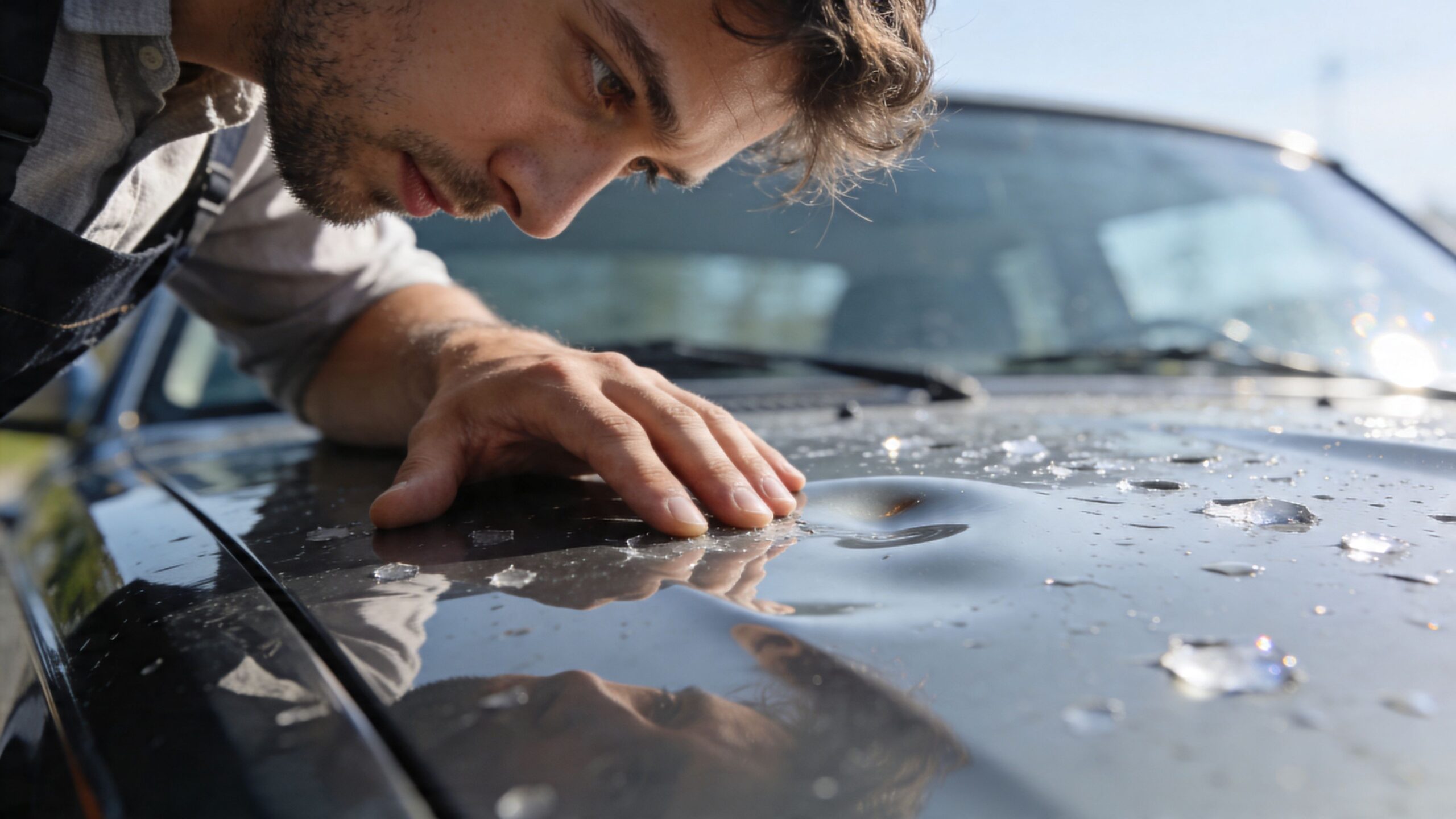
What to look for before you call anyone
Park the vehicle where the light works in your favor. Early sun, late afternoon light, or strong overhead garage lighting will show shallow dents better than flat midday glare.
Check these areas first:
- Roof and hood: These usually take the brunt of the storm.
- Trunk lid and upper door skins: Side-angle hits often show up here.
- Windshield, side glass, and trim: Look for chips, cracks, loosened moldings, and scuffed weatherstrips.
- Paint surface: Lightly run your hand across suspect panels. You are checking for chips, rough spots, and lifted edges in the finish.
Smooth dents with unbroken paint are generally a better sign than chipped paint with fewer dents. Modern hail repair can correct many dents without repainting when the finish is still intact, which helps keep the original factory coating on the car.
Practical rule: Intact paint usually means more repair options. Broken paint usually means more labor, more materials, and a longer repair plan.
Signs the damage may be repairable with PDR
You do not need a full diagnosis at home, but you can tell whether the car looks like a straightforward dent job or something more involved.
A panel often qualifies for paintless dent repair if:
- The paint is still intact
- The dents are shallow, round, or soft-looking
- The hit did not pinch an edge or sharpen a body line
- A technician can reach behind the panel with tools
- The metal has not stretched so far that it stays peaked or distorted
In the shop, this comes down to control. If the metal can be moved back slowly without cracking the finish, PDR stays on the table. If the metal is sharply struck or the coating has already failed, the repair path changes.
Signs conventional repair may be needed
Some hail hits go past dent removal and into body work.
Watch for these red flags:
- Cracked, chipped, or split paint
- Sharp dents on edges, corners, or body lines
- Damage near braces or inner reinforcements
- Peaked metal or obvious stretching
- Scrapes, gouges, or impact marks from branches or debris
- Broken glass or damaged moldings mixed in with the dents
Those repairs often require sanding, filler, primer, paint, and color blending into adjacent panels. For California drivers, that difference affects more than repair time. It can also affect how the insurance estimate is written and whether the carrier approves refinish work on neighboring panels.
If the storm involved falling debris or a harder impact than hail alone, ask for a closer structural check. This guide on how to tell if your car frame is bent gives a useful overview of what more serious damage can look like.
A simple at-home sorting guide
| What you see | What it usually means |
|---|---|
| Small or moderate dents, paint still smooth | Often a good PDR candidate |
| Dents with chipped or cracked paint | Usually conventional body repair |
| Damage limited to one or two panels | Often more straightforward |
| Roof, hood, trunk, trim, and glass all affected | Needs a full shop inspection |
| Dents near edges or strong body lines | More difficult and time-consuming |
Here in Salinas and around the Monterey Bay, I tell drivers not to judge hail damage from one quick glance in the driveway. Reflections hide a lot. Under proper lighting, a hood that looked like it had six dents can turn into thirty, and that changes the estimate.
What not to do during your inspection
A few mistakes make a clean repair harder than it needs to be.
Avoid these:
- Do not press on the dents with your thumb or palm. That can crease the panel.
- Do not try suction gadgets, dry ice, or hot water tricks. They rarely correct hail dents cleanly.
- Do not ignore chipped paint. Once moisture gets into a broken finish, corrosion becomes part of the problem.
- Do not wash away evidence before taking photos. In California claims, clear photos help if your insurer questions the extent or timing of the damage.
If the car is safe to drive, photograph every affected panel, the roof, the glass, and any broken trim before you clean it up. Then have a local shop inspect it while the damage is fresh and easy to document. That gives you a clearer repair plan and a better starting point if you need to open or support a relevant claim.
The Two Main Repair Methods Explained
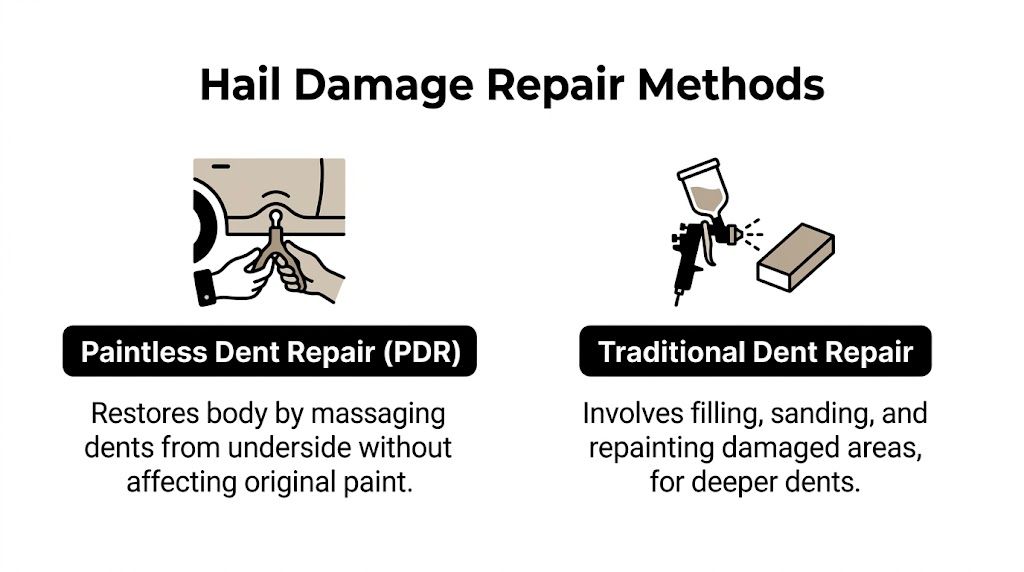
Hail repair usually falls into two paths. We either preserve the factory finish with paintless dent repair, or we repair the metal and refinish the panel with conventional body work. The right choice depends on what the hail did to the metal and the paint, panel by panel.
Paintless dent repair when the finish is still sound
PDR is usually the first method a good shop hopes to use. A technician works from behind the panel with rods, picks, glue-pull tools, and reflection lighting to raise or lower the metal in very small increments. The goal is simple. Put the panel back where it belongs without disturbing the original paint.
That matters because factory paint is still the standard. If the finish is unbroken and the metal has not stretched too far, keeping that original finish usually gives the cleanest result.
PDR is often a strong fit for:
- Round, shallow hail dents
- Panels with intact paint
- Damage away from sharp panel edges
- Cars where preserving factory finish matters to the owner
For drivers comparing minor cosmetic repairs, the general process is similar to the work described in this overview of auto dent and scratch removal in Salinas, although hail claims usually involve many dents across several panels at once.
Why shops prefer PDR when the car qualifies
PDR avoids filler, primer, and repainting. That saves labor and avoids color match issues on panels that do not need refinishing in the first place.
It can also shorten repair time, especially if the damage is spread across aluminum or steel panels with no paint break. In a California coastal area like Salinas, keeping the original finish intact is more than a cosmetic win. It keeps the factory corrosion protection in place.
PDR still has limits.
Sharp dents, stretched metal, impact points on panel edges, and damage under braces or reinforcements can push a panel out of PDR range. Previous body work can also change the answer. If a panel has old filler or has been repainted before, the repair gets less predictable.
Conventional repair when the paint is broken or the metal is too distorted
Conventional repair is the right method when hail has cracked the paint, chipped the finish, or deformed the panel beyond what PDR can safely correct. In those cases, the shop has to restore both the shape of the panel and the protective finish on top of it.
This process usually includes:
- Removing trim and inspecting the full area
- Straightening the metal as far as practical
- Applying filler where needed to restore contour
- Sanding, priming, and sealing the repair
- Refinishing and blending for color match
That takes more time because each step affects the next one. Good refinishing work depends on prep, cure time, and careful color matching under proper light.
On hail jobs, conventional repair is often necessary on the hood, roof, or deck lid if the impact broke the clear coat. Once the finish fails, the dent is no longer only a cosmetic issue. The panel needs its protection restored correctly.
Mixed repair plans are common
Many hail-damaged cars need both methods.
A hood might qualify for PDR in one area, while the roof needs conventional repair where the paint chipped. A good estimate reflects that reality. It does not force one repair method onto every panel for the sake of speed.
Here is the practical comparison:
| Repair method | Best use | Main benefit | Main trade-off |
|---|---|---|---|
| PDR | Dents with intact paint | Keeps the factory finish | Limited by paint damage, sharp impacts, and stretched metal |
| Conventional repair | Dents with broken paint or heavier distortion | Restores panel shape and finish protection | More labor, more materials, longer repair time |
For Monterey Bay drivers, that distinction matters because the estimate you receive should match the actual condition of each panel, not a one-size-fits-all template. If a shop explains why one panel can be saved with PDR and another needs refinishing, that is usually a sign the car is being assessed carefully.
How Insurance Covers Hail Damage Repair
You walk outside after a Monterey Bay storm, see the roof and hood covered in dimples, and your first question is usually simple. Will insurance cover this?
In many cases, yes, if your policy includes coverage for non-collision losses. Hail damage is typically handled under the part of the policy for weather, vandalism, theft, and other non-collision losses. Your deductible still applies, and coverage always comes back to the terms of your own policy.

What to do when you start the claim
Start the claim while the storm date and damage details are still clear.
Have these ready when you call:
- Date of the storm
- Photos of the damage
- Your policy information
- Vehicle location
- Any glass damage or water intrusion concerns
The insurer may ask for photos first, send an adjuster, or direct you to a drive-in inspection. That first estimate is often incomplete on hail claims because small dents, trim damage, and paint failure can be hard to see without proper lighting.
Your right to choose a shop in California
California drivers have more protection here than many people realize.
Under California Insurance Code § 758.5, you have the right to choose the repair shop. Your insurer can suggest a direct repair facility, but it cannot require you to use one specific shop. Around Salinas, that matters. A local shop that sees the car in person may catch damage a photo estimate misses.
California also sets consumer protection rules for auto body claims under 10 CCR § 2695.85, often called the Auto Body Repair Consumer Bill of Rights. Those rules cover written estimates, repair authorization, parts disclosures, and communication during the job.
You are allowed to ask your own shop for an inspection before agreeing with a limited photo estimate. If you want a plain-language overview of how that usually works on the repair side, this page on auto insurance assistance in Salinas is a useful reference.
Why shop estimates and insurer estimates can differ
Hail damage is one of those claim types where the first number is often not the final number.
A shop may identify damage that does not show clearly in driveway light or smartphone photos. Roof rails can hide dent patterns. Hood bracing can change the repair method. Paint chips may only show once the panel is cleaned and inspected closely. I have seen plenty of cars come in with a quick insurer estimate that looked reasonable at first glance, then turn out to need added line items once the vehicle was under shop lights.
That does not mean anyone is doing something improper. It usually means the claim is being updated with better information.
A supplement is the normal way that happens. The shop documents the missed damage, submits it to the insurer, and asks for approval based on the actual condition of the vehicle.
What happens if the vehicle is totaled
Sometimes a hail claim turns into a total loss, especially on older vehicles with widespread damage across the roof, hood, deck lid, and side panels. That decision is usually based on repair cost compared with the vehicle's actual cash value under your policy and California claim handling rules.
If the insurer says the car is a total loss, ask these questions before you make a decision:
- What value did you assign to the vehicle?
- Did the estimate assume paintless dent repair, conventional repair, or a mix of both?
- Can I keep the car under owner retention?
- Will the title be branded, and if so, how?
A total loss decision does not automatically mean the vehicle is unsafe to drive. In many hail cases, it means the cost to restore the panels and finish is too high compared with the car's market value. For a California driver, especially if the car is older and paid off, owner retention can be worth asking about before you sign anything.
Your Next Steps After a Hailstorm
Right after a storm, people either rush into bad DIY fixes or wait too long because they're overwhelmed. Neither one helps.
A better approach is steady and practical. Handle the basics first, then let a shop tell you what kind of repair makes sense.
Start with documentation
Take clear photos before you do anything else. Get wide shots of the whole vehicle, then closer photos of the hood, roof, trunk, glass, and any panel where the light catches dents.
A short walkaround video helps too. It captures reflections better than still images in some cases, and it can be useful if the claim process stretches out.
Protect the car from avoidable follow-up damage
If the glass is cracked or a seal has been damaged, don't leave the car exposed to weather. Water getting inside the vehicle creates a second problem you don't need.
If the paint is chipped or cracked, don't put off the inspection. Once the finish is broken, time matters more.
Small dents can wait a little. Broken paint shouldn't.
Call your insurer, then get a real shop inspection
File the claim with your carrier if you plan to use coverage. Give them the storm date, your photos, and a clear description of what you can see.
After that, get the vehicle inspected by a repair shop that works on body damage every day. Don't rely only on your own guess or a casual glance in a parking lot.
Skip the driveway fixes
The internet is full of dent pullers, glue tabs, hot water tricks, and videos that make hail repair look simple. Most of that advice leaves people with high spots, cracked paint, stretched metal, or dents that look worse in sunlight than they did before.
Avoid:
- Suction cup kits that pull unevenly
- Heat-and-cold tricks that can stress the finish
- Hammering from the inside without proper access and lighting
- Touch-up shortcuts over broken paint without correct prep
DIY attempts can also make the professional repair harder. Once a dent has been pulled badly or the paint has been damaged further, the cleaner repair option may be gone.
Keep your expectations realistic
A proper hail repair is detailed work. Some jobs are straightforward. Others involve mixed methods across several panels and insurance back-and-forth before the full scope is approved.
What you want is not a fast answer. You want an honest one. If the paint is sound and the dents are repairable with PDR, that's excellent. If the panel needs refinishing, it's better to know that up front than to chase a shortcut that won't last.
Choosing a Qualified Hail Repair Shop in Salinas
You walk into a shop the morning after a Monterey County storm, and the car looks different under indoor lights than it did in your driveway. That is the point where the right shop matters. Hail damage can look minor from ten feet away and turn into a long list of dents across the hood, roof, decklid, and pillar edges once it is checked correctly.
A good shop in Salinas should slow the process down enough to inspect the vehicle panel by panel, explain what they see in plain language, and tell you where repair makes sense and where it does not. California drivers also have a practical right that many people do not realize in the moment. You can choose the repair shop. Your insurer may suggest a shop in its network, but that recommendation is not the same as a requirement.
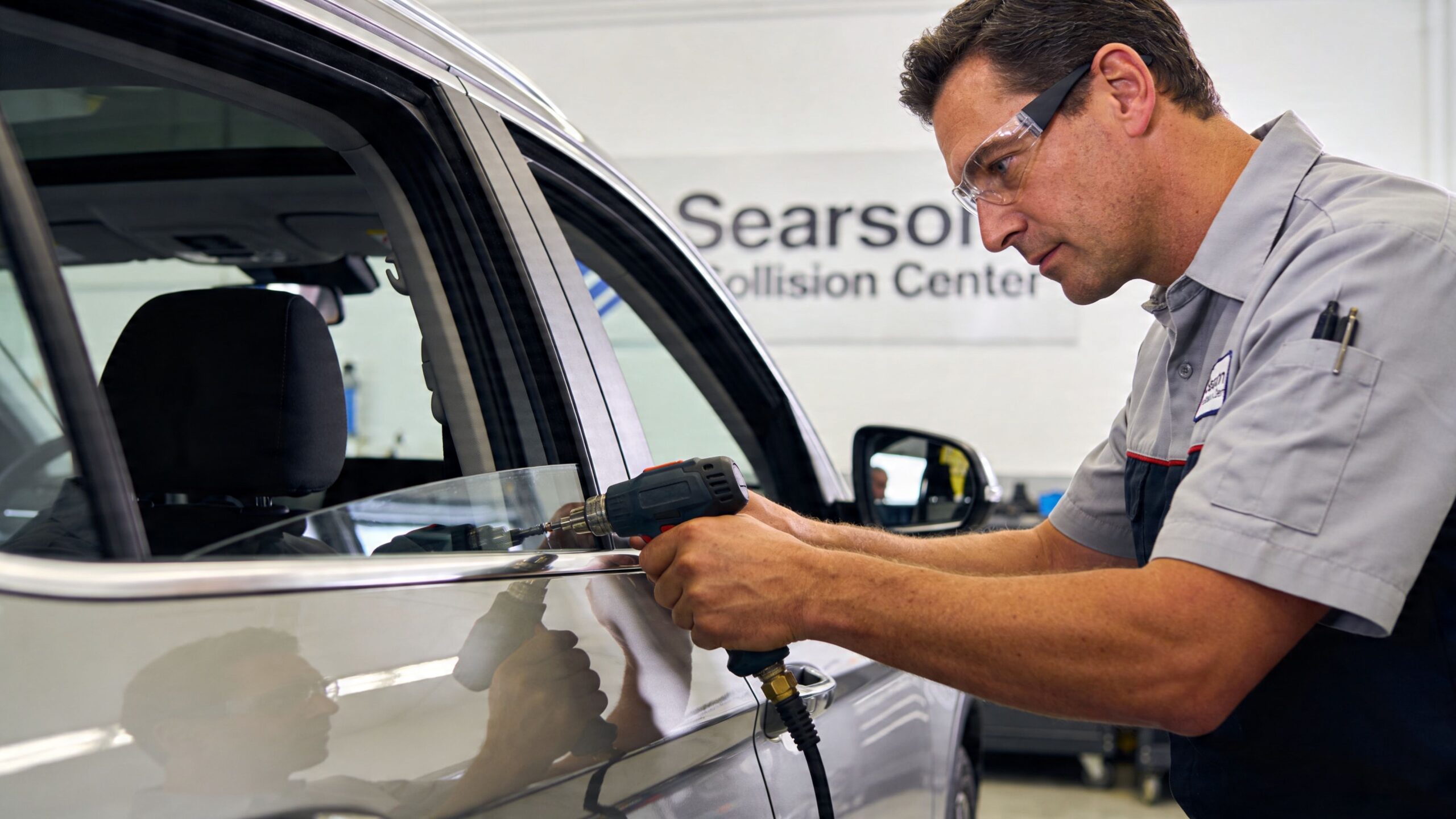
Training and certification matter
Hail repair is not just dent pushing. Late-model vehicles use different metals, tighter panel shapes, and paint systems that punish sloppy work. A technician has to know when paintless dent repair is appropriate, when glue pulling is too risky, and when a panel has taken enough impact that refinishing is the safer repair.
That is why current training matters.
I-CAR Gold Class recognition is one useful sign because it shows the shop keeps up with modern repair procedures. It is not the only thing to look at, and a badge alone does not repair a car. Still, it tells you the shop takes ongoing education seriously instead of relying on methods that worked twenty years ago.
What to ask before you leave the keys
Ask direct questions. A qualified shop should answer them without hiding behind jargon.
Look for clear answers on:
- Whether the paint is still intact on each damaged panel
- Which dents are good candidates for PDR
- Which areas need conventional body and paint repair
- Whether trim, headliner, or lamps need removal for access
- How supplements are handled if added damage is found after teardown
- Who communicates with the insurance adjuster and how often
If the explanation stays vague, keep asking. In a proper estimate, the shop should be able to show you why the repair plan changes from one panel to the next.
Local experience still counts
Salinas and the Monterey Bay do not see hail the way some inland storm regions do. That makes local guidance more important, not less. Drivers here often need help with the process as much as the repair itself, especially if this is their first weather-related claim.
A long-established local shop has usually seen the insurance side, the repair side, and the customer side enough times to keep things calm and honest. Searson Collision Center, for example, has served Salinas and the Monterey Bay Area for decades and handles collision repair, dent and scratch removal, paint and refinishing, frame and structural repair, alignment and suspension, and insurance claim assistance.
That kind of experience helps when a customer wants straight answers about timing, repair limits, and whether a panel can be saved without paint.
If you want added context on outside standards, this article on what it means when a body shop is AAA approved is a useful place to start.
A qualified hail repair shop should be able to tell you what can be repaired well, what will still show, and what should be refinished instead of forced.
Signs you're in the right place
Watch how the shop handles the first conversation. That usually tells you a lot.
Good signs include:
- A full inspection under proper lighting
- A written estimate with line items you can follow
- Photos or marked panels showing where the damage is
- A clear explanation of the repair method for each area
- A direct discussion about supplements, parts, and insurance approval
- No pressure to commit before you understand the plan
The best shops are specific. They do not guess, rush, or promise a perfect result where the metal or paint will not allow one. For California drivers, especially around Salinas, that kind of honesty is what protects both the repair and the claim.
Frequently Asked Questions About Hail Damage
A lot of Salinas and Monterey Bay drivers ask the same questions after a storm. They want to know how long the car will be tied up, what insurance will do, and whether they still control the repair. Here are the answers I give in the shop every week.
How long does hail damage repair usually take?
The timeline depends on how many panels were hit, whether the paint is still intact, and whether the job can be handled with paintless dent repair or needs conventional body and paint work.
A lighter PDR job may be turned around in a couple of days. A car with damage across the roof, hood, deck lid, and upper door frames can take longer, especially if the insurer has to approve added repair steps after a closer inspection. Parts delays are less common with hail than with collision work, but supplements can still slow things down.
Will filing a hail claim make my insurance rates go up?
Hail damage is usually handled under coverage for non-collision events, not a collision claim. That matters because weather damage is treated differently from an at-fault accident.
Still, each policy is its own contract. In California, the cleanest answer comes from your carrier, not a guess from a shop or a friend. Ask how the claim is coded, whether your deductible applies, and whether the claim could affect future premiums on your policy.
Can I keep the insurance money and not fix the car?
If you own the vehicle outright, you may be able to take the payment and decide later. If the car has a loan or lease, the lender may require repairs because they have a financial interest in the vehicle.
There is also the resale and future-claim issue. Once hail damage is documented, it can complicate a later claim on the same panels and lower what the car brings when you sell or trade it.
What's the difference between a shop's estimate and the insurance adjuster's?
An adjuster's first estimate is often written from visible damage only. Under proper shop lighting, and sometimes after trim removal or a closer panel inspection, more dents or cracked paint may show up.
That is why supplements are common. If you want a plain-English explanation, this guide on why a repair estimate can increase after teardown or closer inspection explains it well.
Is it worth fixing hail damage on an older car?
Sometimes it is. Sometimes it is not.
The question is whether the repair cost makes sense for the car you own and how you use it. If the vehicle is mechanically solid, the paint is still in good shape, and the dents can be corrected without repainting every panel, repair can be a reasonable choice. If the hail hit hard enough that multiple panels need conventional work, the numbers can get close to the vehicle's value.
Can sunlight or hot weather pop hail dents back out?
No shop I trust would count on that.
Heat can change how a dent reflects light, so it may look softer on a warm afternoon. The metal has still been displaced. If the panel needs repair, sunlight will not return it to its original shape with the consistency you want on a finished vehicle.
Do I have to use the insurance company's recommended shop?
No. In California, you have the right to choose your repair shop under California Insurance Code § 758.5.
That matters here in Salinas because many drivers assume the insurer's direct repair shop is the only option. It is not. You can choose the shop you trust, ask for a written explanation of any insurer recommendation, and compare how each facility plans to repair the vehicle. If you want help judging credentials, this article on what AAA approval means for a body shop gives you a practical standard to look at.
Get a Clear Answer for Your Vehicle
If you're still asking can you fix hail damage on a car, the most useful next step is a proper inspection. Hail damage can look worse than it is, or simpler than it is, depending on the light and the condition of the paint.
A good estimate should tell you which panels can be repaired cleanly, which ones need refinishing, and how the insurance process is likely to unfold. That's the kind of answer that lets you make a calm decision.
Sources
Dent Advisor. "Hail Damage Assessment." 2026. https://dentadvisor.org/guides/hail-damage-assessment
Carstar. "Can You Repair Hail Damage on a Car?" 2026. https://www.carstar.com/blog/can-you-repair-hail-damage-on-a-car/
Nylund's Collision Center. "Hail Damage." 2026. https://www.nylundscollision.com/hail-damage/
Box-Kat. "2025 Vehicle Damage Report." 2026. https://www.box-kat.com/blogs/box-kat-blog/2025-vehicle-damage-report
If you want a straightforward estimate and a clear explanation of what your car needs, contact Searson Collision Center at (831) 422-2460 or stop by 488 Brunken Ave, Salinas, CA 93901. We're open Monday through Friday, 7:00 AM to 5:00 PM.