Quick Answer
After a car accident, your immediate priorities are to first check for injuries and call 911. If it's safe to do so, move your vehicle out of traffic and turn on your hazard lights. Exchange name, contact, and insurance information with the other driver but do not admit fault. Use your phone to take extensive photos of the damage to all vehicles, the accident scene, and the other driver's documents. Finally, report the accident to your insurance company as soon as possible and remember that in California, you have the right to choose your own repair shop.
Introduction
The sound of crunching metal and the jolt of impact are disorienting and stressful. In the moments after a car accident, it’s hard to think clearly, but what you do next is critical for your safety and your insurance claim. We've helped thousands of drivers in the Salinas area navigate this exact situation, and this guide explains what to do after a car accident, step by step, from the scene to the repair shop.
Your Immediate Priorities at the Accident Scene
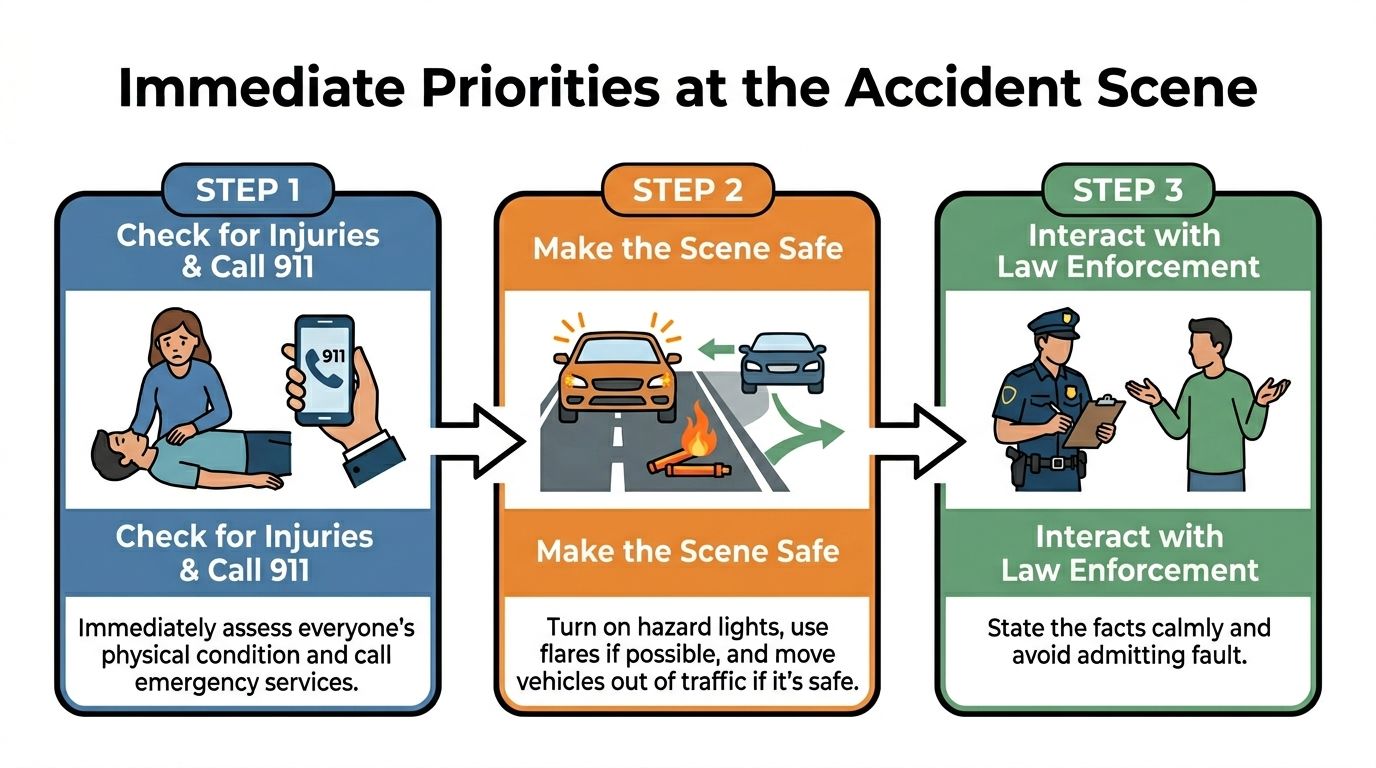
The first few moments after a collision are chaotic. Adrenaline takes over, and it's tough to think straight. But the actions you take right here, right now, can make a huge difference for your health and the eventual insurance claim. Forget the noise and confusion for a moment and focus on this simple, critical sequence.
First Things First: Check on Everyone and Call 911
Before you even look at the damage to your car, your absolute first priority is people. Check yourself and your passengers for injuries. If you're able, check on the people in the other vehicle, too.
No matter how minor the collision seems, call 911. We can't stress this enough. Adrenaline is a powerful painkiller, and serious injuries like concussions or whiplash often don't show symptoms for hours or even days (Mayo Clinic, 2024). Getting paramedics to the scene ensures everyone gets a proper medical assessment. This call also brings police to the scene, which is vital for getting an official report—one of the single most important documents you’ll need for your insurance claim.
Make the Scene Safe to Prevent Another Crash
Once you know help is on the way, your next job is to prevent a bad situation from getting worse. A disabled car in a lane of traffic is a recipe for a secondary—and often more severe—collision.
Immediately flip on your hazard lights. This is the universal sign for distress and tells other drivers to slow down and be careful. If your car is still drivable and you can move it safely, pull it out of the flow of traffic onto the shoulder or a nearby side street. Sitting in a live lane on a busy road like US-101 is incredibly dangerous.
Talking to the Police
When law enforcement arrives, your only job is to be calm, cooperative, and stick to the facts. Don't guess, don't speculate, and don't get emotional.
- Describe what happened from your perspective.
- Tell them your direction of travel and what you saw and felt.
- Have your driver's license, registration, and insurance card ready.
This is crucial: do not admit fault. It’s a natural human instinct to say, "I'm so sorry," even if you did nothing wrong. But those simple words can be legally interpreted as an admission of guilt, which can cause major headaches with your insurance company. Just state the facts as you know them and let the investigators do their job.
Documenting Everything to Protect Your Claim
Once you've made sure everyone is safe and help is on the way, your focus shifts to documentation. What you record in these first few minutes can make all the difference between a frustrating insurance battle and a smooth, fair resolution. Your smartphone is the only tool you need to build a clear, factual record of what happened before memories fade or stories change.
Exchanging Key Information with the Other Driver
California law requires you to exchange information with any other drivers involved. Stay calm, be polite, and stick to the facts. This isn't the time for debates about what happened. The quickest way to capture everything is to take a clear photo of their driver's license and insurance card. If not, write down:
- Their full name, address, and phone number.
- Their insurance company and the full policy number.
- Their driver’s license number.
- The license plate number of their vehicle.
- The make, model, and color of the other car.
The One Thing You Must Never Say at the Scene
Over the years, we've seen one simple mistake cause more headaches than any other. In the shock and confusion after a crash, it's a natural human impulse to try and smooth things over by apologizing.
Never admit fault or say "I'm sorry." Even a simple, well-meaning apology can be used by an insurance company as an admission of guilt, which can seriously jeopardize your claim. You're not an accident investigator; determining fault is not your job.
Using Your Smartphone as an Evidence Tool
Right now, your phone is the most powerful tool you have. When it comes to photos, there's no such thing as too many. The more pictures you take, the better you can illustrate what happened for your insurance provider.
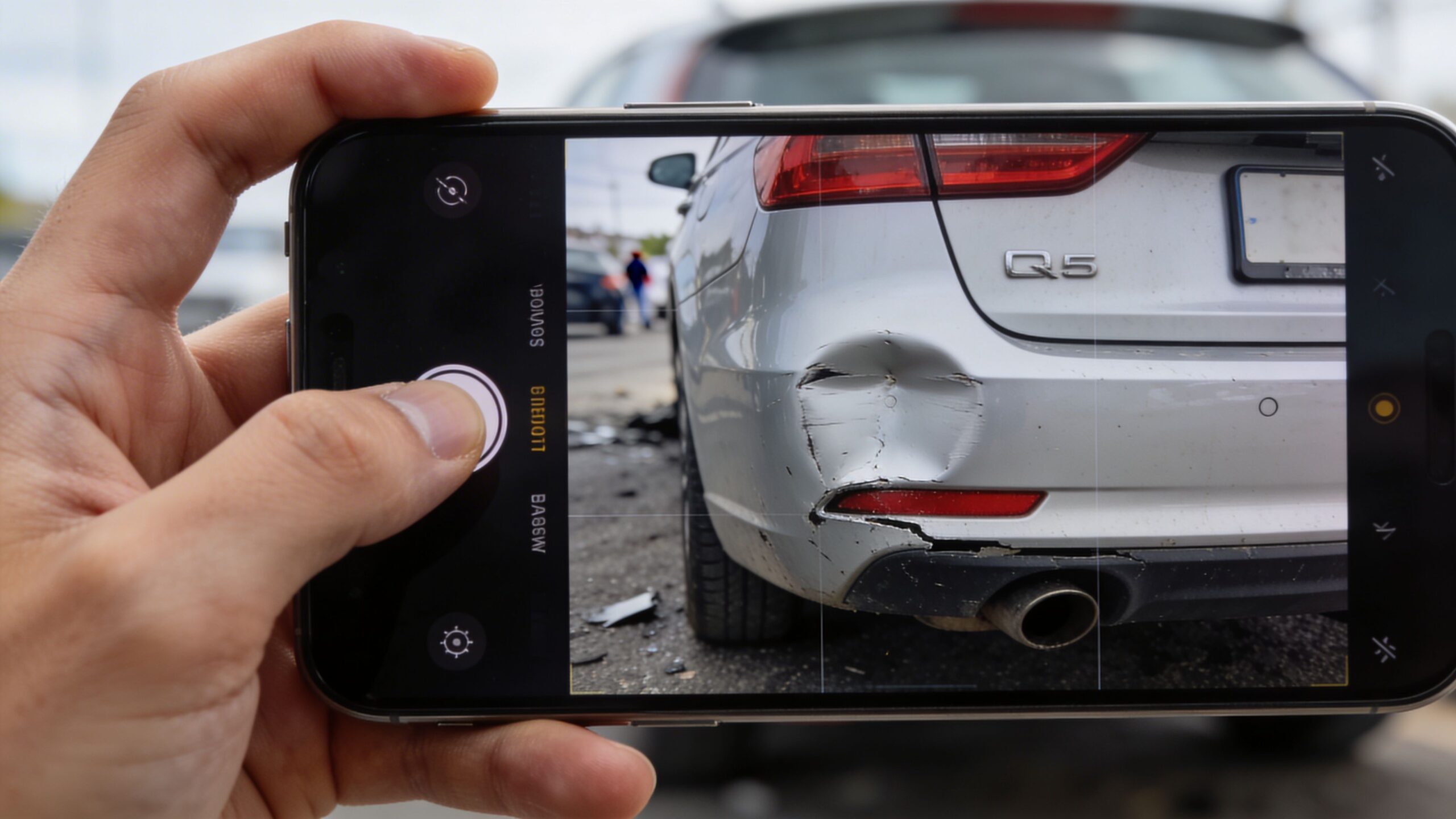
Use this checklist to make sure you capture everything you need. This information is vital for protecting your rights and ensuring a smooth claims process.
Essential Accident Documentation Checklist
| Information to Collect | Why It's Important |
|---|---|
| Wide-Angle Scene Photos | These show the final resting positions of the cars, nearby traffic signs, road conditions, and the overall environment. |
| Damage to All Vehicles | Get close-ups and mid-range shots of the damage on every vehicle involved, taking pictures from multiple angles. |
| License Plates | A clear photo of each vehicle's license plate definitively links the damage to that specific car. |
| Skid Marks and Debris | Photos of skid marks, broken glass, or other debris on the road help reconstruction experts understand the physics of the crash. |
| Witness Information | If anyone saw what happened, politely ask for their name and phone number. An impartial account is incredibly valuable. |
| Officer and Report Number | If police respond, get the officer's name, badge number, and the police report number. You will need this for follow-up. |
Finally, while it’s still fresh, take a moment to write down your own account of what happened. Note the time, location, weather, and what you were doing just before the impact. Combining your notes with an official police report creates a powerful foundation for your claim. If you're unsure about that official document, you can learn more about when a police report is necessary for your insurance claim in our detailed guide.
How to Handle the Car Insurance Claim Process
Once the dust settles at the scene, a different challenge begins: dealing with insurance companies. It can feel overwhelming, but understanding how the claims process works is the single best way to take back control and ensure a fair outcome. It all starts with that first phone call. From there, a claims adjuster gets involved, estimates are written, and repair decisions are made.
Initiating Your Claim and What Happens Next
As soon as you can, you need to let your insurance company know what happened. Most insurers have a 24/7 claims hotline or a mobile app for this. When you make that first call, provide the basics: when and where the accident took place, who was involved, and the police report number, if you have it.
Reporting the crash triggers the next step: your insurance company assigns a claims adjuster to your case. This person is your main point of contact. It’s their job to investigate the accident, determine who was at fault, and evaluate the damage to your vehicle. The adjuster will want to inspect your car, get a copy of the police report, and speak with the other driver and any witnesses.
Your Right to Choose Your Own Repair Shop
This is one of the most critical pieces of information for any driver in California. Your insurance company will likely have a list of "preferred" shops they want you to use. They might suggest it's a faster or easier option.
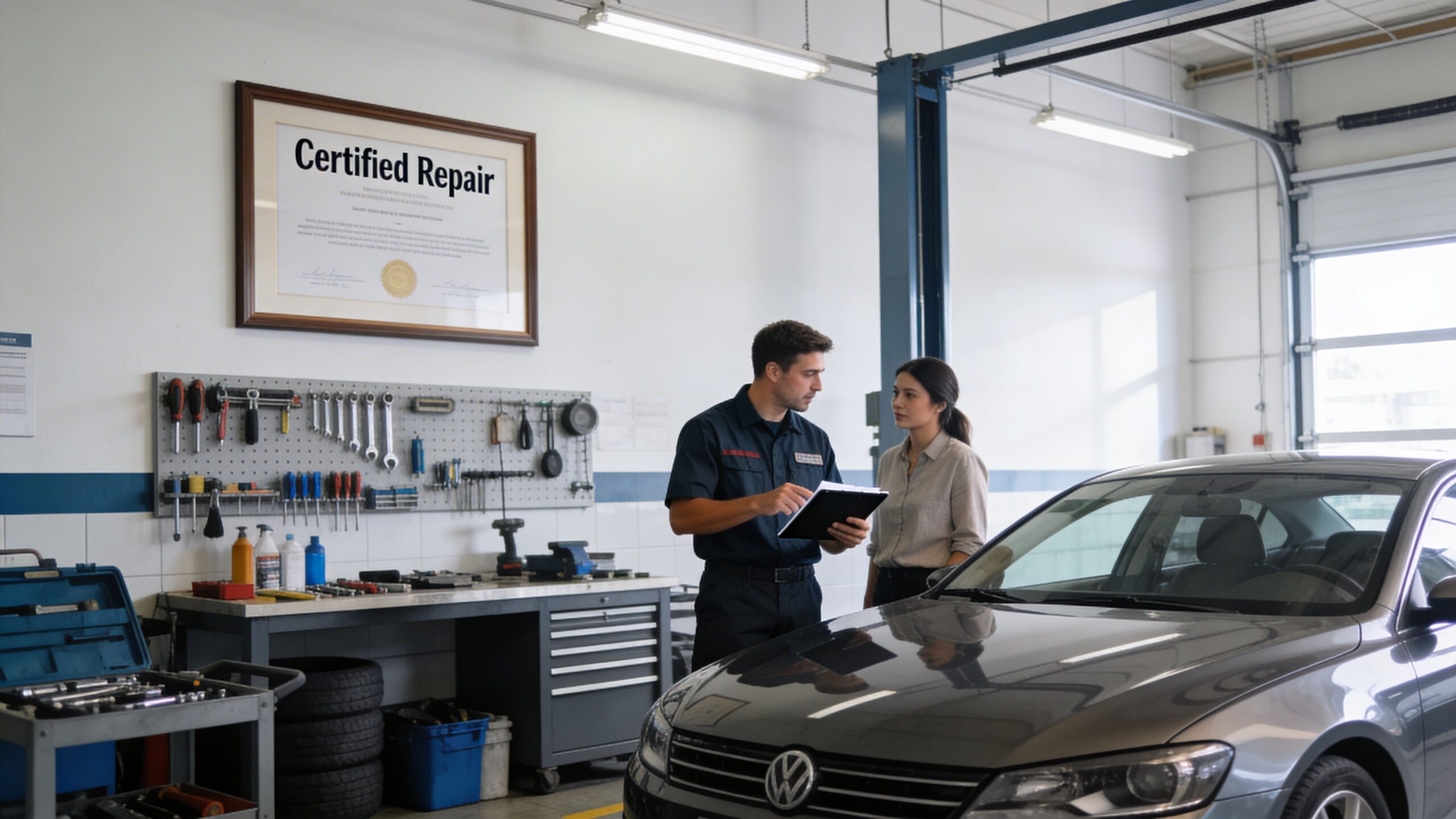
You are under no obligation to use their recommended shop. California Insurance Code § 758.5 gives you the absolute right to have your vehicle repaired at any collision center you choose.
This practice, known as "steering," is about the insurer controlling costs. They have agreements with those shops to do the work cheaply, but cheaper for them doesn't mean better—or safer—for you. Choosing an independent, certified shop like Searson Collision Center means the focus stays where it should be: on properly and safely restoring your vehicle.
Navigating Conversations with Insurance Adjusters
When you're on the phone with an adjuster—especially one from the other driver's insurance company—remember their primary goal is to protect their company's bottom line by minimizing claim payouts.
- Stick to the Facts: Just like at the scene, state what happened clearly and without emotion. Never guess, apologize, or admit any fault.
- Don’t Rush a Settlement: If an adjuster makes a quick offer to settle, it's a red flag. Never accept an offer on the spot, particularly if you’re still dealing with injuries.
- Politely Decline a Recorded Statement: You are not required to give a recorded statement to the other party's insurer. It's often best to let your own adjuster or your chosen repair shop handle communications.
- Understand the Initial Estimate: The first estimate from an adjuster is just a starting point. It's almost always written before the car has been taken apart, so it can't account for hidden damage. For a deeper dive, check our guide on why repair estimates often change after work begins.
A quality repair shop becomes your best advocate here. We speak their language and deal with adjusters every day, providing them with detailed documentation to justify the necessary repairs and taking that burden off your shoulders.
FAQs: Common Questions After a Car Accident
Q: Do I really need a police report for a minor accident?
A: California law only requires a report for accidents with injury or over $1,000 in damage. However, we always recommend getting one. A police report is an official, third-party account of the incident that provides crucial evidence for your insurance claim and protects you if the other driver changes their story later.
Q: Will my insurance rates go up after an accident?
A: This is a common worry, but it depends on who was at fault and your policy details. If you were not at fault, your rates should not increase. If you were at fault, a rate increase is possible, but many insurers offer accident forgiveness. Never let fear of a rate hike stop you from reporting an accident and getting your car repaired safely.
Q: What if the other driver doesn't have insurance?
A: If the at-fault driver is uninsured, your own policy may cover the damages through Uninsured/Underinsured Motorist (UM/UIM) coverage. This is a vital part of your policy that steps in when the other driver can't pay. Check your policy documents to see what your UM/UIM limits are.
Q: How long will my car repairs take?
A: Repair time depends on the extent of the damage, parts availability for your specific vehicle, and insurance approval speed. A simple bumper fix might take a few days, while major structural work could take several weeks. A good shop will give you a clear preliminary timeline and provide regular updates.
Q: What does it mean if my car is declared a "total loss"?
A: A vehicle is a "total loss" when the cost to repair it exceeds its Actual Cash Value (ACV) before the crash. If this happens, the insurance company will pay you the car's ACV, minus your deductible. A trustworthy shop can help you review the insurer's valuation to ensure it is fair.
After an accident, the last thing you should have to question is the integrity of your repair shop. It's not just about getting the dents out; it's about knowing the job was done right, restoring your vehicle's safety and your own confidence behind the wheel. Choosing a local, trusted expert is a key step in what to do after a car accident.
For over 60 years, our family has served as that trusted resource for the Salinas community. As a local, independent shop—not a national chain—we've built our reputation one car and one family at a time, right here in the Monterey Bay Area. That history isn't just a number; it's decades of hands-on experience we put into every single repair.
We know that promises don't mean much without proof. That’s why we’ve earned the highest credentials in the business: I-CAR Gold Class and AAA-Approved status. For you, this means our technicians are continuously trained on the complex systems in today's cars, from advanced driver-assistance systems to modern lightweight alloys. It’s our guarantee of a safe repair that meets factory specifications.
When you’re ready, the team at Searson Collision Center is here to make the process simple and clear. Give us a call at (831) 422-2460 for a free, no-pressure estimate, or just stop by the shop.
Location: 488 Brunken Ave, Salinas, CA 93901
Hours: Monday – Friday, 7:00 AM to 5:00 PM
Sources
Mayo Clinic. "Whiplash." 2024. https://www.mayoclinic.org/diseases-conditions/whiplash/symptoms-causes/syc-20353226.
California State Legislature. "California Insurance Code § 758.5." Accessed 2024. https://leginfo.legislature.ca.gov/faces/codes_displaySection.xhtml?lawCode=INS§ionNum=758.5.