Quick Answer
A car door paint job cost depends on the damage, the paint system, and how much prep and blending the repair needs. A proper estimate has to account for sanding, repair, masking, color matching, and finish work. If you want a factory-looking result, start with a hands-on inspection and a detailed auto paint refinishing estimate.
You walk out to your car, see the scrape or crease in the door, and your first thought is simple. How much is this going to cost me?
That’s a fair question, especially if you’re also trying to figure out whether insurance is worth involving, whether the paint will match, and whether a cheap quote will hold up. For drivers in Salinas and the Monterey Bay Area, the answer comes from understanding what the shop is doing, not just what number ends up at the bottom of the estimate.
Dealing With a Damaged Car Door? Here’s What to Expect
Door damage looks simple from ten feet away. Up close, it usually isn’t.
A scratch may only need refinishing. A dented edge may need metal work first. A hard hit near the latch or hinge side can affect fit, alignment, and how the door closes, which changes the repair plan before paint even starts. If you’re weighing whether to fix a scratch yourself or risk making it worse, the deciding factor is usually depth, location, and whether the finish has been broken.
The part that surprises people is how much of the job happens before any color goes on the panel. Paint work is like building on a foundation. If the surface isn’t straight, clean, and properly prepared, the finish won’t look right and it won’t last.
What Really Determines a Car Door Paint Job Cost
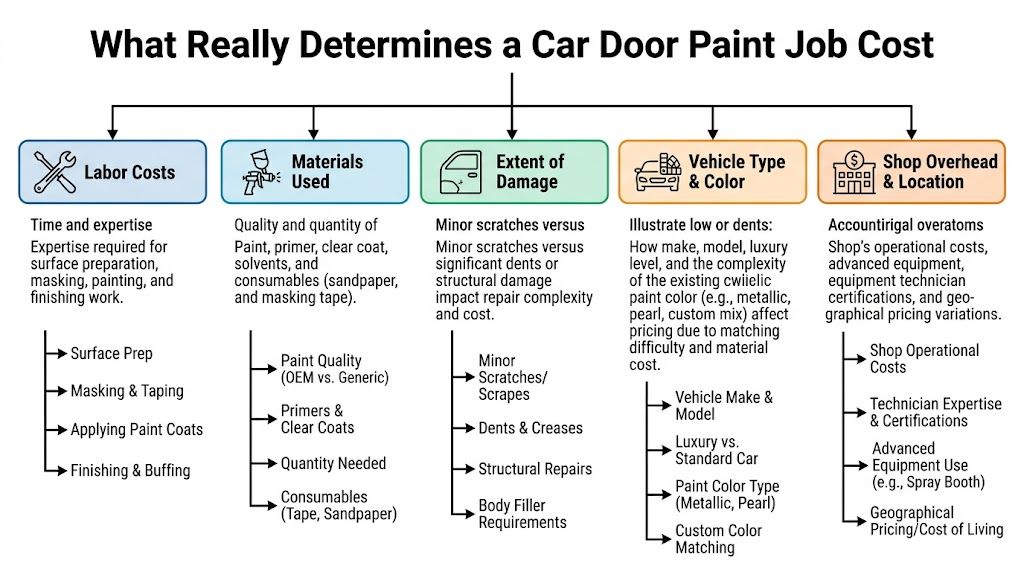
Customers in Salinas often come in asking one simple question: why did one shop quote a few hundred dollars less for what sounds like the same door repair?
The answer is usually in the repair plan, not the color itself. Two estimates can both say "paint door" while one includes proper disassembly, repair, color match, and finish work, and the other leaves out steps that affect how the panel looks six months later.
Labor and prep usually drive the difference
A door repaint is won or lost before the basecoat is sprayed.
On a proper job, the panel is cleaned, sanded, feathered, masked correctly, and inspected under good light before refinishing starts. If the handle, mirror, molding, belt trim, or weatherstrip blocks access, those parts may need to come off so the painter can reach edges cleanly instead of taping around everything.
That takes time, and time is a real part of the price. A lower estimate often means less disassembly, less prep, or less finish correction after paint. Those shortcuts save money on paper. They also raise the odds of tape lines, rough edges, dry spray, or visible flaws around hardware.
Materials matter, but they are only part of the story
Paint cost is more than the color can on the mixing bank. The job also uses primer, sealer when needed, basecoat, clear coat, reducers, hardeners, masking paper, tape, abrasives, and polishing supplies.
Higher-grade materials usually spray more consistently, hold gloss better, and stand up better over time. Cheaper products can lower the estimate, but they can also affect durability, texture, and color accuracy. If you plan to keep the vehicle for a while, that trade-off deserves a straight answer.
Damage under the paint changes the job
Fresh paint does not hide poor body work. It makes it easier to see.
A light scratch on a flat section of the door is one thing. A crease through a body line, edge damage near the latch, or an older repair with filler underneath is a different repair entirely. Those conditions add labor because the panel has to be straight before it can be refinished well.
Sometimes the better answer is not painting at all. If the dent is shallow and the original finish is intact, paintless dent repair may avoid refinishing and keep the cost down. An in-person inspection matters here because photos rarely show subtle distortion, stretched metal, or previous work under the surface.
Color match and blending can change the estimate fast
The paint code gets you into the right formula family. It does not guarantee a perfect match on the car.
Sun exposure, age, oxidation, metallic content, and spray technique all affect how the repaired door will read next to the fender and quarter panel. Blending into the adjacent panel is often the step that keeps the repair from standing out. It adds labor and materials, but it is often the difference between a repair that disappears and one you notice every time you walk up to the car.
This issue is also covered in our guide to why a repaired panel may not match the rest of the paint.
For Salinas drivers using insurance, this part matters more than many people expect. If a carrier estimate is written too tightly and does not allow for needed blend work or trim operations, the first number may look attractive but still be incomplete. A trusted shop should explain what the vehicle needs, document it clearly, and help support supplements when the insurer owes for proper repair steps.
A door is not just a flat panel
Doors look straightforward until you price them correctly.
They have outer edges, jamb transitions, handle pockets, mirror mounting points, body lines, trim breaks, and nearby panels that affect color match. If the damage wraps an edge or reaches an attached part, labor goes up quickly. Rear doors can also bring added complications if the damage runs toward the quarter panel. Front doors can create matching issues near the fender.
That is why a "per panel" number only goes so far. The shape of the damage, the color, the vehicle age, and how far the repair needs to extend all affect the final cost.
What a solid estimate should account for
A professional estimate for a door paint job usually reflects four separate decisions:
- How much repair the panel needs before paint
- How much disassembly is needed for clean access
- Whether adjacent panels need blending for a proper match
- How much finish work is required after curing, including defect removal and polishing
If one estimate is much lower than another, compare those items line by line. In many cases, the cheaper number is not a better value. It is a shorter repair plan.
At Searson, that conversation often includes the insurance side too, because local drivers need more than a paint number. They need to know whether the quote reflects a proper repair, whether a supplement is likely, and whether the shop will document the work well enough to stand behind them during the claim.
Navigating Insurance Claims for Door Damage
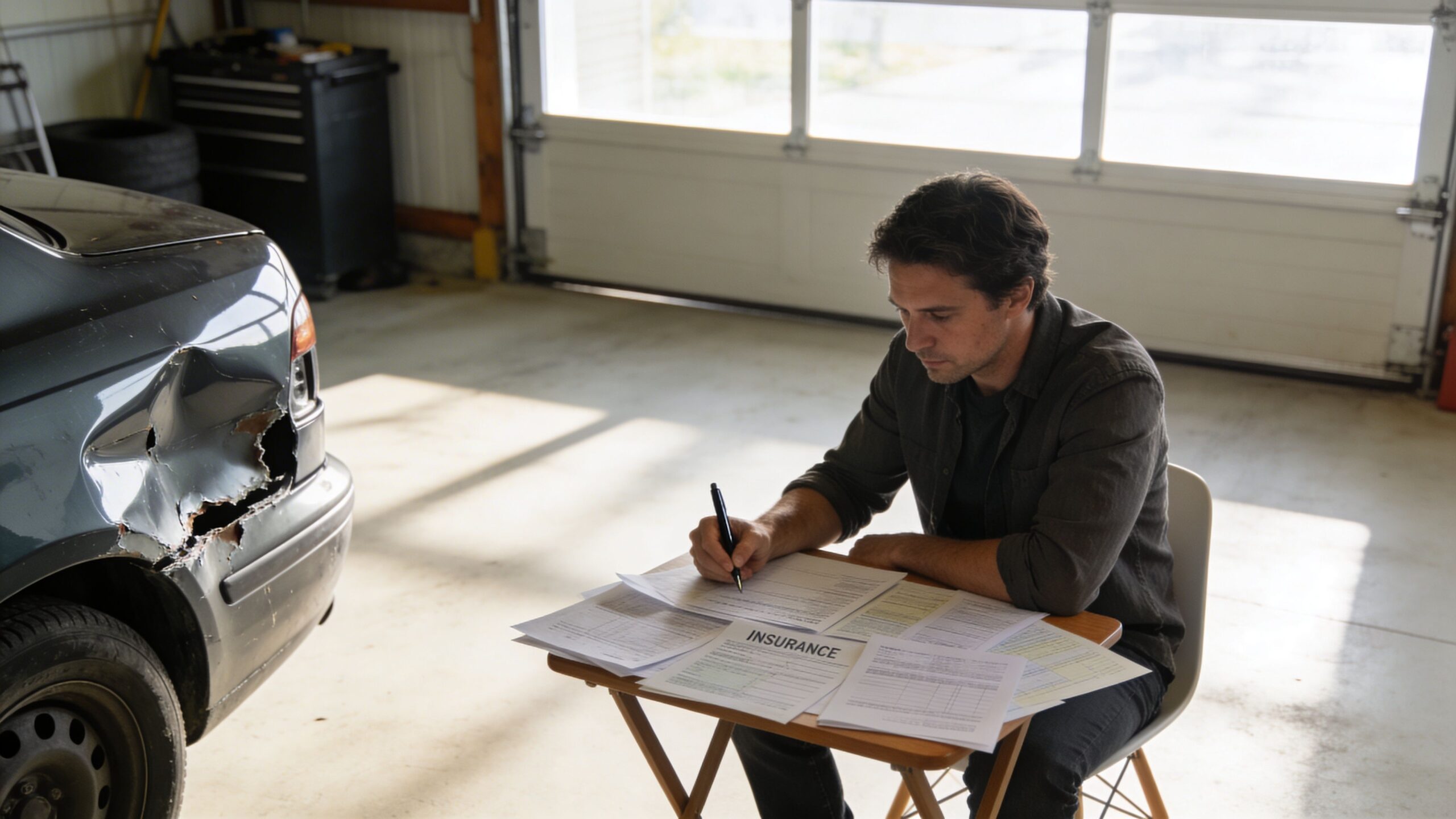
You walk out to your car in Salinas, see a creased door or a long scrape, and the first question usually is not about paint. It is whether you should turn it in to insurance, pay out of pocket, or expect a fight over what the repair really needs.
That confusion is normal. Door damage claims often stall because the visible damage is only part of the story. A door can look like a simple repaint and still need repair time, parts removal, edge work, and a supplement after teardown. The claim decision depends on the deductible, who caused the loss, and whether there may be hidden damage affecting fit or function.
In California, Insurance Code § 758.5 gives you the right to choose your own repair facility. The insurer cannot require you to use a specific shop. California’s Auto Body Repair Consumer Bill of Rights also gives you protections involving estimates, parts disclosures, and repair authorization. For guidance tied to your policy, check with your insurer or a licensed professional.
When a claim is worth filing
Start with the deductible. If the repair is close to that amount, many drivers decide to handle it themselves and avoid opening a claim.
The decision changes fast when the damage reaches more than one panel, the door no longer lines up correctly, or another driver’s carrier is involved. In those cases, the written estimate is only the starting point. Once the shop disassembles the door, it may find damaged moldings, broken clips, intrusion beam issues, or hidden edge damage that was not visible at intake.
That is why local drivers are usually better served by getting a shop estimate before deciding too quickly. A careful estimate gives you something real to compare against your deductible and helps you avoid judging the repair by the scratch alone.
How insurer pressure usually shows up
Most steering is subtle.
An adjuster may recommend a direct repair shop, suggest the process will be faster there, or frame another shop as a complication. You still have the right to choose the shop you trust. That matters in a paint claim, because a shortcut estimate can leave out blending, disassembly, or finish work that affects how the door looks after delivery.
A proper repair plan should match the condition of the vehicle and the refinish requirements. It should not be built around the lowest first number.
What the estimate language actually means
Insurance estimates and body shop estimates often use the same terms, but customers are rarely given a plain explanation. These are the ones that matter most:
- R&I: Remove and install. Parts come off for access and go back on after repair.
- Refinish: The paint process for the repaired or replaced panel.
- Blend: Extending color into the next panel so the repair does not stand out.
- Repair: Restoring the existing panel rather than replacing it.
If those operations are missing, ask why. On a door repair, that question can save a lot of frustration later.
If you are dealing with a recent accident, it also helps to know what paperwork may matter early. Whether you need a police report for an insurance claim depends on the facts of the loss and the carrier handling it.
Why the shop you choose matters during the claim
A good shop does more than send in a number. It documents the damage clearly, explains why certain steps are required, and updates the insurer when additional damage appears during disassembly. That is the part many drivers in Salinas do not see until the claim is already underway.
At Searson Collision Center, that often means helping the customer understand where the insurer’s estimate stops and where the actual repair begins. The shop does not decide coverage and should not promise claim results. It can explain the repair, support needed operations with documentation, and speak with the adjuster when a supplement is justified. For a local driver trying to get a door repaired correctly, that kind of advocacy makes the process clearer and usually prevents surprises at the end.
What to Look for in a Professional Paint Estimate
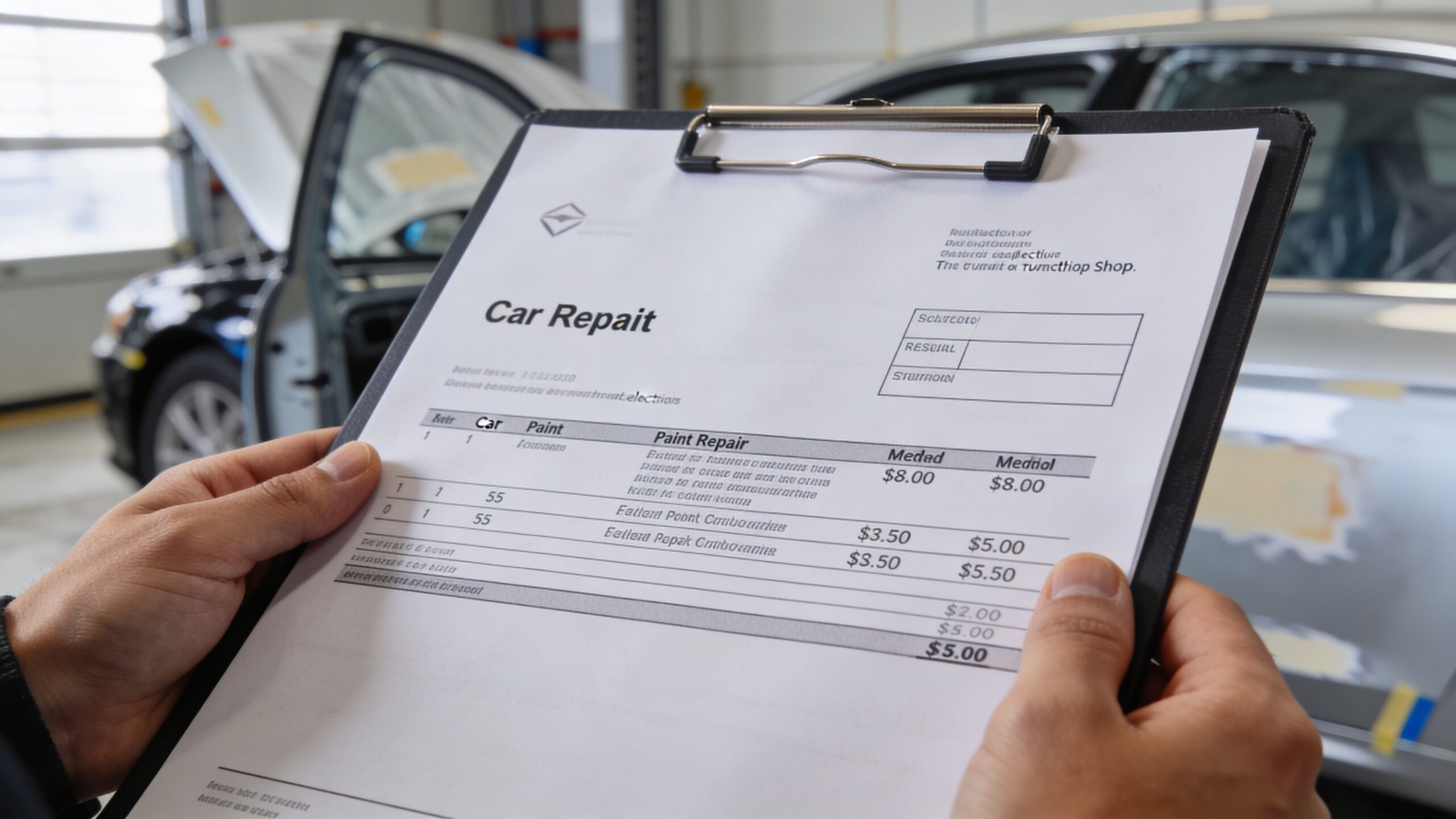
A good paint estimate should let you see how the shop plans to repair your door, not just what they want to charge.
That matters in Salinas because many drivers first see one number from insurance, then a different number from the shop, and assume somebody is playing games. In reality, a proper estimate breaks the work into labor, materials, refinish steps, and any parts or trim that have to come off to paint the door correctly. If those details are missing, you cannot tell whether you are comparing a complete repair to a shortcut.
What separates a real estimate from a quick quote
A professional estimate usually lists the actual operations tied to the job. On a door repair, that often includes trim removal, surface repair, paint materials, and blend work if the color will not die into the adjacent panel cleanly.
A vague quote tends to leave out the steps that affect the final result most.
Look for these items:
- Masking and setup: This affects edge quality, overspray control, and how clean the finished panel looks around moldings and openings.
- R&I operations: Handles, mirrors, belt moldings, lamps, trim, and weatherstrips may need removal and installation.
- Refinish materials: Primer, sealer, basecoat, clear coat, hardeners, reducers, and related supplies should be accounted for.
- Blend procedures: If the color or metallic makes a direct panel paint line obvious, adjacent panel blending may be part of the correct repair.
If a shop hands you a single line that says "paint door," ask for more detail before approving anything.
What a solid estimate usually shows
A clear estimate follows the repair from inspection through final finish.
The estimator should identify what panel is being repaired, what panel is being painted, and what attached parts need to be removed for access. If the damage is near the handle, body line, molding, or door edge, that should affect how the job is written. If color match is a concern, the estimate should reflect that too.
From there, the written plan should support what the technician has to do in the shop. Straighten the damage. Prep the surface. Prime where needed. Sand it properly. Refinish it. Reassemble it. Clean up and polish the finish if the repair plan calls for it.
That level of detail protects the customer as much as the shop.
What I’d want to see on my own estimate: enough information to know what is being repaired, what is being painted, what parts are coming off, and where color matching may require extra work.
Questions worth asking before you approve the job
You do not need body shop experience to spot a weak estimate. Ask a few direct questions and listen for direct answers.
| Question | Why it matters |
|---|---|
| Will you remove the trim or tape around it? | It affects paint edges, overspray risk, and how clean the repair looks up close. |
| Will this door need blend work on the next panel? | It affects whether the color stands out in sunlight or at an angle. |
| Are you repairing this door or replacing it? | The labor, materials, and final cost can change a lot depending on that choice. |
| What might change once the door is disassembled? | Hidden damage behind trim or inside the shell is common after an impact. |
If the estimate changes after teardown, that does not automatically mean the original write-up was careless. It often means the visible damage was only part of the story. This explains why a repair estimate can go up after the shop starts working on the car.
Why low pricing often shows up later
Cheap door paint work can look acceptable when you pick up the car. Then the sunlight hits it. You see a hard paint edge near the molding, texture around the handle, or a color shift from the next panel.
Those problems usually come from skipped prep, limited disassembly, weak material coverage, or no blend where one was needed. A careful estimate does not guarantee perfect work by itself, but it usually tells you whether the shop has written the repair transparently.
For local drivers dealing with an insurance claim, that clarity has another benefit. It gives the shop something concrete to defend when the carrier's first number is too light. At Searson, that written detail helps the customer understand what the insurer allowed, what the repair requires, and where a supplement may need support.
From Estimate to Delivery What's the Timeline?
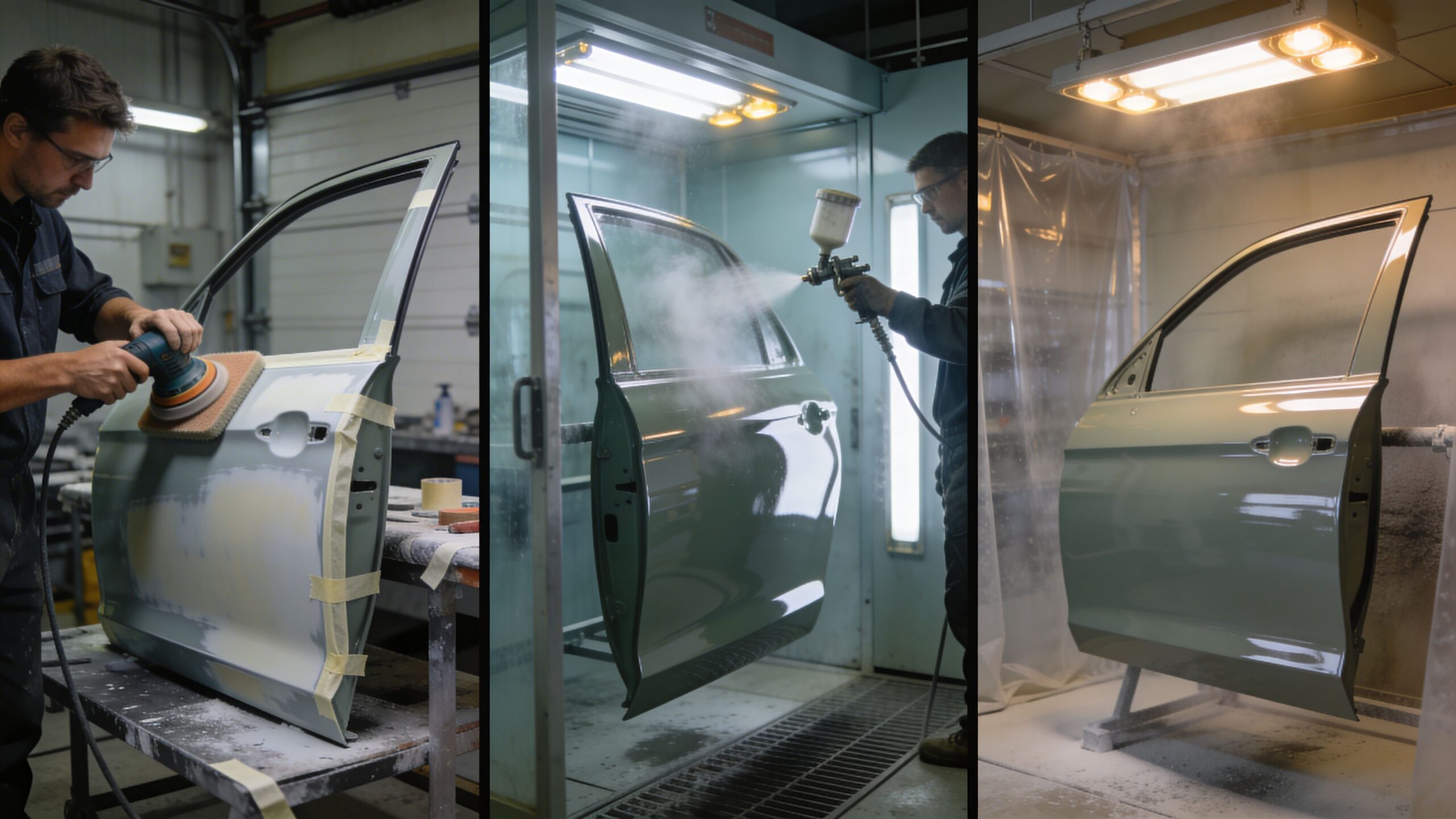
A Salinas driver drops off a car on Monday and asks the question we hear every week. “Is this a one-day job, or am I going to be without my car all week?” The honest answer depends on the damage, the parts situation, and whether insurance approvals slow the file down.
For a straightforward refinish on a repairable door, the work may move quickly once the car is in production. If the hit damaged the shell, bent the edge, affected moldings, or led to a supplement after teardown, the timeline stretches. Paint work is not just spray time. The repair, prep, curing, reassembly, and final checks usually take longer than customers expect.
What happens first
The estimate gets approved, then the shop locks in the repair plan and checks parts availability.
If an insurance claim is involved, the first delay often happens before any sanding starts. The carrier may need photos, a review of the estimate, or approval for additional damage found after disassembly. For local customers, a shop like Searson helps by documenting the repair properly and pushing the claim forward instead of leaving you to argue with the insurer on your own.
What takes time in the middle
Most of the schedule is tied to steps you never see.
The door may need trim, handle components, belt molding, mirror pieces, weatherstrip, or internal hardware removed so the repair can be done cleanly. Then the technician repairs the damaged area, sands it, primes it, and checks the surface before refinish. After that, the panel is cleaned, masked, sealed if needed, painted, and cleared according to the paint system. Then it has to cure before anyone starts reassembly.
A typical sequence looks like this:
- Disassembly: Remove parts that interfere with repair or would leave paint edges.
- Body repair and prep: Straighten, fill if needed, sand, prime, and block the surface.
- Refinish: Apply sealer, basecoat, and clearcoat in the booth.
- Cure time: Let the finish harden enough for handling and polishing.
- Reassembly and quality control: Reinstall hardware, check fit, inspect color and texture, then clean the vehicle.
If blending into the next panel is part of the job, add time. If the color is a difficult silver, pearl, or tri-coat, add care.
What happens before pickup
The last stage should be quiet and methodical. That is a good sign.
Before delivery, the shop should check the color match in different light, confirm the texture is consistent, make sure moldings and handles sit right, and verify the door opens, closes, and latches correctly. If the damage came from an impact, alignment matters just as much as gloss.
I would rather hold a car an extra few hours than send it out with a dust nib, a loose trim piece, or a door that needs to be adjusted again. Good shops work that way because comebacks waste your time and ours.
If you have a deadline, say it at drop-off. A responsible shop can give you a realistic window, explain what could change it, and keep you updated if insurance, hidden damage, or parts availability affects delivery.
Frequently Asked Questions About Car Door Painting
Can you just paint over a deep scratch?
Not if you want it to look right. A deep scratch usually needs sanding, repair, and primer before color goes on. If metal or primer is exposed, spraying over it leaves the defect visible and can create adhesion problems later.
Will the new paint match my older car?
It can match very well, but older paint often needs blending to get there. Sun exposure, age, and finish wear change how the original color reads, especially on metallic and pearl colors. That’s why a shop may recommend painting beyond only the damaged spot.
Do I have to paint the inside door jamb?
Not always. It depends on where the damage is and whether the repair reaches into the jamb area. If the outside skin is damaged but the jamb is untouched, the shop may not need to refinish inside. If damage wraps around the edge, leaving the jamb out can create a visible mismatch.
Does paint fix rust?
No. Paint covers a repaired surface. It does not stop active corrosion by itself.
If rust is present, the rusted area has to be addressed first. Otherwise, the problem can return under the new finish.
Is a cheap touch-up good enough for a door scrape?
Sometimes for a very small, minor blemish. Not for larger damage, obvious scratches, or anything on a highly visible section of the door.
Cheap touch-up work usually doesn’t level the surface, match texture, or restore the panel’s appearance from normal viewing distance. If appearance matters, get a proper estimate.
Should I go through insurance for door damage?
It depends on the size of the repair, your deductible, and whether there may be hidden damage. If the door was hit hard enough to affect alignment, attached parts, or neighboring panels, it’s worth asking the shop and your insurer how the claim would be handled. You should also remember that in California, you can choose your repair shop.
How long will the paint last?
That depends on the materials used and whether the surface was prepared correctly. Better paint systems and proper prep hold up longer than quick, low-cost resprays. The finish also needs normal care after delivery while it fully settles.
Why are two estimates for the same door so different?
Because they may not include the same work. One estimate may include trim removal, repair time, blending, and final polish. Another may only price a fast refinish on the visible face of the panel.
That’s why the estimate itself matters as much as the number.
Can you paint just the damaged spot instead of the whole door?
Sometimes on very small damage, but spot repairs have limits. On many door repairs, refinishing the full panel gives a cleaner appearance and better consistency in gloss and color. The right method depends on the damage and the paint color.
What should I bring in for an estimate?
Bring the vehicle, your insurance information if a claim is open, and any photos or claim details you already have. If another driver was involved, bring that claim number too. The more complete the information, the easier it is to compare the visible damage with what the insurer has documented.
Get a Clear and Honest Car Door Paint Job Cost Estimate in Salinas
The only reliable way to know your car door paint job cost is to have the damage inspected in person. The difference between a simple refinish and a more involved repair often comes down to details you can’t see in a parking lot.
If you’re in Salinas or anywhere in the Monterey Bay Area, you can get a free estimate and talk through the repair, the paint match, and whether insurance should be part of the process. Searson Collision Center is at 488 Brunken Ave, Salinas, CA 93901. You can call (831) 422-2460. Hours are Monday through Friday, 7:00 AM to 5:00 PM.
Sources
ClearPro. "How Much Is a Paint Job on a Car?" 2025. https://www.clearpro.com/how-much-is-a-paint-job-on-a-car/
Texas Collision Centers. "Auto Paint Repair Cost Factors That Influence the Price." 2025. https://www.texascollisioncenters.com/post/auto-paint-repair-cost-factors-that-influence-the-price
CarFax. "Car Paint Job Cost." 2025. https://www.carfax.com/maintenance/car-paint-job-cost
Automotive Globe Specialist. "How Much Does It Cost to Paint a Car." 2025. https://www.automotiveglobespecialist.com/post/how-much-does-it-cost-to-paint-a-car
If you want a straightforward estimate without guesswork, contact Searson Collision Center. We’re at 488 Brunken Ave, Salinas, CA 93901, open Monday through Friday from 7:00 AM to 5:00 PM, and you can reach us at (831) 422-2460.