Quick Answer
Repair bills are up sharply, and drivers feel it the first time an estimate lands in their hands. The reason is not just inflation. Repairs now involve more expensive parts, more labor hours, more insurer review, and harder choices about whether a repair still makes financial sense.
For drivers in Salinas, that shows up in three places fast. The estimate is higher than expected, the repair can take longer than it used to, and the final plan may change once the vehicle is disassembled. If you have ever wondered why a repair estimate can go up after the shop starts working on your car, that is part of the same cost pressure.
What matters on the ground is how the shop handles those pressures. A good local shop explains where the money is going, what steps are required for a safe repair, which parts options are realistic, and where the trade-offs are. That gives you a clear picture of the repair, instead of a number with no context.
These are the six cost drivers behind rising repair bills, and what they mean for your vehicle, your timeline, and your decisions once the repair process starts.
Advanced vehicle technology and diagnostic complexity
A bumper used to be mostly a bumper. On a lot of newer vehicles, it also sits in front of sensors, cameras, wiring, brackets, and safety systems that all have to be checked after an impact.
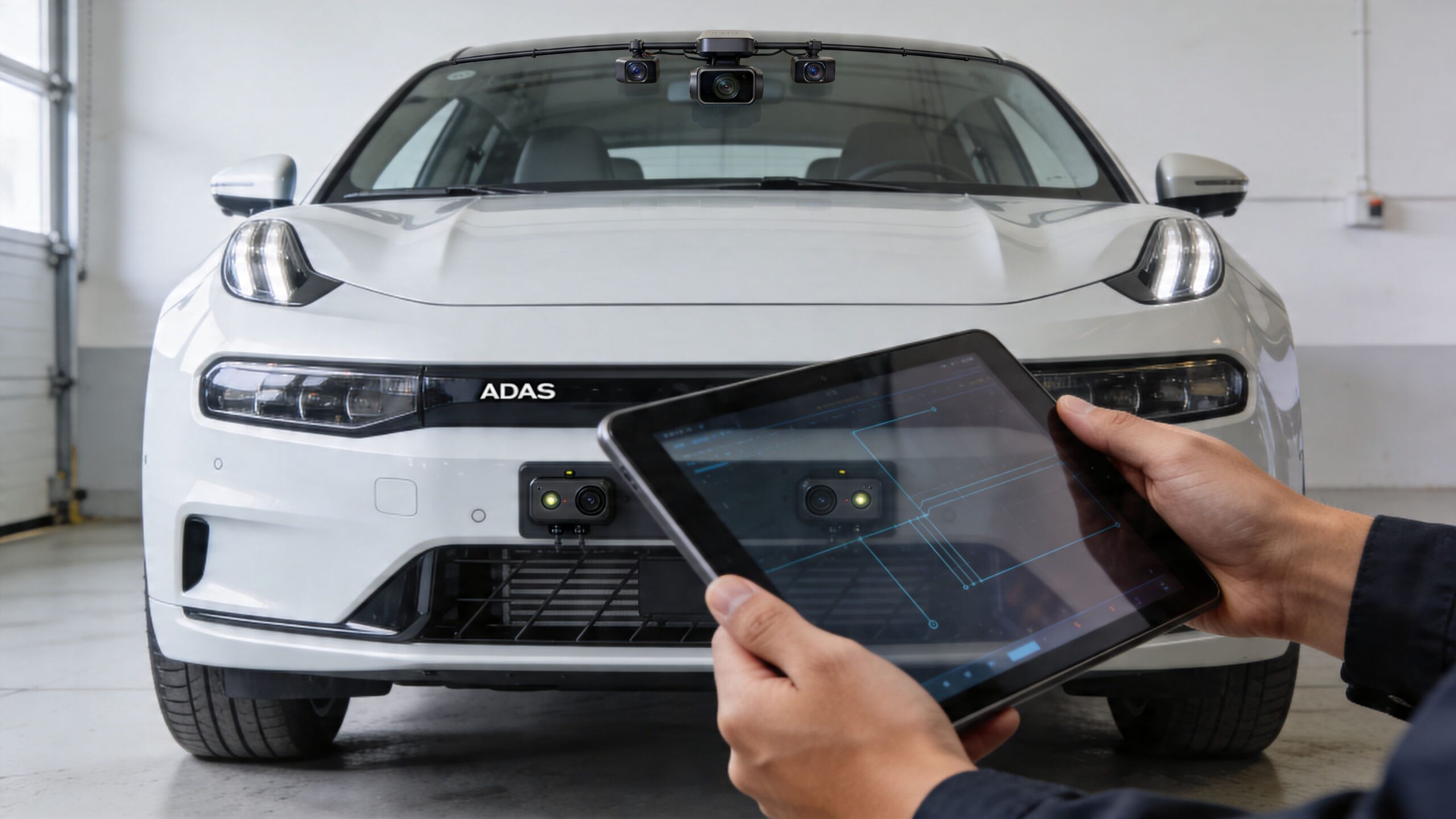
Modern vehicles carry more electronics than most drivers realize. Blind-spot monitoring, parking sensors, lane-departure warning, automatic emergency braking, and backup camera systems all add steps to a proper repair. Even a hit that looks minor on the outside can mean the vehicle needs scanning and calibration before it should go back on the road.
More safety systems means more post-repair checks
This is one of the biggest reasons the 6 things drivers should know about why repair bills keep going up starts with technology. Replacing or repairing the visible damage is only part of the job now.
The complexity shows up in labor time. Replacing an evaporator core in a 2019 Ford Ranger requires full dashboard disassembly, and battery access on some vehicles can involve seat removal, which pushes labor hours up (Granger Warranty on rising repair bills and modern vehicle complexity).
Practical rule: If your vehicle has driver-assist features, ask whether pre-repair scanning, post-repair scanning, and calibration are included in the estimate.
A few examples we see across the industry:
- Front-end impacts: Sensors behind the grille or bumper may need inspection and recalibration.
- Mirror or door damage: Blind-spot hardware can be affected even when the panel damage looks light.
- Suspension and alignment hits: A vehicle can track differently after impact, which can also affect how safety systems read the road.
If you're comparing estimates, a cheaper one isn't always more complete. A shop that leaves out scan time or calibration steps can make the first number look lower, but that doesn't mean the repair is finished correctly.
Searson Collision Center is an I-CAR Gold Class shop, which matters because training has to keep up with the cars. If you want a plain-language explanation of how vehicle design affects safety, this piece on are bigger cars safer is also worth reading.
Rising cost of OEM parts
Parts prices can change the repair plan fast. On many late-model vehicles, the parts bill is no longer a side detail. It is one of the biggest reasons the final number surprises people.
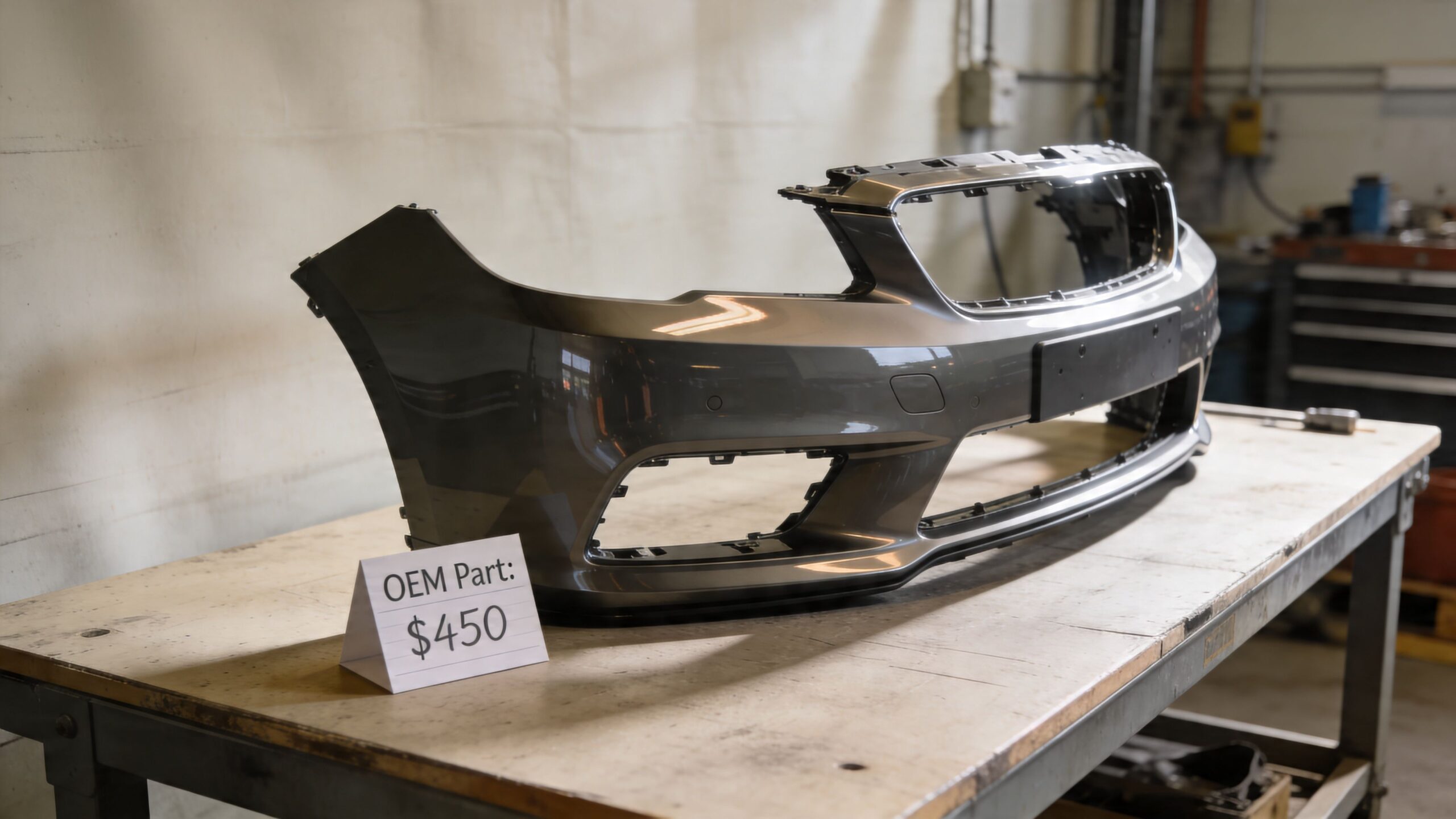
Many repairs call for OEM parts because fit, finish, mounting points, and sensor compatibility all affect the result. That matters most on newer vehicles, where a bumper cover, headlamp, bracket, or grille may need to line up correctly with safety hardware and manufacturer procedures. Aftermarket parts still make sense in some situations, especially on older cars, but they are not a universal substitute.
OEM parts cost more, and the difference adds up quickly
A single visible part rarely tells the whole story. A front-end hit that looks limited to the bumper may also require brackets, absorbers, trim pieces, clips, lamps, and sensor-related components. Once those items stack up, the estimate moves fast.
Availability adds pressure too. If a part is backordered or hard to source, the shop may need to locate it through a different channel at a higher cost. That affects timing as well as price, which is one reason two estimates can differ even when they are written for the same damage.
Ask for a line-by-line parts breakdown. A clear estimate should show what is OEM, what is aftermarket, and what is being reused, if reuse is appropriate.
The part choice depends on the vehicle and the repair goal:
- OEM parts: Usually the best match for fit and manufacturer repair standards, but often the highest-cost option.
- Aftermarket parts: Can lower the price in the right repair, but fit, finish, and consistency can vary.
- Used parts: Sometimes a practical choice for certain components, especially on older vehicles, but condition and availability need close review.
This is one of the places where a local shop should explain the trade-off plainly. Some owners want the lowest safe cost because the car already has age and miles on it. Others want OEM parts because they plan to keep the vehicle long term or want the repair to match factory standards as closely as possible. Both approaches can be reasonable.
Glass is a good example. On some vehicles, replacing a windshield is no longer just a glass job because trim, moldings, and driver-assist equipment can affect the parts list and the repair path. Our article on whether liability insurance covers windshield replacement explains how coverage and repair scope can split into separate questions.
If your estimate changes after teardown, that does not automatically signal a problem. Hidden damage and revised parts needs are common in collision work. Searson explains that process in why did my repair estimate go up after the shop started working on my car.
Labor rates are up because the work is harder and the talent pool is smaller
Labor rates rise for a simple reason. The average repair now asks more of the technician, the equipment, and the shop than it did a few years ago.
In a modern collision repair, the job may involve structural measuring, panel replacement, refinishing, scan work, suspension checks, and safety-system procedures on the same vehicle. Shops need people who can do that work correctly and document it clearly enough for the customer and insurer to follow. That skill set is harder to hire for, and harder to keep.
Shortage of skilled technicians affects your bill
The technician shortage is one reason repair bills keep climbing, as noted by Endurance Warranty's review of why car repair costs keep rising. In the shop, that shows up in two ways. Hourly rates go up, and cycle time often stretches because the right person is already tied up on another repair.
Drivers in Salinas usually feel this as a trade-off. A shop with trained staff, proper measuring equipment, and current repair information may charge more. A lower-price shop may still be the right fit for some work, but if it has to send scans out, wait on a specialist, or guess its way through a procedure, the savings can disappear fast.
This also affects repairs that owners do not think of as complex. A windshield replacement can turn into a calibration question if the vehicle has driver-assist features, which is why coverage and repair scope often split apart. Our guide to whether liability insurance covers windshield replacement explains that part of the decision.
What to ask before you approve the repair:
- Ask about technician training: I-CAR Gold Class is a useful sign that the shop keeps up with current repair methods.
- Ask who performs structural and safety-related work: Those repairs should stay with qualified staff and the right equipment.
- Ask whether scans or specialized procedures are done in-house or sublet: That affects both timing and cost.
- Ask how estimate changes are explained: A good shop shows you why labor time changed instead of just adding lines to the bill.
A shop's certifications tell you something real about how it operates. If you want a customer-focused explanation of that, see what does it mean when a body shop is AAA approved.
Insurance decisions now shape the repair almost as much as the damage
This part frustrates a lot of drivers because the conflict is often invisible. The vehicle owner sees an estimate and a timeline. Behind the scenes, the shop and insurer may be arguing over procedures, parts, or whether certain steps will be covered.
That matters because rising repair costs have pushed more claims into harder territory. Some repairs are close enough to a vehicle’s value that the insurer starts looking at total loss sooner than the owner expected.
More vehicles are being totaled and more owners are self-paying small damage
The average Total Cost of Repair reached $4,667, up 3.7% from the prior year, according to the industry review cited in the author brief. That helps explain why more drivers are thinking carefully before filing smaller claims, especially when deductibles are high.
At the same time, the total loss frequency has reached 23.1% across all loss categories, also cited in the author brief. For an older vehicle, that means damage that once might have been repaired can now trigger a total loss review instead.
If your car is older or has high mileage, ask early whether the estimate is likely to trigger a total loss evaluation. That conversation is easier before the repair process gets deep.
California drivers should also know they have the right to choose their repair shop under California Insurance Code § 758.5. In plain terms, your insurer can suggest a shop, but it can't require you to use one. If you have coverage questions, your insurer or a licensed professional can explain how that applies to your policy and claim.
A lot of drivers also don't realize how coverage type affects unrelated damage. For example, if you're sorting out glass damage and policy limits, this article on does liability insurance cover windshield replacement helps explain the distinction.
The practical takeaway is simple. Insurance doesn't remove the cost problem. It changes who pays which part, and sometimes it changes whether the car gets repaired at all.
Older vehicles make every repair decision more consequential
The vehicle fleet is aging, and that changes the repair conversation. People are keeping cars longer because replacing them is expensive, but an older vehicle can be less forgiving when collision damage is ignored or repaired halfway.
A twelve-year-old vehicle with existing wear may already have fading paint, surface corrosion in vulnerable areas, or suspension wear that becomes obvious after an impact. That doesn't mean it isn't worth repairing. It means the decision has to be made with open eyes.
Keeping cars longer raises the stakes on repair quality
S&P Global reports the U.S. vehicle fleet age at nearly 13 years, according to the industry reporting summarized by Granger Warranty in the verified data. Older vehicles break down more often, and they also show collision-related issues more quickly if repairs aren't done correctly.
There is another reason this matters. Sixty percent of Americans now keep vehicles for more than a decade to avoid high new car prices, again as summarized in the verified data from Granger Warranty. When someone plans to keep a car that long, proper paint prep, structural alignment, and complete repair procedures matter more than a short-term patch.
In body shop terms, drivers need straight answers about condition:
- Cosmetic damage: On an older vehicle, untreated paint damage can turn into corrosion.
- Structural damage: Small misalignment problems can affect tire wear, steering feel, and long-term drivability.
- Suspension-related damage: If the vehicle doesn't track right after impact, it needs attention, not guesswork.
Searson Collision Center has been repairing vehicles in Salinas since 1963. That history matters because older vehicles need judgment as much as tools. Some are good candidates for full repair. Some need a practical approach. The right shop should tell you the difference clearly.
Communication is part of the repair quality
Most drivers can't inspect a weld, judge a frame measurement, or confirm a calibration procedure on sight. What they can judge is whether the shop tells them what is happening, what changed, and why the timeline moved.
That is not a soft issue. It is one of the clearest signs that a repair is being managed properly.
Good communication usually reflects good process
The local review pattern cited in the author brief is familiar to anyone who works in collision repair. Customers talk about updates. They mention whether the shop kept them informed, whether parts delays were explained, and whether the delivery date moved without warning.
That lines up with what happens in real repairs. Delays usually come from parts availability, insurer approval, or hidden damage found during teardown. When a shop explains each stage clearly, the customer can follow the repair. When it stays quiet, the process feels chaotic even if good work is happening in the back.
The broader cost pressure is real too. Motor vehicle maintenance and repair rose 4.9% year over year and contributed 2.1% to annual CPI changes, according to the 2025 survey summary and industry analysis published by Aftermarket Matters (Aftermarket Matters on vehicle ownership and repair cost pressure)).
Communication also helps with decisions. If a part is delayed, you may choose to wait for the correct component. If additional damage is found, you need to know whether it affects safety, cost, or total loss status. If an insurer questions a procedure, you should know that too.
For drivers comparing shops, ask practical questions:
- How often will I get updates
- Who calls me if the estimate changes
- Will you explain delays tied to parts or insurer approval
- Do you help with insurance claim communication
If you're trying to compare a national chain estimate with a local one, this Caliber Collision estimate article gives useful context on what to look at when reading the paperwork.
6 Drivers of Rising Repair Costs
A simple way to read this is to separate what raises the bill, what slows the job, and what affects the final repair decision. The six cost drivers in this article line up with what drivers in Salinas encounter at the estimate counter and during the repair.
| Cost driver | What raises the cost | What it means for your repair |
|---|---|---|
| Advanced vehicle technology and diagnostic complexity | More scanning, calibration, software access, and verification time | Newer vehicles often need more than parts replacement. They need systems checked and reset correctly so safety features work as designed. |
| Rising cost of OEM parts | Higher part prices, limited availability, and more backorders | The right part may cost more and take longer to get, but fit, finish, and sensor compatibility are often better. |
| Labor rates are up because the work is harder and the talent pool is smaller | Training, certifications, specialized tools, and a smaller pool of qualified technicians | Labor is not just time with a wrench. It includes skilled repair planning, proper structural work, refinishing steps, and post-repair checks. |
| Insurance decisions now shape the repair almost as much as the damage | Approval delays, parts disputes, procedure questions, and deductible pressure | The estimate is only part of the story. Claim handling can affect timing, parts choice, and how supplements get approved. |
| Older vehicles make every repair decision more consequential | Lower vehicle values, harder-to-find parts, and tighter cost-benefit decisions | On an older car, a repair can reach the point where you have to weigh safety, reliability, appearance, and total loss risk more carefully. |
| Communication is part of the repair quality | Time spent documenting, updating, explaining delays, and getting authorization | Good communication helps you make better choices during the repair instead of reacting after the bill or timeline changes. |
That last point gets overlooked, but drivers feel it. Two shops can write similar estimates and deliver very different experiences depending on how clearly they explain parts delays, hidden damage, insurer pushback, and repair options.
That is the practical reality behind rising repair costs. It is not one single issue. It is a stack of decisions, procedures, and outside pressures that affect what your vehicle needs and how a shop handles the job.
FAQ
Why did my repair estimate go up after the shop started working on my car
Because some damage isn't visible until the vehicle is disassembled. Hidden structural issues, broken mounting points, damaged brackets, or affected sensors often don't show up in the first visual estimate. A good shop documents that added damage and submits a supplement rather than guessing at the start.
Are higher repair bills always a sign that a shop is overcharging
No. Higher bills often reflect more parts, more labor time, or required diagnostic work on modern vehicles. The better question is whether the estimate explains the work clearly and follows proper repair procedures.
Should I choose OEM parts or aftermarket parts
It depends on the vehicle, the damage, and your repair goals. OEM parts are often the safer choice for fit, finish, and sensor compatibility, especially on newer vehicles. On some older vehicles and some cosmetic repairs, aftermarket parts may be a reasonable option if the shop explains the trade-offs clearly.
Why is my repair taking longer than I expected
Most delays come from parts availability, insurer approvals, or additional damage found after teardown. Complex repairs also take more time because scanning, alignment checks, paint work, and safety-system verification have to happen in the right order.
Can my insurance company make me use a certain body shop
In California, you have the right to choose your repair shop under California Insurance Code § 758.5. Your insurer can recommend a shop, but it can't require you to use one. For claim-specific guidance, check with your insurer or a licensed professional.
Is it worth repairing an older vehicle after a collision
Sometimes yes, sometimes no. If the vehicle has been maintained well and the damage can be repaired correctly, a proper repair can extend its useful life. If the vehicle has heavy prior wear, low market value, or significant structural damage, a total loss discussion may make more sense.
Get a clear, honest assessment of your repair needs
Rising costs have made collision repair harder for drivers to read at a glance. A higher estimate doesn't automatically mean something is wrong, but it does mean you need a shop that will explain the why behind the numbers.
That is really the value in understanding the 6 things drivers should know about why repair bills keep going up. More electronics, higher parts costs, technician shortages, insurance pressure, older vehicles, and slower parts flow all affect what lands on the estimate and how long the repair takes.
For vehicle owners, what works is asking direct questions. Ask what parts are being used. Ask whether the estimate includes scans and calibration if your car has driver-assist features. Ask how the shop handles supplements and insurance communication. Ask how often you'll hear from them. Those answers usually tell you more than the opening number alone.
At Searson Collision Center, those conversations are part of the job. The shop handles collision repair, dent and scratch removal, paint and refinishing, frame and structural repair, alignment and suspension work, and insurance claim assistance. For Salinas and Monterey Bay Area drivers, that means you can bring in the estimate, the claim paperwork, or just your questions and get a straightforward explanation of what you're looking at.
If you're dealing with a repair estimate, a total loss question, or a claim that seems to be dragging out, Searson Collision Center is available to talk it through. You can reach the shop at (831) 422-2460 or visit 488 Brunken Ave, Salinas, CA 93901, Monday through Friday, 7:00 AM to 5:00 PM.
Sources
"Why Car Repair Costs Are Rising." 2025. https://www.empower.com/the-currency/money/why-car-repairs-costs-are-rising-news
Endurance Warranty. "Why Car Repair Costs Keep Rising and How to Stay Protected." 2025. https://www.endurancewarranty.com/learning-center/cost-price/why-car-repair-costs-keep-rising-and-how-to-stay-protected/
Granger Warranty. "Why Repair Bills Are Rising Faster Than Car Payments in 2025." 2025. https://grangerwarranty.com/blog/why-repair-bills-are-rising-faster-than-car-payments-in-2025/
Aftermarket Matters. "Survey Drivers Pay Nearly 167% More Annually Than Expected for Vehicle Ownership." 2025. https://www.aftermarketmatters.com/national-news/survey-drivers-pay-nearly-167-more-annually-than-expected-for-vehicle-ownership/
If you want a straightforward estimate or just need help making sense of a collision repair decision, Searson Collision Center is here to help. Call (831) 422-2460, stop by 488 Brunken Ave, Salinas, CA 93901, or visit Monday through Friday, 7:00 AM to 5:00 PM.