Direct Answer: A dent can be popped out when the paint is intact and the metal isn’t creased or stretched. If the paint cracked, the metal folded, or the panel is near a seam, it needs conventional bodywork.
You walk out of a Northridge Mall parking lot in Salinas and find a dent in your door. Your first instinct is to wonder whether it can just be popped out — and whether you even need a shop at all.
That instinct is worth following. Some dents really can be fixed without paint or filler, and the repair costs a fraction of conventional bodywork. But plenty of dents look simple on the surface and aren’t — and the wrong call can leave you with a bad repair or a paint job that doesn’t match.
This article breaks down the two types of dents, what actually separates them, and how to read your own damage before you make a decision.
What Makes a Dent a Candidate for Paintless Dent Repair
Paintless dent repair (PDR) works by using specialized tools to push or pull the metal back into shape from behind the panel — no sanding, no filler, no paint. It’s fast, it’s effective, and it preserves your original factory finish.
But it only works under specific conditions. The metal has to be able to move back without cracking or distorting further. That means:
- The paint surface must be fully intact — no chips, cracks, or flaking around the dent
- The metal must be round or smooth in shape, not creased or folded
- The dent must have enough access room behind the panel for a technician’s tools
- The metal can’t be overstretched — if the metal thinned significantly on impact, pushing it back won’t restore its shape
Door dings from shopping carts are the most common PDR candidates. So are small hail dents, minor parking lot impacts, and hood dents from debris — as long as the paint held. If your dent checks all those boxes, PDR is almost always the faster and cheaper path.
For a closer look at when these repairs actually need a shop involved, this breakdown on small dents and whether to leave them is worth reading before you decide.
The Signs a Dent Has Gone Past the Point of Popping Out
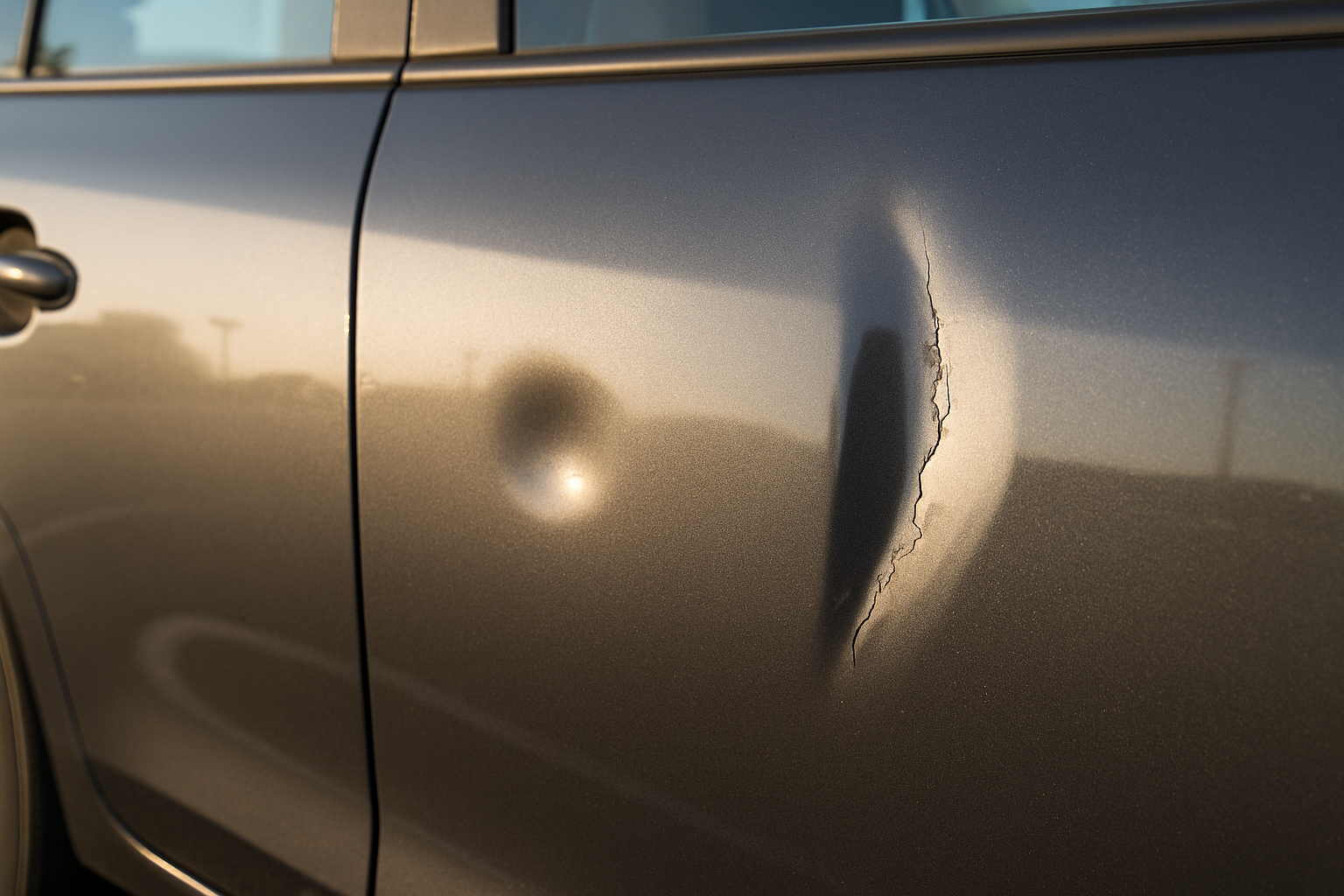
A crease changes everything. When metal folds — even slightly — it work-hardens along that fold line. Pushing it from behind won’t reverse that. You’ll end up with a ridge or a wave instead of a flat panel, and no amount of PDR technique fixes work-hardened steel.
Here’s what you’re looking at when conventional bodywork becomes the answer:
- Paint is cracked or chipped anywhere along the dent — even a hairline crack means moisture has already reached bare metal
- The dent has a sharp edge or crease rather than a smooth curve
- The panel feels rigid at the dent’s deepest point — if you can press the center and it doesn’t flex at all, the metal may have stretched or hardened
- The damage is at a panel edge, seam, or body line — these areas have less material to work with and almost always require filler or replacement
- The impact left multiple overlapping dents, which suggests the panel absorbed more force than PDR can reverse
A collision hard enough to affect the door frame, the rocker panel below it, or the structure underneath the skin is a completely different category. That’s not a cosmetic repair — it’s structural work, and it needs to be treated that way. What happens between drop-off and pickup at a body shop explains what that process actually looks like.
One more thing worth knowing: aluminum panels, which are increasingly common on newer vehicles, behave differently than steel. Aluminum is more brittle and tears more easily. It also can’t be re-worked as many times as steel without weakening, which means the margin for error on PDR is narrower — and more dents on aluminum end up needing conventional repair.
PDR vs. Conventional Bodywork: A Side-by-Side
This table shows the key differences between the two repair paths — what each one covers, what it costs in the Salinas area, and when each one applies.
| Factor | Paintless Dent Repair (PDR) | Conventional Bodywork |
|---|---|---|
| Paint condition required | Paint must be fully intact | Works even when paint is damaged |
| Dent shape | Round, smooth — no creases | Any shape, including creases and folds |
| Panel type | Steel or aluminum with intact finish | Any panel, including near seams and edges |
| Filler used | None | Body filler where needed |
| Paint or refinishing | None — original paint preserved | Required on repaired panels |
| Typical Salinas area cost | $75–$300 per dent | $300–$1,500+ depending on panel and paint work |
| Turnaround time | Same day to 1–2 days | 2–5 days or more depending on scope |
| Insurance coverage | Often covered under comprehensive | Covered under collision or comprehensive with deductible |
How to Read Your Dent Before Calling a Shop
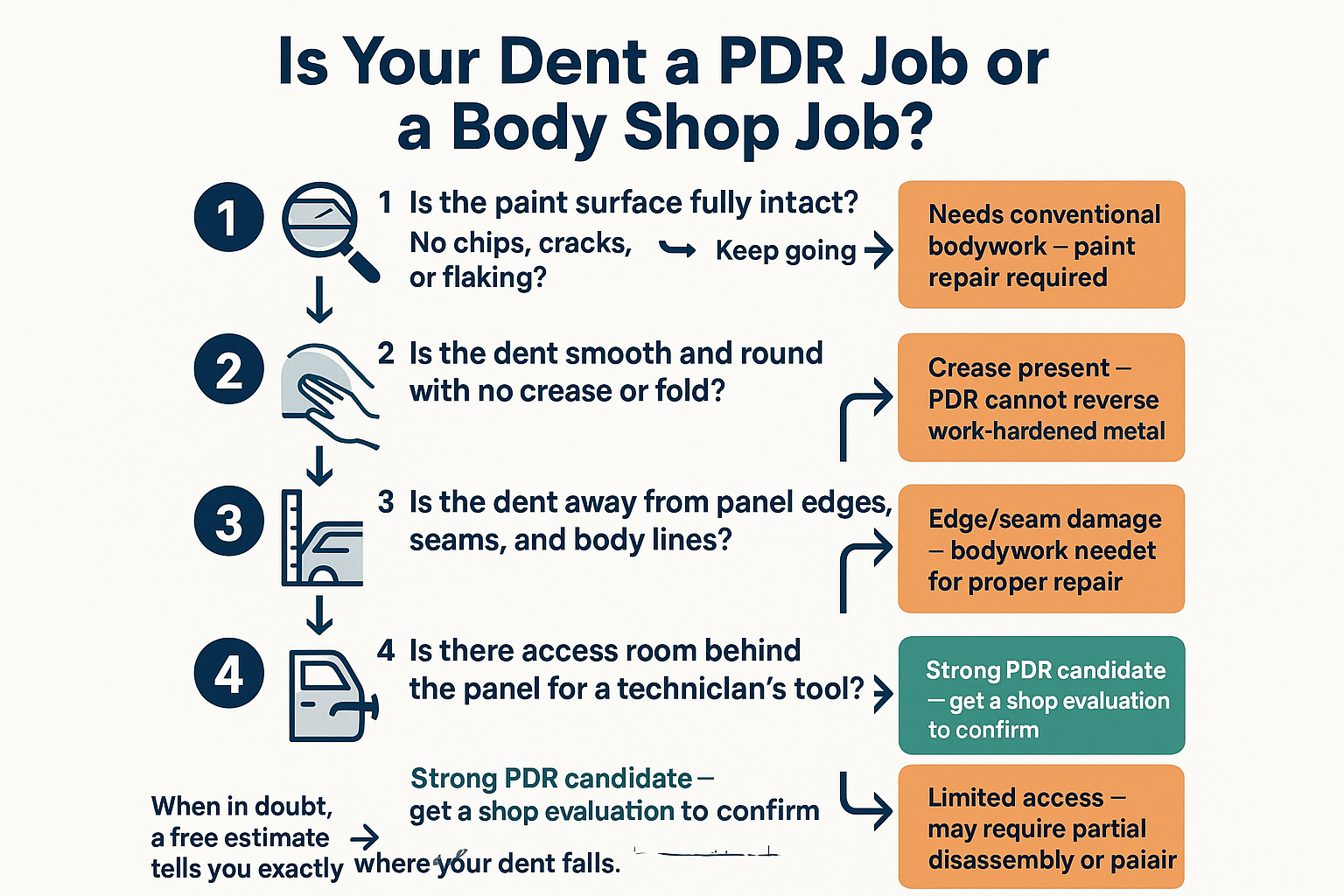
This visual walks through the four questions to ask when you find a dent — so you have a reasonable sense of what you’re dealing with before anyone else weighs in.
Why the Location of the Dent Matters as Much as the Shape
Two dents can look almost identical in size and depth and still land in completely different repair categories — because location on the panel changes everything.
A round, paint-intact dent in the center of your door is one of the easiest PDR jobs there is. Move that same dent two inches to where the door meets the body line along the bottom, and now you’re dealing with a ridge that can’t be massaged out cleanly. The metal there is shaped for structural support, not flexibility.
Door edges and panel corners are especially prone to this. Parking lot bumps in Salinas often happen at angles — a shopping cart doesn’t always hit flat. When the impact clips a corner, the damage tends to spread along the edge, and edge damage almost always needs filler and paint.
The same logic applies to your hood near the cowl, your trunk lid near the latch area, and anywhere a body line runs through the damage. Door-specific dent repair goes into more depth on this for anyone dealing with door panel damage specifically.
And if you’re looking at damage on a panel that was already repaired before — from a previous accident or repair — be cautious about assuming PDR will work. Filler under old paint behaves unpredictably when metal moves, and a prior repair can disqualify a dent from the PDR path even when the surface looks fine.
What a Real Estimate Should Tell You
A good estimate doesn’t just quote a price — it tells you which method the shop recommends and why. If a shop jumps straight to a number without explaining whether PDR is even an option, that’s worth asking about.
In the Salinas area, free estimates are standard at reputable collision shops, and a written estimate should break down:
- Whether the repair is PDR, conventional bodywork, or a combination
- Which panels are involved and whether paint or refinishing is required
- Any hidden damage that can’t be confirmed until the panel is removed
- The timeline from drop-off to pickup
Insurance coverage is another variable. If someone else caused the dent — a hit-and-run in a Salinas parking lot, for example — the repair may be covered under your uninsured motorist property damage coverage. If it’s a hail event or a falling object, comprehensive coverage typically applies. Either way, knowing your deductible matters before you decide whether to file at all. Filing a car insurance claim effectively explains the process clearly if you’re unsure where to start.
For self-pay repairs, the cost difference between PDR and conventional bodywork is significant enough to change the math. A $150 PDR repair on a door ding versus a $700+ conventional repair with paint and blending on a creased panel — that’s a real decision, not a minor detail.
Frequently Asked Questions About Dent Repair in Salinas
Can I tell at home whether my dent qualifies for PDR?
You can get a reasonable read on it. Check the paint surface closely in direct sunlight — any cracking, chipping, or white stress marks around the dent mean PDR is off the table. Then run your finger along the dent’s edge. If you feel a sharp ridge or crease rather than a smooth curve, the metal has folded. Both of those conditions rule out paintless repair. But even if things look promising, a shop evaluation is still the only way to confirm — especially since access behind the panel isn’t something you can assess without partial disassembly.
My dent has a small paint chip right at the center. Can PDR still work?
Generally no. Even a small chip means bare metal is exposed, and pushing the dent from behind won’t fix the paint surface. The panel will need to be refinished regardless, so conventional repair — filler if needed, then paint — becomes the right call. Leaving exposed metal unrepaired is also a rust risk, especially with Monterey County’s coastal air. That’s worth taking seriously.
How much does PDR cost compared to regular dent repair in Salinas?
PDR in the Salinas area typically runs $75 to $300 per dent depending on size, location, and accessibility. Conventional bodywork on the same panel — including filler, primer, paint, and clear coat — usually starts around $300 and can reach $1,000 to $1,500 or more depending on how much of the panel needs refinishing. The gap is wide enough that it’s always worth confirming which method applies before assuming the worst.
Does it matter if my car is a newer model with aluminum body panels?
Yes, it does. Aluminum doesn’t behave like steel — it’s more brittle and doesn’t flex back as predictably. PDR is still possible on aluminum, but the technique is different and the margin for a clean result is smaller. More dents on aluminum panels end up needing conventional repair than similar dents on steel vehicles. Any shop experienced with late-model vehicles will flag this during the estimate.
What happens if a shop does PDR on a dent that actually needed conventional repair?
You’ll likely end up with a repair that looks wrong — a ridge, a low spot, or a wave in the panel that’s visible in certain light. At that point, conventional bodywork is still required, but now there’s the added step of addressing what the failed PDR attempt left behind. Choosing the right method from the start avoids that entirely.
Will my insurance pay for PDR?
Often yes, depending on how the damage happened. Comprehensive coverage typically covers hail dents, falling objects, and similar non-collision events — and PDR is a common repair method for hail damage specifically. If another driver caused the dent, their liability coverage or your uninsured motorist coverage may apply. Check your deductible first — if the repair costs less than your deductible, it usually makes more sense to pay out of pocket.
Not Sure Which Category Your Dent Falls Into?
Searson Collision Center offers free estimates at 488 Brunken Ave in Salinas — and an experienced technician can tell you within minutes whether your damage is a PDR job, a conventional repair, or something in between. Drivers from across Monterey County, including Monterey, Seaside, and Marina, come here specifically because the answer they get is straight. Call (831) 422-2460 or visit searsoncollisioncenter.com to set up your estimate.