Direct Answer: A minor surface crack may be drivable short-term, but a bumper with structural damage, loose pieces, or compromised mounting is a safety and legal risk you shouldn’t ignore.
You backed into a pole in the Northridge Mall parking lot or got tapped on northbound Highway 101 near the Sanborn Road exit — and now your bumper has a crack running across it. The car still drives. So the question sitting in the back of your head is: do I actually need to deal with this right now?
The honest answer depends on what kind of crack you’re dealing with. A hairline surface crack in the plastic cover is a very different problem than a bumper that’s fractured through, partially detached, or no longer sitting flush against the vehicle.
This article breaks down the two things that matter most: what the crack is actually doing to your safety, and what it’s likely to cost you to fix it in Monterey County. Those two pieces of information are what you need to make a smart decision.
What a Bumper Actually Does — and Why That Matters Here
Most drivers think of bumpers as cosmetic. But modern bumper systems are engineered safety components, and understanding that changes how you think about a crack.
A typical bumper assembly has three layers working together:
- Bumper cover — the painted plastic shell you see from the outside
- Energy absorber — a foam or plastic block behind the cover that crushes on impact to protect occupants
- Reinforcement bar — a metal beam bolted directly to the vehicle’s frame that handles the structural load
When you crack the bumper cover, you haven’t necessarily damaged the two layers behind it. But here’s the problem: you can’t see those layers without removing the cover. A visible crack on the outside doesn’t tell you what condition the energy absorber is in underneath.
On rear-end hits along busy stretches like South Main Street or the Highway 68 corridor, what looks like a bumper-only tap can transfer force into the absorber and leave it compressed or cracked — even if the cover itself only shows a surface fracture. That absorber won’t perform the same way in a second impact.
For more context on what happens when a minor collision involves more than it looks, the what is a fender bender article covers what these smaller crashes actually involve structurally.
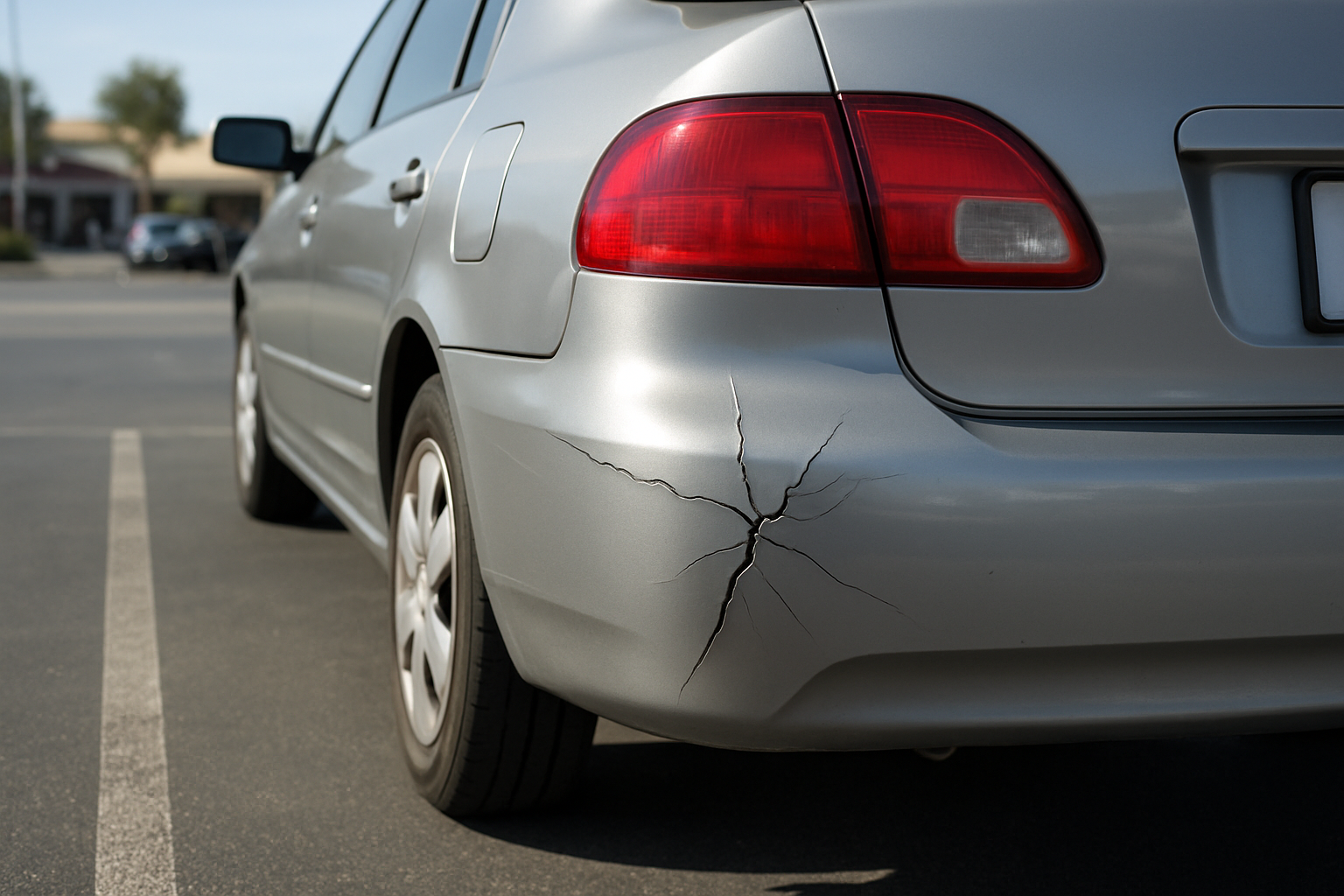
When a Cracked Bumper Becomes a Real Problem
There’s a meaningful difference between a crack you can leave alone temporarily and one that needs immediate attention. The following situations push a cracked bumper out of the “I’ll get to it” category.
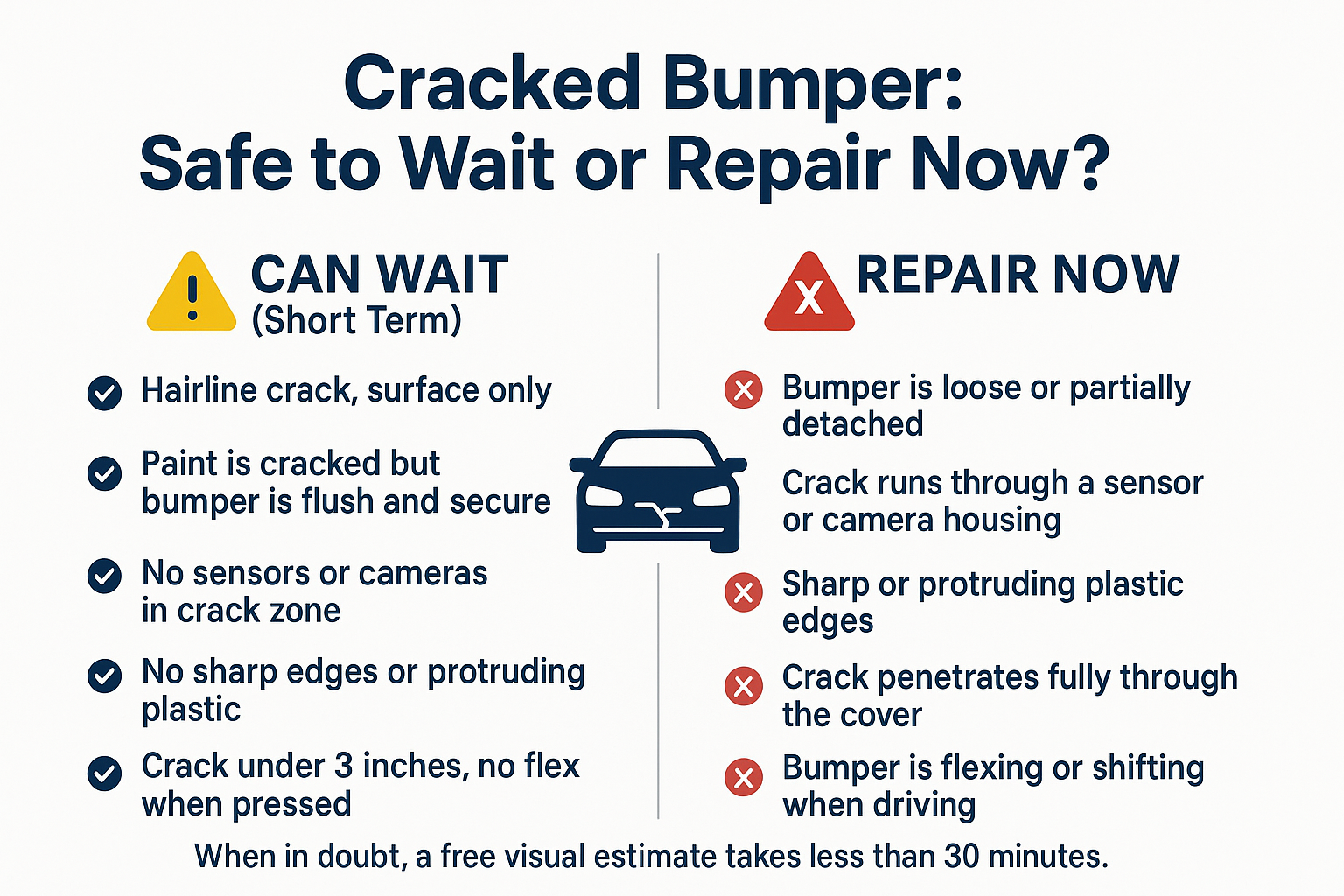
The bumper is loose or partially detached. If any part of the cover is separating from its mounting clips or brackets, it can catch air at freeway speeds, drag on the ground, or come off entirely. On Highway 101 between Salinas and Monterey, that’s a serious hazard for drivers behind you.
The crack has sharp edges or protruding plastic. California Vehicle Code prohibits operating a vehicle with parts that could injure pedestrians or other road users. A jagged plastic edge sticking out from your rear bumper can earn you a fix-it ticket during a routine stop.
The crack is near a sensor or camera housing. Most vehicles built after 2018 have parking sensors, backup cameras, or radar-based safety systems mounted in the bumper. A crack that runs through or near those housings can allow moisture intrusion or misalign the sensor, which can affect how your safety systems perform.
You can see daylight through the crack. Once a crack fully penetrates the bumper cover, road debris, water, and dirt have a direct path to the energy absorber and any wiring behind it. Water sitting against the absorber over a Salinas winter — even a mild one — accelerates breakdown.
If any of these apply to your situation, you’re past the “cosmetic only” threshold.
Cracked Bumper Decision Guide: Safe to Wait or Repair Now?
This guide helps you quickly categorize the damage you’re looking at and decide whether it’s urgent.
What Bumper Repair Actually Costs in Salinas
Cost is usually the reason people sit on this longer than they should. So let’s look at what repair actually runs in Monterey County.
The range is wide because bumper repairs vary a lot depending on whether the cover can be repaired or needs full replacement, whether sensors need to be recalibrated, and what the paint match situation looks like on an older vehicle.
Here’s a realistic breakdown for the Salinas area in 2025–2026:
- Crack repair on a repairable cover (no replacement): $150–$350 depending on crack length and location
- Full bumper cover replacement, painted to match: $500–$1,100 for most passenger vehicles
- Bumper replacement with sensor recalibration: $800–$1,500+, depending on how many sensors are involved and the vehicle make
- Luxury or late-model vehicles with integrated radar systems: Can run $1,500–$2,500 or more
If the damage happened in a collision, your liability or collision coverage may pay for most of this minus your deductible. California Insurance Code § 758.5 gives you the right to choose your own repair shop — your insurer can suggest a shop, but they cannot force you to use one.
For a broader look at what collision-related work runs in this market, how much does collision repair cost has a full 2026 price breakdown by damage type.
If the crack also involves paint damage on adjacent panels, the complexity goes up. When does a scratch actually require a full repaint explains the thresholds that push a repair into full refinishing territory.
Cracked Bumper Repair Cost Ranges — Salinas / Monterey County, 2025–2026
These figures reflect typical repair scenarios at a certified body shop in the Salinas area. Final costs depend on vehicle make, sensor configuration, and paint match requirements.
| Repair Scenario | Estimated Cost Range | Insurance Applies? |
|---|---|---|
| Surface crack repair, no replacement | $150 – $350 | Sometimes (claim may not be worth filing) |
| Full bumper cover replacement, painted | $500 – $1,100 | Yes, if collision or liability covered |
| Replacement with sensor recalibration | $800 – $1,500+ | Yes, sensors are included in claim |
| Luxury or radar-equipped vehicle | $1,500 – $2,500+ | Yes, but verify coverage limits |
| Energy absorber replacement (in addition) | $200 – $500 added | Yes, if discovered during teardown |
The Hidden Cost of Waiting Too Long
A cracked bumper that sits unrepaired doesn’t just stay the same. It usually gets worse, and in ways that cost more to fix later.
Plastic bumper covers flex constantly during normal driving — every speed bump on Alisal Street, every dip pulling in or out of a driveway. A crack that starts at 2 inches can spread to 6 or 8 inches within a few weeks of normal use, especially if the vehicle sees any highway driving where aerodynamic pressure stresses the panel.
Once a crack spreads to a corner or a mounting point, the repair calculus changes. A repairable cover becomes an unrepairable one, and you’re now looking at full replacement instead of a patch job. The $200–$300 repair you could have done in week one becomes a $700–$900 replacement six weeks later.
There’s also the issue of what’s hiding behind the crack. If the impact that caused the crack also damaged your energy absorber, that component isn’t going to announce itself — it’ll just underperform the next time you need it. Getting an estimate early means a technician can pull the cover and actually look at what’s behind it, which is the only way to know for certain.
For drivers who went through a collision and are dealing with more than just bumper damage, what actually happens to your car between drop-off and pickup at a body shop explains the full inspection and repair sequence from the shop’s side.
Frequently Asked Questions About Cracked Bumpers
Can I get pulled over for a cracked bumper in California?
Yes, if the damage creates a safety hazard. California Vehicle Code Section 27700 covers equipment that could injure other people, and a jagged or protruding bumper edge qualifies. A bumper that’s visibly loose or dragging is also grounds for a stop. A tight hairline crack that’s flush with the surface is much less likely to draw attention, but once the plastic starts separating or sticking out, you’re in fix-it ticket territory.
Does a cracked bumper affect my car’s safety in another accident?
Potentially, yes — but it depends on what’s behind the crack. The bumper cover itself is mostly cosmetic. What matters is the foam energy absorber underneath it. If the original impact that cracked the cover also compressed or fractured the absorber, your bumper system won’t absorb energy the same way in a second hit. The only way to know is to have someone pull the cover and look.
Can a cracked plastic bumper be repaired, or does it always need to be replaced?
Short cracks — generally under 4–6 inches, not at a corner, and not through a sensor zone — can often be repaired with plastic welding and refinishing. Longer cracks, cracks near mounting points, and cracks that have caused the cover to warp or separate almost always require full replacement. A shop can usually tell you which category you’re in during a free visual estimate.
Will my insurance cover a cracked bumper?
If another driver hit you, their liability insurance should cover it. If you caused the damage, it falls under your collision coverage — which means your deductible applies. For minor surface cracks with a repair cost under $300–$400, it often doesn’t make financial sense to file a claim and risk a rate increase. For anything involving bumper replacement or sensor recalibration, filing usually makes sense. How to file a car insurance claim walks through the process step by step.
How long does a bumper repair or replacement take?
A repair on a repairable crack is typically 1–2 days including paint. A full bumper replacement with painting and sensor recalibration usually runs 2–4 days, depending on parts availability. Some domestic vehicle bumpers are stocked locally; late-model imports or vehicles with integrated radar components may require parts to be ordered, which can add 1–3 business days.
What if the crack happened in a parking lot and I don’t know who did it?
That falls under uninsured motorist property damage coverage or collision coverage, depending on your policy. California requires insurers to offer uninsured motorist coverage, but it’s optional for property damage — so check your declarations page. If you don’t have coverage that applies, you’re self-paying. Either way, getting a written estimate first gives you a real number to work with before you decide anything.
Not Sure What You’re Actually Dealing With?
A visual estimate takes less than 30 minutes and gives you a real answer — not a guess. Searson Collision Center has been doing exactly this kind of work at 488 Brunken Ave in Salinas since 1963, and the estimate is always free. Call (831) 422-2460 or visit searsoncollisioncenter.com to schedule a time that works for you.