Table of Contents
- Quick Answer
- The Definition of a Fender Bender and Its Common Causes
- What to Do Immediately After a Minor Accident
- Assessing the Real Damage After a Fender Bender
- Navigating Insurance Claims and Your Right to Choose
- Understanding Your Repair Options and Timelines
- How to Find a Trustworthy Auto Body Shop in Salinas
- Frequently Asked Questions About Fender Benders
Quick Answer
A fender bender is a low-speed collision, usually below 10 mph, that causes minor visible damage such as scuffs, dents, or bumper damage. It still counts as an accident, and the smart next step is to check for injuries, document everything, notify insurance, and get the car professionally inspected.
If you're reading this right after hearing that crunch in a parking lot or at a stoplight, you're probably asking two things at once. What is a fender bender, and how serious is this really?
In plain terms, a fender bender is usually a minor collision. In practice, though, it can still lead to insurance issues, hidden vehicle damage, and a lot of confusion if you don't handle the first few steps correctly.
The Definition of a Fender Bender and Its Common Causes
What the term means in real life
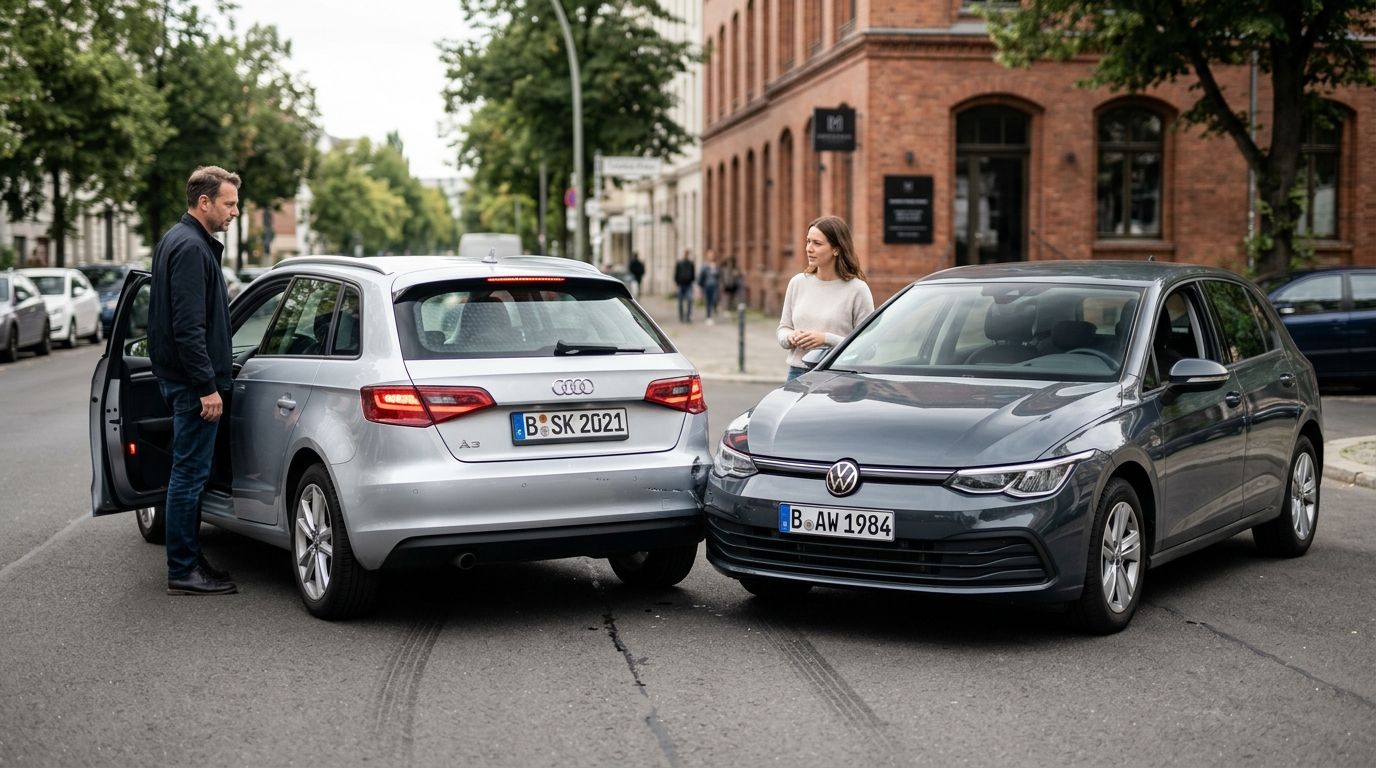
If you're asking what is a fender bender, the practical answer is simple. It's a low-speed collision, typically below 10 mph, with damage often limited to the fender, bumper, or body panel, such as a rear-end tap in traffic, a parking lot bump, or a low-speed hit at an intersection, as described in this explanation of low-speed car accidents.
That sounds minor, and often it is. But "minor" only describes how the crash looked at the scene. It doesn't mean you should shrug it off and drive away without handling it properly.
A lot of drivers use the phrase as if it means "not a real accident." That's a mistake. In practical terms, it still sets off the same basic responsibilities. You stop, exchange information, document what happened, and notify your insurance company.
Practical rule: If two vehicles made contact and there's damage or a dispute, treat it like an accident from the start.
For a common example, a low-speed rear-end hit often looks simple but can involve more than the eye catches at first. If that's your situation, this guide on what to do if you're rear-ended is worth reading.
Why these accidents happen so often
Most fender benders don't come from wild driving. They come from ordinary lapses in ordinary places.
- Distracted moments: Looking at a phone, a screen, or even over your shoulder too long in a parking lot.
- Following too closely: Stop-and-go traffic leaves very little room for a delayed reaction.
- Misjudging distance: Tight turns, backing maneuvers, and short stopping distances catch people off guard.
- Busy intersections: One driver assumes the other is moving, stopping, or turning differently than they are.
In Salinas and around the Monterey Bay Area, a lot of these happen in shopping centers, commute traffic, and crowded lots where speeds are low but attention slips fast.
What to Do Immediately After a Minor Accident
The first few minutes matter. Not because you need to say the perfect thing, but because calm, basic steps protect your safety and make the claim much easier later.
Take care of safety first
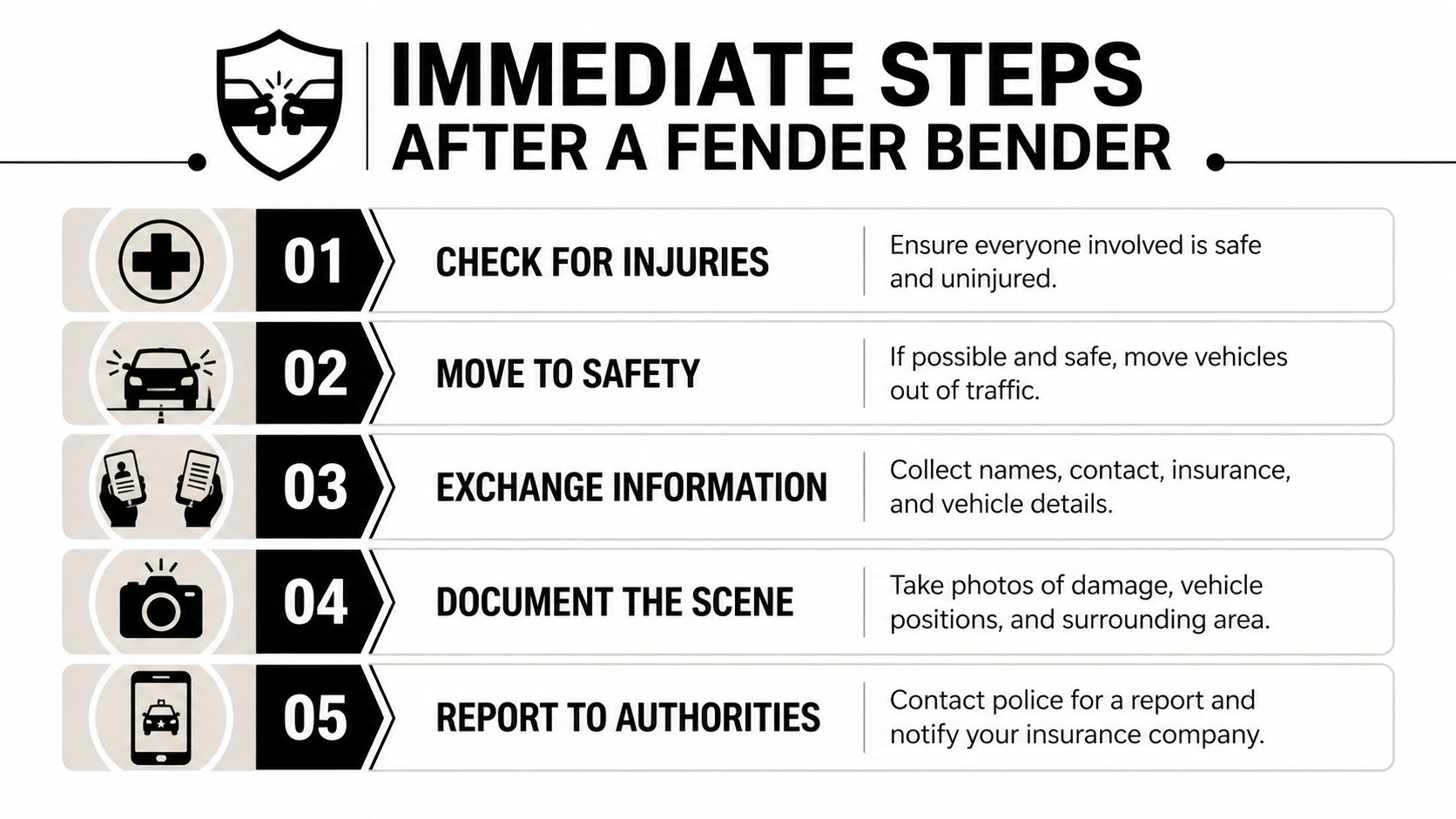
Check yourself, your passengers, and the other people involved. If anyone feels pain, seems disoriented, or may be injured, call for medical help right away.
If the vehicles can be moved safely, get them out of active traffic. A shoulder, side street, or nearby lot is better than sitting in a travel lane. Turn on hazard lights and stay aware of other traffic around you.
One thing I tell people often is this. Don't let embarrassment rush you. People make mistakes after a minor crash because they want the whole thing over with.
A quiet parking lot collision can still leave a driver shaky enough to miss important details. Slow down and handle the basics.
Gather the right information before anyone leaves
Once everyone is safe, collect the essentials. You want clear facts, not a long roadside debate about fault.
- Driver details: Full name, phone number, driver's license, and insurance information.
- Vehicle details: License plate, make, model, and color.
- Scene documentation: Photos of both vehicles, close-ups of damage, the overall scene, street signs, lane position, and anything that may have affected visibility.
- Witness contact: If someone saw the collision, get a name and phone number if they're willing.
Take more photos than you think you'll need. Good lighting, wide shots, close shots, and different angles help far more than a hurried single picture of a bumper corner.
If you need a fuller walkthrough, this page on what to do after a car accident lines up well with the steps above.
Know when to call police and insurance
If there are injuries, an unsafe scene, a driver who won't cooperate, suspected impairment, or a disagreement about what happened, call police. If you're unsure, it's usually better to make the call than wish later that you had.
You should also notify your insurance company promptly. Keep your statement factual. Say what happened, where it happened, and what damage you observed. Don't guess about injuries, repair cost, or who caused what if you don't know yet.
A short note on conversation at the scene helps too:
Don't argue fault on the roadside. Exchange facts, stay civil, and let the report, photos, and claim process do their job.
Assessing the Real Damage After a Fender Bender
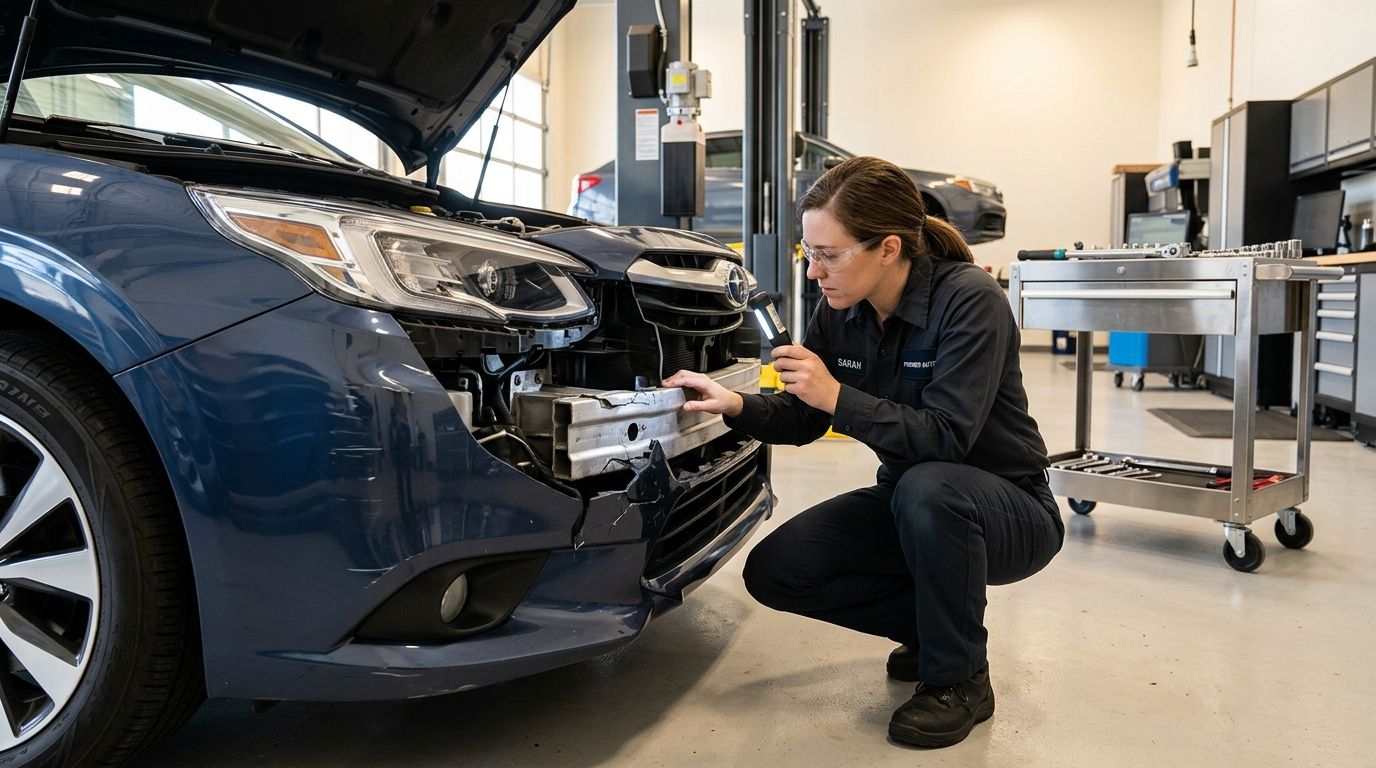
A scuffed bumper can fool people. Modern vehicles hide a lot behind plastic covers, sensor housings, reinforcement parts, and tightly engineered unibody structures.
Why the bumper cover doesn't tell the whole story
Even a low-speed hit can do more than leave a scratch. According to this discussion of hidden damage in minor collisions, impacts at 5 to 10 mph can misalign frames by 1 to 2 mm, and 15 to 20% of minor accidents conceal frame damage.
Those are small measurements, but in collision repair, small measurements matter. The car doesn't need to look badly crushed for steering feel, panel fit, suspension geometry, or sensor alignment to be off.
If you want a plain-language overview of one of the bigger concerns, this page on how to tell if your car frame is bent is a useful starting point.
What a proper inspection should look for
A proper post-accident inspection checks more than painted surfaces. It should look at the bumper assembly, mounting points, adjacent panels, frame or unibody alignment, suspension-related effects, and whether anything shifted underneath.
Here's the difference between what works and what doesn't:
| Approach | What happens |
|---|---|
| Quick visual glance | May catch obvious dents, cracks, or missing trim only |
| Photo-only self-check | Useful for records, not enough for repair decisions |
| Professional estimate and inspection | Identifies visible damage and looks for hidden structural or related collision damage |
One reliable option in Salinas is Searson Collision Center, which handles collision repair, frame and structural repair, alignment and suspension checks, paint and refinishing, and insurance claim assistance. For a first-time claimant, the important part isn't the shop name by itself. It's whether the shop inspects the car thoroughly instead of writing the damage off as "just a bumper."
Navigating Insurance Claims and Your Right to Choose
Insurance is where a lot of people start feeling pushed around. The best way through it is to stay organized and know where your control begins.
Report the claim clearly and stick to facts
When you call your insurer, have your photos, the other driver's information, and the basic timeline in front of you. Keep it simple. Time, place, direction of travel, point of impact, and any immediate symptoms or concerns.
Don't volunteer guesses about repair cost. Don't agree that damage is only cosmetic unless a repair professional has inspected it. If the adjuster asks where you plan to take the vehicle, you can tell them you haven't decided yet or name the shop you prefer.
If you need help with the paperwork side, this guide on how to file a car insurance claim can help you get your notes in order before that call.
California gives you the right to choose the shop
In California, Insurance Code § 758.5 says an insurer can't require you to use a particular auto body repair shop. In everyday language, that means the insurance company can suggest a shop, but the choice is still yours.
California's Auto Body Repair Consumer Bill of Rights under 10 CCR § 2695.85 also requires insurers to give you written notice of that right. That's useful to know if you feel steered toward a shop you didn't ask for.
If a shop is being chosen for you instead of by you, stop and ask why. You're the vehicle owner.
That doesn't mean every suggested shop is a bad one. It does mean you should choose based on credentials, communication, and confidence in the repair plan, not pressure.
Understanding Your Repair Options and Timelines
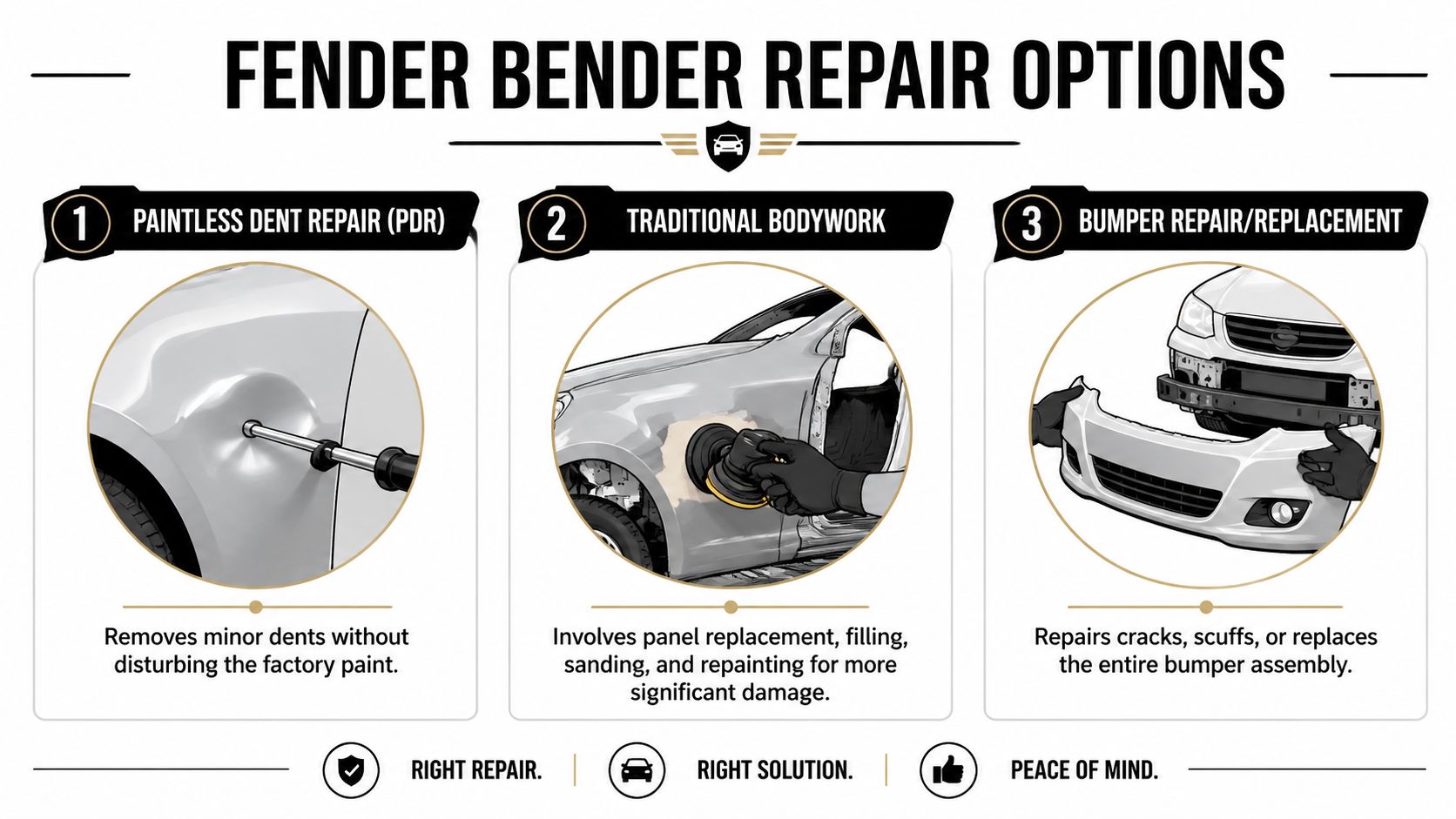
Not every fender bender gets repaired the same way. The right method depends on where the damage is, whether the paint was broken, and whether anything underneath moved in the impact.
When paintless dent repair makes sense
Paintless dent repair works well on smaller dents where the paint is still intact and the metal hasn't been stretched too far. It's commonly a good fit for certain parking lot dings and minor panel dents.
This method preserves the factory finish, which is a real advantage when the damage qualifies for it. It isn't the answer for every hit, though. If the paint is cracked or a body line is sharply distorted, another repair method is often the better choice.
When conventional body repair is the better fix
Traditional body repair comes into play when a panel is creased, the finish is damaged, or parts need refinishing to restore appearance and fit. That may involve panel repair, dent and scratch removal, surface prep, paint work, and blending into surrounding areas where needed.
For many first-time customers, this is the part that feels mysterious. It doesn't need to be. A good estimate should explain what parts are damaged, what can be repaired, what needs replacement, and what paint work follows.
When bumper, frame, alignment, or suspension work is needed
A bumper isn't just a painted shell. Behind it are structural and mounting components that may need repair or replacement after an impact. Some minor crashes also affect alignment or suspension, especially if the wheel, tire, or curb was involved.
Repair timing depends on what the inspection finds, parts availability, and whether insurance approvals are needed. Cosmetic repairs usually move faster than structural work, but no honest shop should promise a timeline before the car is properly inspected.
A simple comparison helps:
- Small dent with intact paint: Paintless dent repair may be possible.
- Scraped, cracked, or distorted panel: Conventional body repair and refinishing are more likely.
- Impact with underlying shift or drivability concerns: Structural, alignment, or suspension-related repair needs to be checked before anyone talks about "just touching up the paint."
How to Find a Trustworthy Auto Body Shop in Salinas
A good shop doesn't just fix what's obvious. It follows repair procedures, communicates clearly, and can show you why its standards matter.
Credentials matter more than advertising
Two things are worth paying attention to in Salinas and the Monterey Bay Area. I-CAR Gold Class status and AAA approval.
I-CAR Gold Class tells you the shop invests in ongoing collision repair training. That's important because vehicle construction, materials, and repair procedures keep changing. AAA approval adds another layer because it reflects third-party vetting of business practices and customer service.
If you're comparing options, this article on how to find a good auto body shop gives a useful checklist.
What to ask before you leave your car
Ask direct questions.
- How will you inspect for hidden damage
- Who handles insurance communication
- Do you perform frame and structural repair if needed
- Can you explain the estimate in plain language
- Will you let me know if additional damage is found after teardown
Those answers tell you more than a polished front office ever will.
Frequently Asked Questions About Fender Benders
Will a fender bender make my insurance go up
It can, but not every minor claim has the same effect. According to this California-focused summary of claim impact, minor claims under $2,000 raise rates by 8 to 12% on average for at-fault drivers in California, and 40% of drivers skip filing. Whether your own rate changes depends on fault, your driving history, and your policy.
Can I drive my car after a fender bender
Maybe, but don't assume it's fine because it still moves. If the bumper is loose, a light is broken, a wheel feels off, fluids are leaking, or the steering doesn't feel normal, have it inspected before driving farther. Even when the damage looks light, hidden issues can affect safety.
Do I have to file an insurance claim for a minor accident
That depends on the situation and your policy terms. If there's any chance of hidden damage, delayed injury symptoms, or disagreement about fault, reporting the accident is usually the safer move. For guidance specific to your policy, check with your insurer or a licensed professional.
How long does fender bender repair usually take
There's no honest one-size-fits-all answer. A small cosmetic repair may move along quickly, while a repair involving parts delays, refinishing, structural checks, or insurance supplements takes longer. The best estimate is the one given after the vehicle is inspected, not guessed at in a parking lot.
Can the insurance company tell me where to take my car
In California, no. They can recommend a shop, but under California Insurance Code § 758.5, the choice of repair facility is yours. If you feel pressured, ask for that position in writing and review your rights carefully.
If you're dealing with what is a fender bender practically, not just in theory, a clear estimate helps take the guesswork out of it. Searson Collision Center can talk through the damage, the repair process, and the insurance side in plain language. Call (831) 422-2460, visit 488 Brunken Ave, Salinas, CA 93901, or stop by Monday–Friday, 7:00 AM–5:00 PM.