Direct Answer: Before dropping off your car, ask about the repair timeline, how supplements are handled, whether OEM or aftermarket parts will be used, and what the warranty covers.
Most people drop off their car at a body shop the same way they drop off dry cleaning — hand it over, hope for the best, and wait for a call. That approach works fine for slacks. It doesn’t work well for a $4,000 collision repair.
In Salinas and across Monterey County, drivers dealing with accident damage are often under pressure — juggling rental cars, insurance adjusters, and work schedules. Asking the right questions before you leave the keys is the fastest way to avoid surprises later.
This isn’t a list of every possible thing you could ask. It’s the handful of questions that actually change outcomes — the ones most people skip and later wish they hadn’t.
What Parts Will Actually Go on My Car?
This is the question that catches more people off guard than almost any other. Your insurance estimate may call for aftermarket parts — parts made by third-party manufacturers, not the company that built your car. They’re cheaper. They’re also not always the same fit or quality as original equipment.
You have the right to ask specifically:
- Will OEM (original equipment manufacturer) parts be used?
- If aftermarket parts are specified by insurance, can I pay the difference for OEM?
- Are any reconditioned or used parts included in the estimate?
California does have consumer protections here. Shops are required to disclose when non-OEM parts are used. But knowing upfront lets you have that conversation before the work starts — not after.
For newer vehicles or cars still under manufacturer warranty, this matters even more. Aftermarket structural components on a vehicle with active safety systems can create problems that show up months later. If you’re not sure what your estimate specifies, ask the shop to walk through it line by line. A reputable shop won’t have any issue doing that.
For more on what actually happens once your car is in the shop’s hands, this breakdown of the repair process from drop-off to pickup is worth reading before your appointment.
What Happens If the Shop Finds More Damage After Work Starts?
Hidden damage is real. A collision that looks like a bumper and quarter panel job from the outside can involve frame damage, sensor misalignment, or bent structural components that only show up once the panels come off.
What you want to know before drop-off:
- Does the shop handle supplement estimates directly with my insurance carrier?
- Will I be contacted before any work beyond the original estimate begins?
- How long does the supplement approval process typically add to the timeline?
A supplement is just a revised estimate that accounts for damage not visible in the original inspection. Insurance companies handle these regularly. A shop with experience doing insurance work — like shops that are AAA Approved and I-CAR Gold Class certified — will manage that process without putting the burden on you.
But you should still ask. Knowing that the shop communicates directly with your insurer, and that you’ll get a call before costs increase, removes a major source of post-repair stress.
If you want a clearer picture of how to file a car insurance claim effectively before your drop-off appointment, that’s a good place to start.
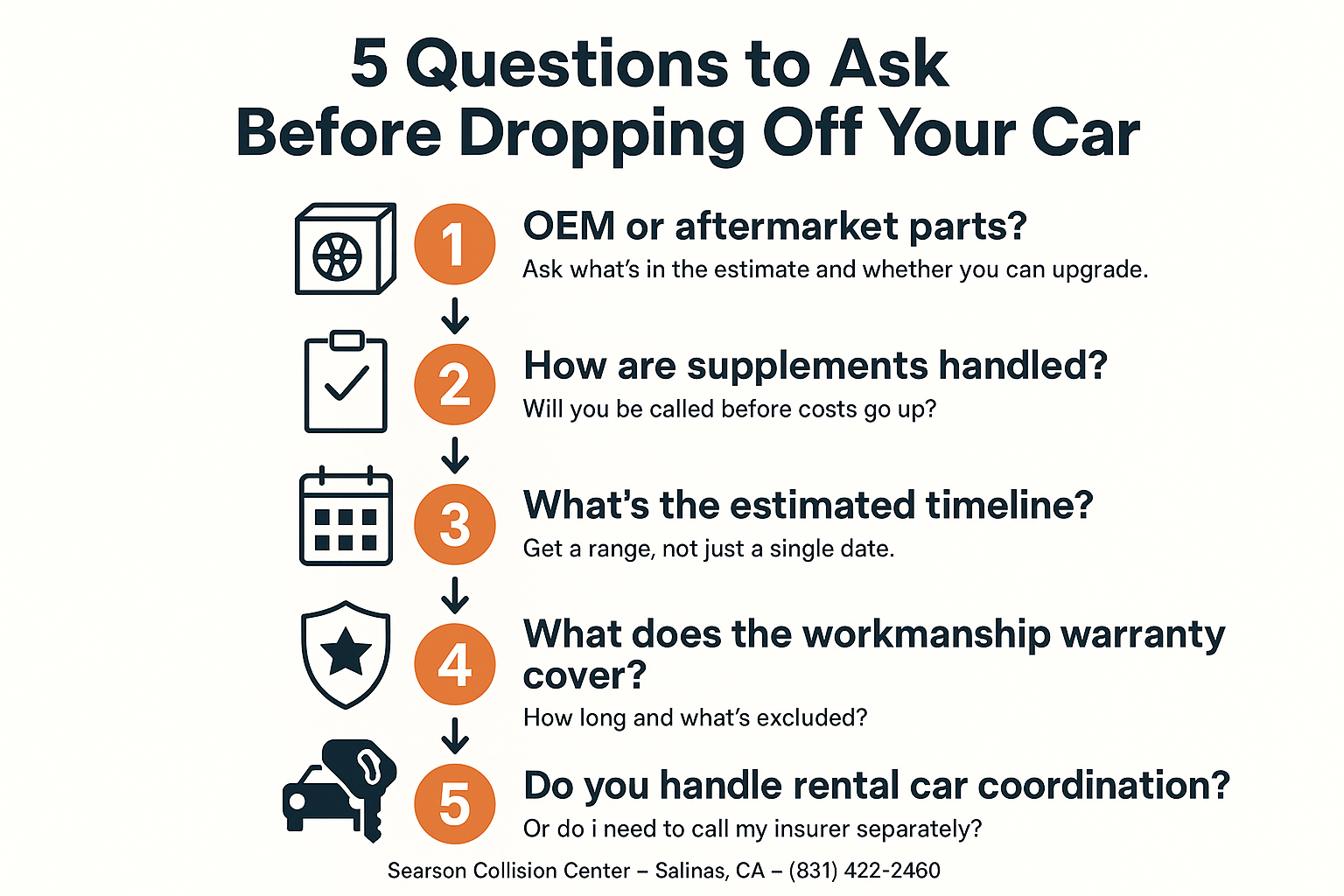
5 Questions to Ask Before You Leave Your Keys
These are the five questions that most often separate a smooth repair experience from a frustrating one.
How Long Will the Repair Actually Take?
Repair timelines in the Salinas area are affected by the same supply chain pressures hitting shops everywhere — parts delays, insurance approval backlogs, and shop capacity. A straightforward rear-end repair might take 5 to 8 business days. A more involved collision with structural work can run 3 to 4 weeks.
The mistake most drivers make is asking for a single completion date rather than a realistic range.
Better questions to ask:
- What’s the earliest and latest this repair could be done?
- Are there any parts on backorder right now?
- If my rental coverage only lasts 10 days, will this repair fit inside that window?
That last question matters a lot. Rental coverage limits catch people off guard constantly. If your policy covers $30 per day up to $300 total, you have 10 days of rental before you’re paying out of pocket. Knowing the repair estimate upfront lets you plan — or contact your insurer about an extension before you’re already over the limit.
Shops doing thorough work won’t rush to give you an unrealistically short timeline just to win the job. A shop that gives you an honest range and explains what could extend it is one you can trust.
Common Repair Types and Typical Timelines in Salinas
These are general ranges for the Salinas market. Actual timelines vary based on parts availability, insurance approval speed, and shop workload.
| Repair Type | Typical Timeline | Main Variable |
|---|---|---|
| Minor dent or scratch — no structural damage | 2–4 business days | Paint cure time |
| Bumper replacement with sensor recalibration | 3–5 business days | Parts availability |
| Single-panel collision repair | 5–8 business days | Insurance approval |
| Multi-panel collision — no frame damage | 1.5–2.5 weeks | Parts and labor scheduling |
| Collision with frame or structural damage | 3–5 weeks | Supplement approval + parts |
| Full repaint (single color, full vehicle) | 2–3 weeks | Prep work and cure cycles |
What Does the Workmanship Warranty Actually Cover?
Every legitimate body shop offers some form of warranty on their work. But the details vary significantly — and most drivers never ask about them until something goes wrong.
Here’s what to pin down before drop-off:
- Does the warranty cover paint, bodywork, and structural repairs — or just one?
- Is the warranty lifetime for as long as you own the vehicle, or does it expire?
- What voids the warranty? (Some shops exclude damage from subsequent accidents or improper washing.)
- Is the warranty transferable if you sell the car?
A shop that stands behind its work with a lifetime guarantee on bodywork isn’t just making a marketing claim — it’s telling you something about how they approach every repair. If a shop hedges on warranty questions or gives vague answers, that’s useful information too.
And if you’re still evaluating shops before you’ve picked one, what to look for when choosing a body shop you’ve never been to covers the certification and credibility signals that matter most.
One More Thing Most People Don’t Ask: Can I Choose This Shop?
Insurance companies often steer drivers toward shops in their preferred network. Some adjusters imply — directly or indirectly — that you have to use a specific shop to keep the process simple. That’s not accurate.
Under California Insurance Code § 758.5, you have the legal right to choose your own repair shop. Your insurer cannot require you to use a specific facility as a condition of your claim.
You don’t need to bring this up confrontationally. Just ask your insurer: “Am I required to use a shop from your network, or can I choose my own?” The answer should be that the choice is yours.
If you want to understand this in more detail before your drop-off, this piece on whether your insurance company actually gets to choose where your car is repaired explains the California rules clearly.
Frequently Asked Questions About Dropping Off Your Car for Repairs
Do I need to have a claim number before I drop off my car?
Not always. You can get a free estimate without a claim number. But if you’re filing through insurance, having the claim number when you drop off makes it easier for the shop to contact your adjuster directly and start the approval process without delays.
What should I take out of my car before dropping it off?
Remove anything you’ll need during the repair period — garage openers, toll tags, prescription sunglasses, anything in the center console you use daily. You don’t need to empty the car, but assume you won’t have easy access to it for the full repair window.
Should I get a second estimate?
You can, and it’s not rude to do so. If the estimates come back very different, ask each shop to explain what’s driving the gap. A very low estimate sometimes means damage isn’t fully accounted for. A shop that walks you through their estimate line by line is almost always the safer choice.
What if my insurance company says my car is a total loss but I disagree?
You can dispute a total loss determination. California law gives you the right to challenge the insurer’s valuation. Your shop can also provide documentation on the actual repair scope, which sometimes affects how the insurer evaluates the claim. Ask your shop if they’ve handled disputes like this before — experienced shops have.
Does the shop need my car keys, or just a drop-off?
They need the keys — the car will need to be moved in and out of bays throughout the repair process. Most shops have a secure key drop if you’re arriving outside business hours.
How do I know if my bumper sensors or cameras still work after the repair?
Ask specifically whether ADAS (advanced driver assistance system) recalibration is included in the repair scope. If your car has backup cameras, parking sensors, or collision warning systems, those components may need recalibration after bodywork — especially if the bumper or surrounding panels were replaced. A shop that doesn’t mention this when it’s relevant is a red flag. You can read more about what happens to bumper sensors when they get hit if you want to understand the issue before your appointment.
Ready to Drop Off With Confidence?
If you’re dealing with collision damage anywhere in Monterey County — whether you’re in Salinas, Seaside, Marina, or coming over from Monterey — Searson Collision Center has been handling repairs and insurance coordination from the same location on Brunken Ave since 1963. Free estimates are available, and the team is straightforward about timelines, parts, and what your warranty covers. Call (831) 422-2460 or visit searsoncollisioncenter.com to schedule your estimate.