Table of Contents
- Quick Answer
- Your First Steps After a Vehicle Collision
- Your Right to Choose Paint and Body Shops in California
- How to Properly Evaluate Local Auto Body Shops
- Navigating the Insurance Claim with Your Chosen Shop
- What About Dents, Scratches, and Non-Insurance Work
- Your Next Step for a Quality Repair in the Monterey Bay Area
- Frequently Asked Questions About Paint and Body Shops
Quick Answer
Choosing the right paint and body shops starts with four things. Verify training credentials such as Gold Class I-CAR, ask how the estimate is written and updated, confirm what parts they plan to use, and remember that in California you have the right to choose your own repair facility, not just the one your insurer suggests.
If you're reading this after a fender bender, you're probably dealing with two problems at once. Your car is damaged, and suddenly everyone has an opinion about where it should go, including the insurance company.
A good repair starts before the first panel comes off. The shop you choose, the questions you ask, and how you handle the claim can make the difference between a repair that feels right and one that keeps bothering you months later.
Your First Steps After a Vehicle Collision
Right after a collision, your first job isn't choosing among paint and body shops. It's making sure people are safe, getting the facts down, and protecting yourself from confusion later.
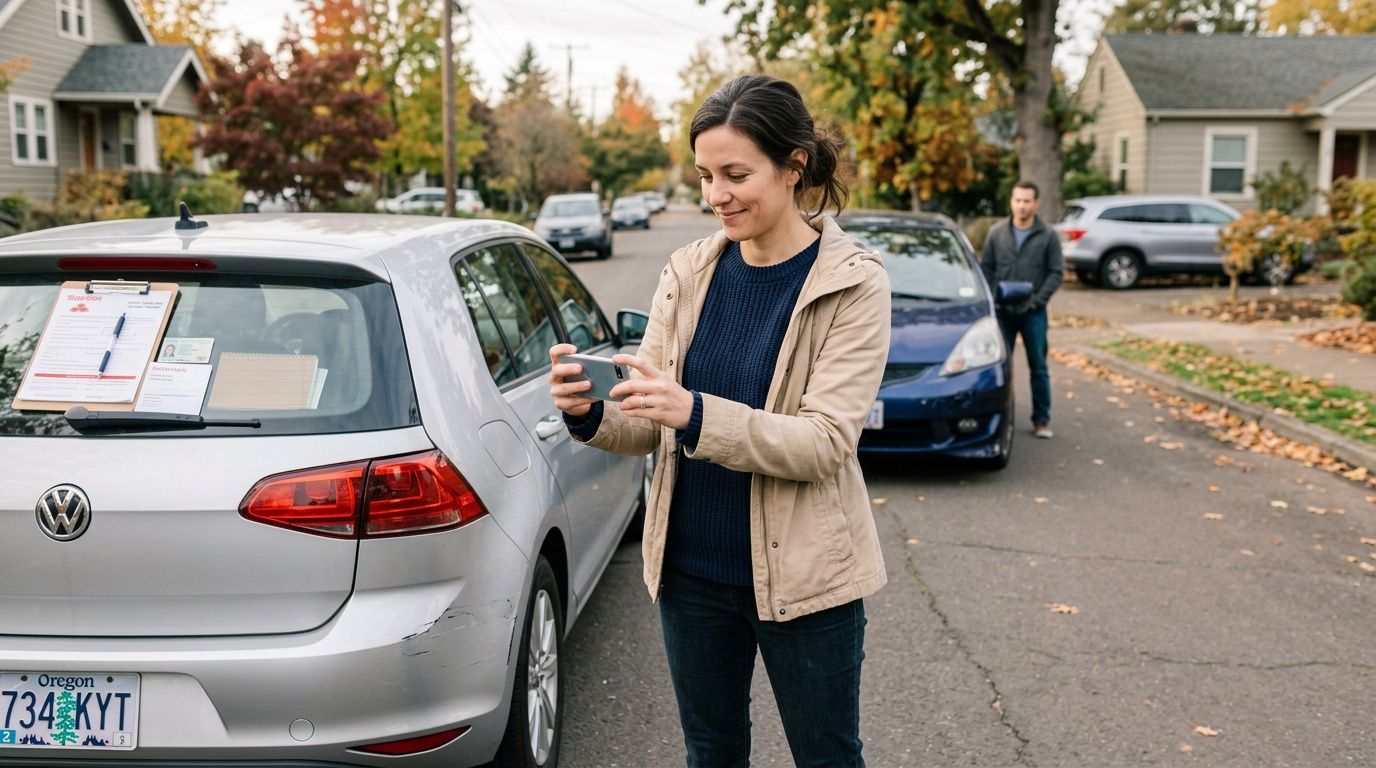
If the vehicle can be moved safely, get it out of traffic. Turn on the hazard lights. If anyone may be hurt, call emergency services first and deal with the paperwork after that.
Then start documenting. Use your phone and get wide photos, close photos, plate numbers, the position of the vehicles, and the surrounding area. If there are skid marks, broken pieces, curb contact, or deployed airbags, photograph that too.
What to collect at the scene
A small mistake here can create a bigger problem once the claim starts.
- Driver information: Full name, phone number, address, license number, and insurance carrier.
- Vehicle details: Plate number, make, model, and color.
- Scene records: Time, location, weather, and anything unusual about the road.
- Witness details: Names and contact information if anyone saw what happened.
Practical rule: Don't rely on memory after an accident. Write it down while you're standing there.
When you speak with the other driver, keep it calm and brief. Exchange information. Don't argue roadside about fault, and don't guess about damage you can't see yet.
Making the first insurance call
When you contact your insurer, stick to the basic facts. Give them the date, time, location, the other party's information, and a short description of what happened.
If they immediately start directing you to a particular shop, note the name, but don't treat that as your only option. You can also review a straightforward post-accident checklist from Searson Collision Center if you want a simple reminder of the order to handle things.
A clean first report helps later when the estimate is compared to the loss description. Loose details and missing photos tend to create delays, especially once hidden damage turns up during teardown.
Your Right to Choose Paint and Body Shops in California
You report the claim, and within minutes the insurance adjuster gives you a shop name and says they can get things started right away. After sixty years in Salinas body shops, I can tell you what that usually does to people. It makes them think the decision has already been made.
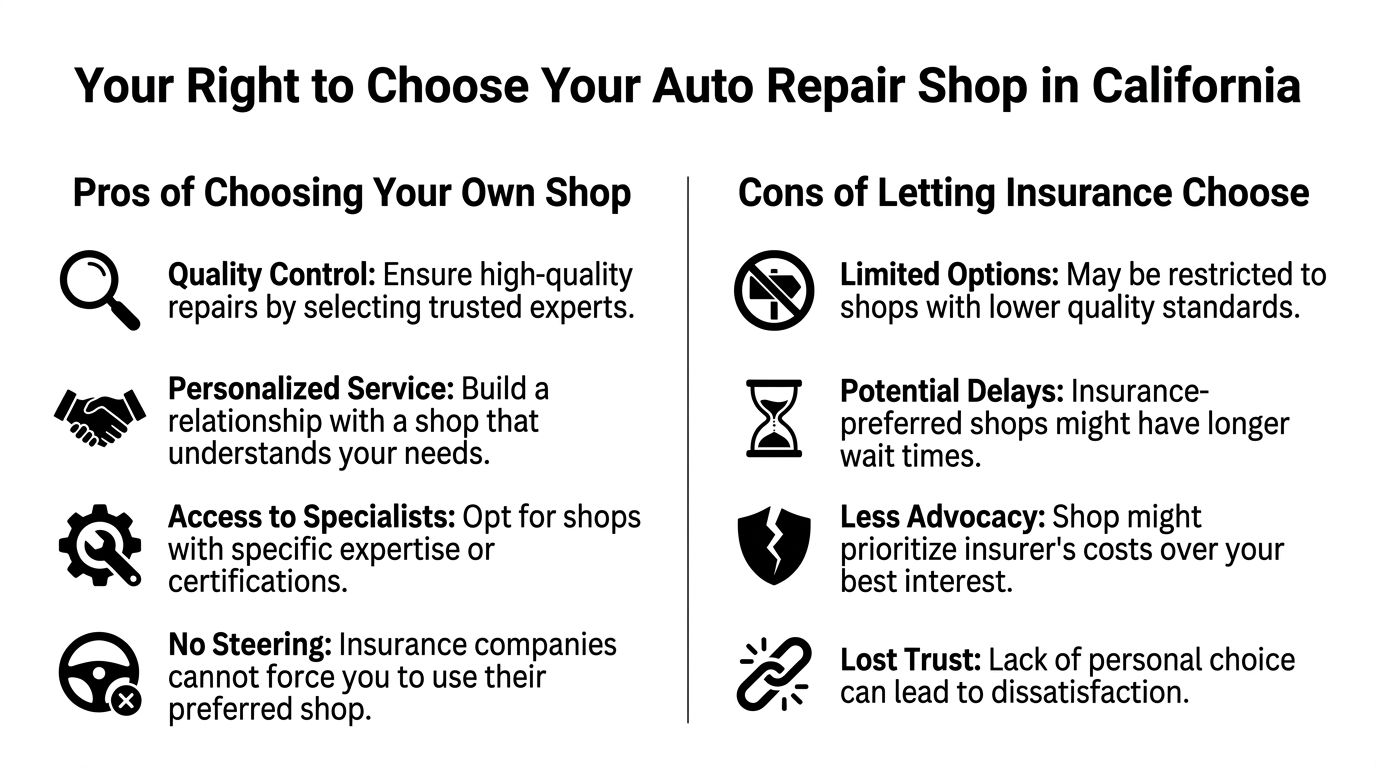
It has not. In California, you choose the repair shop. The insurance company can recommend a shop. It cannot require you to use one.
What the California rule means day to day
California Insurance Code § 758.5 and the Auto Body Repair Consumer Bill of Rights under 10 CCR § 2695.85 are the rules people usually mean here. In plain English, the insurer handles payment questions and claim administration. You still decide where the car goes for repairs.
That right matters most when the claim is moving fast and the vehicle owner is rattled. A referred shop may be perfectly competent. The problem is assuming the insurer's preference is the same as your own interest. Those are not always the same thing, especially if you care about repair documentation, parts choices, or whether the shop will press for overlooked damage during teardown.
What insurance steering sounds like
Steering is usually subtle. You hear it in the wording.
- "We can make it easier if you use one of our shops."
- "We can't guarantee the work anywhere else."
- "That shop isn't in our program."
- "You'll have fewer delays if you stay in network."
Some of those statements point to real administrative convenience. They do not cancel your right to pick the shop. In my experience, that is the part drivers need to hold onto.
Convenience for the claim file is not the same as a repair plan built around your vehicle.
How to respond without turning it into an argument
Keep it calm and plain. Tell the representative you appreciate the referral, but you have chosen your own repair facility and want the claim handled there. Ask them to note in the file that you are exercising your right to select the repair shop.
If you want a plain-language explanation from the shop side, this article on whether your insurance company gets to choose where your car is repaired explains the issue clearly.
One honest caution. A direct-repair shop is not automatically bad, and an independent shop is not automatically good. The key question is whether the shop will inspect thoroughly, explain what it finds, document supplements, and stand its ground if the estimate misses damage. That is where a vehicle owner keeps some control instead of handing the whole process over to the insurer.
How to Properly Evaluate Local Auto Body Shops
There are a lot of shops out there. The U.S. Car Body Shops industry is projected to reach $76.9 billion in 2026 and includes about 105,000 businesses, which tells you how varied the field is and why credentials and process matter when you compare facilities, according to IBISWorld's U.S. car body shop industry profile.
When a customer chooses well, the conversation with the shop usually feels steady from the start. The front office doesn't dodge questions. The estimate isn't vague. The shop explains what it knows, what it doesn't know yet, and what could change once disassembly begins.
 auto body shops with seven key criteria for choosing a professional service provider.” />
Watch how the estimate is handled
An estimate is more than a price sheet. It's the first sign of whether the shop is careful.
A good estimator looks at panel gaps, wheel position, suspension clues, and signs of impact transfer. They ask what happened, where the hit landed, and whether the vehicle is pulling, vibrating, or showing warning lights. They don't just circle the obvious dent and move on.
In collision repair, poor communication at the estimate stage causes problems later. One industry discussion on estimating found a 59% completion rate on manually processed estimates in a documented case, and consultants cited a target that shops should close at least 80% of walk-in estimate prospects. That same report notes some shops fall into the 40% to 50% range when the sales side of estimating is weak. You can read that in this Auto Body News report on estimate completion and conversion.
The lesson for a vehicle owner is simple. If the estimate process feels rushed, confusing, or half-finished, the repair process often follows the same pattern.
Ask about training and approvals
Modern repairs depend on trained people, not good intentions.
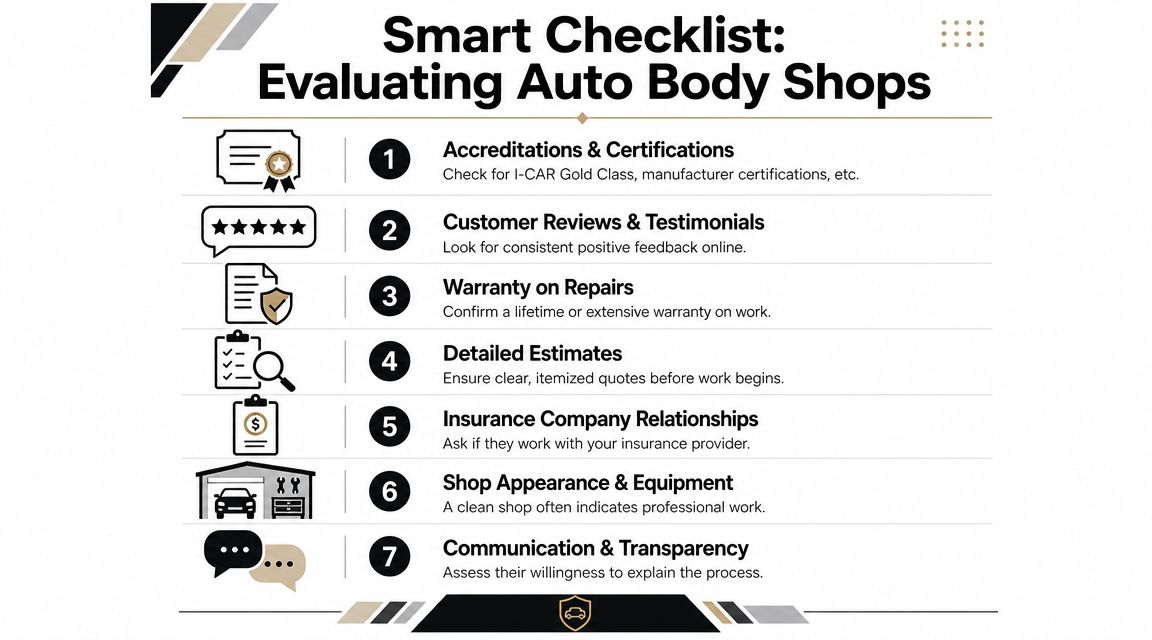
Look for current collision training credentials such as Gold Class I-CAR. Ask whether the shop is AAA approved if that matters to you. Approval programs don't guarantee perfection, but they do show the shop has met outside standards instead of grading itself.
A helpful comparison is to ask, "Who will be involved in this repair, and how current is their training?" That's a fair question, especially when structural repair, refinishing, or suspension damage may be involved.
For a plain explanation of what that approval means, this page on what it means when a body shop is AAA approved gives the basics.
Read the estimate line by line
You don't need to know every labor code, but you should expect the estimate to be specific.
Look for line items that separate body work, paint work, parts, and related operations. If the sheet is full of broad wording and very little detail, ask questions before authorizing anything.
A useful way to compare two shops is this:
| What to compare | What you want to see |
|---|---|
| Parts listing | Clear description of what is being replaced or repaired |
| Refinish operations | Enough detail to show how paint work is being handled |
| Structural notes | Written acknowledgment if frame or structural checks are needed |
| Supplements | An explanation that hidden damage may require added approvals |
| Communication | Who calls you, and when |
A short estimate isn't always a dishonest one. Sometimes the damage is simply not fully visible yet. The honest shop says that out loud.
Ask about OEM and aftermarket parts
Parts choice affects fit, finish, and cost. It also affects how a claim discussion goes.
OEM parts are made by the vehicle manufacturer or for that manufacturer. Aftermarket parts are made by another company. In some repairs, aftermarket parts may be acceptable. In others, customers prefer OEM for fit, consistency, or peace of mind.
The important thing is not to let the parts decision stay hidden in the paperwork. Ask which parts are listed now, whether substitutions are expected, and how the shop handles fit issues if a non-OEM part doesn't line up properly.
Searson Collision Center is one local option that handles collision repair, refinishing, structural repair, alignment and suspension work, and insurance claim assistance for drivers in Salinas and the Monterey Bay Area. That kind of full repair scope can matter when damage travels beyond the visible panel.
Get the warranty in plain language
Don't settle for a vague promise that the work is "covered."
Ask what the warranty covers on paint and refinishing, on body labor, and on any replacement parts supplied through the repair. Ask whether the warranty is limited by ownership, time, or location.
Then ask one more question. If something doesn't look right after delivery, who do you call, and what happens next? The answer will tell you a lot about the shop's attitude after the keys are handed back.
Navigating the Insurance Claim with Your Chosen Shop
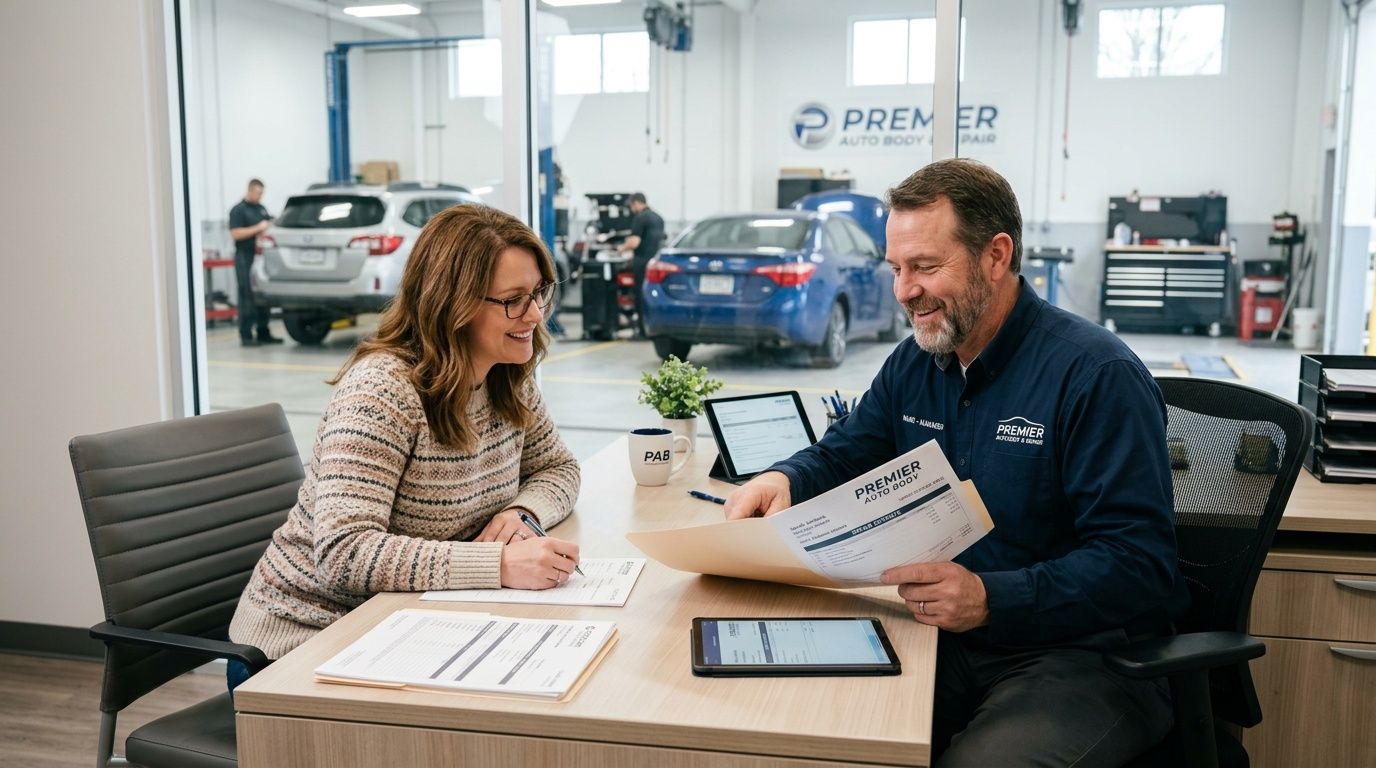
Once you've picked the shop, the job shifts from shopping to coordination. A good repair facility earns its keep during this phase. It should know how to deal with adjusters, photos, approvals, and supplements without making you carry every piece of the file yourself.
 auto body shop reviews paperwork with a female customer at a desk.” />
What your shop should do after you authorize repairs
The shop should send its estimate and documentation to the insurer, answer follow-up questions, and keep the file moving. You shouldn't have to chase both sides just to find out whether the repair is approved.
In production, repair shops also track how work is flowing through the building. One collision KPI discussion notes that technician utilization is benchmarked at 85% or higher, while warning that the number can be misleading if estimates are padded or if parts delays leave technicians waiting. It also points to communication breakdowns as a main cause of production trouble. That analysis appears in this overview of collision repair KPI metrics.
From the customer side, that means delays aren't always about laziness or indifference. Sometimes parts are backordered, hidden damage was found, or the insurer hasn't approved an added operation yet. A solid shop will tell you which of those is happening.
Why supplements matter
A supplement is an added estimate for damage that wasn't visible on the first inspection. That happens all the time, especially on bumper hits, quarter damage, and anything that looks minor from the outside but transfers force inward.
A proper supplement includes photos, updated line items, and an explanation tied to the teardown findings. If the shop doesn't document hidden damage carefully, the insurer has room to push back, and that can leave the repair stuck.
The first estimate is often the starting point, not the final map. Hidden damage is part of collision work, not a sign that someone did something wrong.
If you're still at the beginning of the process, this guide on how to file a car insurance claim is a practical walk-through of the paperwork side.
If the repair is cosmetic and you're paying yourself
The insurance workflow doesn't apply to every job. If you're fixing a scrape, small dent, or parking lot damage out of pocket, the questions change.
You want to know whether the repair can stay localized, whether blending is needed for color match, and whether the damaged panel should be repaired or replaced. For smaller work, a shop that explains the repair path clearly is often more useful than one that provides a number without explanation.
What About Dents, Scratches, and Non-Insurance Work
Not every visit to paint and body shops starts with a claim number. A lot of people come in because the car still runs fine, but they can't stand looking at the dent in the door or the scrape on the bumper.
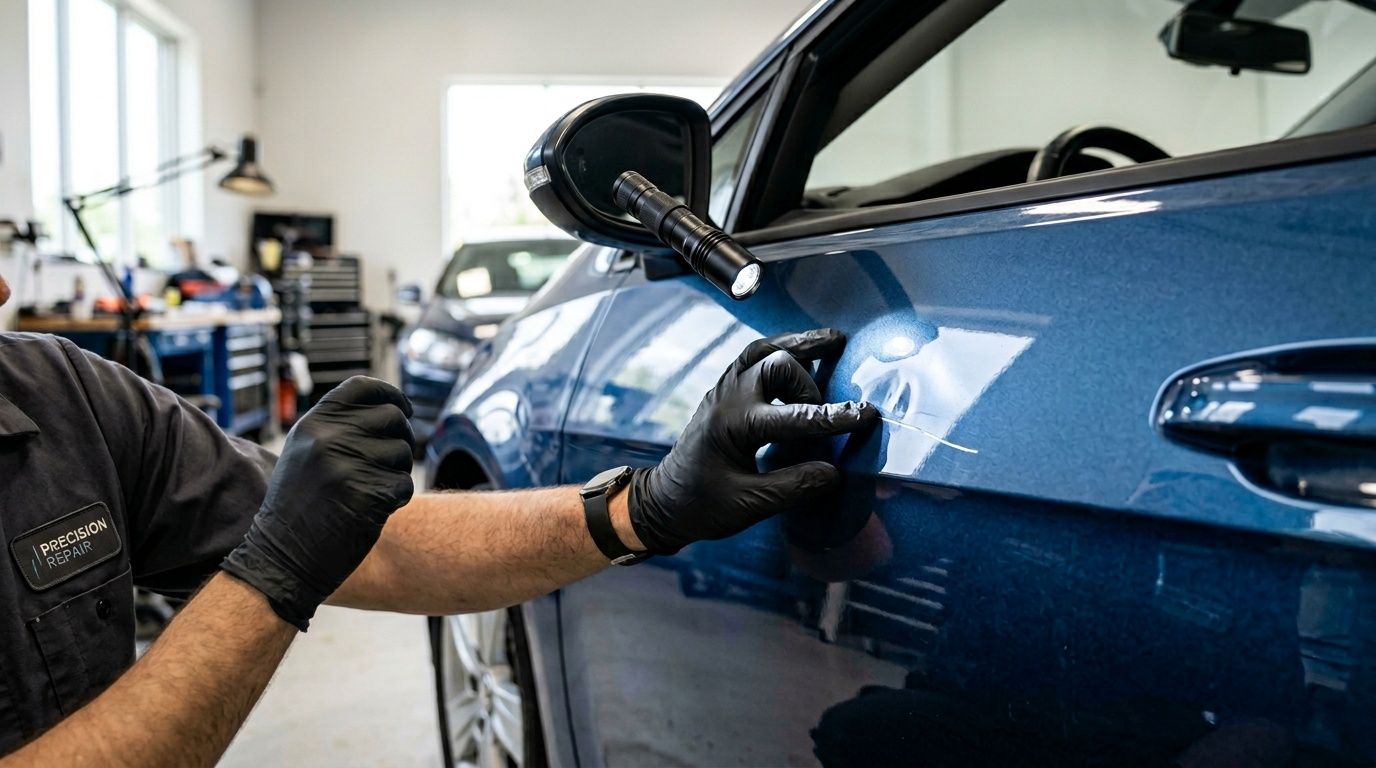
Search behavior reflects that concern. Google Trends for 2025-2026 shows a 40% spike in searches for "paintless dent repair cost without insurance," a sign that many drivers want straight answers about cosmetic work and out-of-pocket options, as noted on this page discussing local body repair demand.
When a smaller repair makes sense
For minor dents and scratches, the main question is whether the damage is only cosmetic or whether the impact disturbed the panel more severely. A shallow dent with intact paint may be handled very differently from a crease on a body line or a scratch that has gone through the finish.
That is why a quick look in the parking lot isn't enough. The shop should inspect the shape of the dent, the condition of the paint, the access behind the panel, and whether adjacent panels will need blending to keep the finish from standing out.
How to compare cosmetic repair quotes
For non-insurance work, ask the shop how it plans to repair the damage, not just what it plans to charge. Two quotes can look similar on paper and still describe very different work.
Use questions like these:
- Will this be repaired or replaced: The answer changes both labor and final appearance.
- Is paint work involved: Some dents can be corrected with minimal finish work. Others require refinishing and blending.
- Will the color be blended into nearby panels: Metallics and certain modern colors often need careful blending to avoid a visible edge.
- What result should I expect: On a daily driver, some owners want the damage gone. Others want the finish as close to factory as possible.
If you're comparing options for a door ding or small panel damage, this page on dent repair for vehicle doors gives a useful local example of the kinds of repairs involved.
The best cosmetic repair shops don't dismiss smaller work. They explain it clearly. If a scratch can be polished, they'll say so. If it needs body work and refinishing to look right, they should say that too.
Your Next Step for a Quality Repair in the Monterey Bay Area
If you've had an accident, don't hand over the repair decision just because the claim has started moving. Ask questions, read the estimate, and choose among paint and body shops based on training, communication, and how clearly they explain parts and repair steps.
For drivers in Salinas and the Monterey Bay Area, Searson Collision Center is a family-owned local shop at 488 Brunken Ave, Salinas, CA 93901. The shop handles collision repair, dent and scratch removal, paint and refinishing, frame and structural repair, alignment and suspension, and insurance claim assistance.
If you want to talk through the damage or get an estimate, call (831) 422-2460 or stop by Monday through Friday, 7:00 AM to 5:00 PM. A straightforward conversation at the start usually saves headaches later.
Frequently Asked Questions About Paint and Body Shops
Can my insurance company make me use their shop
In California, you have the right to choose your repair facility. An insurer can recommend a shop, but it shouldn't present that recommendation as your only option. If you're unsure how that applies to your claim, ask your insurer to explain its process in writing or speak with a licensed professional.
How long will my repair take
That depends on damage severity, parts availability, insurer approvals, and whether hidden damage is found after teardown. A small cosmetic repair may move quickly, while a collision repair involving structural or suspension issues takes longer. The important thing is getting a realistic timeline and updates when that timeline changes.
Will the final bill match the first estimate
Not always. The first estimate is based on visible damage. Once disassembly begins, the shop may find hidden damage that requires a supplement and insurer approval before the repair continues.
Should I get more than one estimate
You can, especially if you're paying out of pocket and comparing repair approaches. If you're using insurance, the better move is often to choose one shop you trust and let that shop document the vehicle thoroughly rather than collecting several rushed estimates that don't reflect teardown findings.
What should I bring when I visit a body shop
Bring the vehicle if it can be driven safely, your insurance information, claim number if you have one, photos from the scene, and any paperwork already sent by the insurer. If the car is making unusual noises, pulling, or showing warning lights, mention that immediately because those clues help the estimator look beyond the visible dent.
How do I know if a paint match will look right
Ask the shop how it handles color matching and whether adjacent panels may need blending. Good paint work isn't just about the formula. It's also about surface prep, application, and how the repaired area transitions into the surrounding finish.
If you'd like a calm, no-pressure estimate or just want to talk through what happened, contact Searson Collision Center at (831) 422-2460 or visit 488 Brunken Ave, Salinas, CA 93901. Hours are Monday through Friday, 7:00 AM to 5:00 PM.