Table of Contents
- Quick Answer
- The Telltale Signs Your Alignment Is Off
- Simple At-Home Checks You Can Perform
- What Causes Wheel Misalignment in the First Place?
- What to Expect from a Professional Alignment Service
- Your Guide to Finding a Trusted Alignment Shop
- Frequently Asked Questions About Wheel Alignment
- How often should I have my alignment checked
- Can a bad alignment happen after a minor accident
- Will insurance pay for an alignment after a collision
- What's the difference between alignment and tire balancing
- Can bad alignment damage other parts of the car
- How do I know whether I need a tire shop or a collision shop
- Get a Clear Answer on Your Car's Alignment in Salinas
Quick Answer
If your car pulls to one side, the steering wheel sits crooked when you're driving straight, or your tires wear unevenly, it may need an alignment. Those signs usually show up after potholes, curb hits, suspension wear, or a collision, and they're worth checking before they turn into tire or handling problems.
If your car feels a little off lately, you're not imagining it. A vehicle with poor alignment often still runs and steers, but it stops tracking the way it should. Knowing how to tell if your car needs alignment helps you catch the problem before it shows up as worn tires, unstable handling, or hidden collision-related damage.
A lot of drivers in Salinas and the Monterey Bay Area first notice it on a normal commute. The steering wheel is no longer centered, the car drifts on a straight road, or one front tire starts wearing faster than the other.
The Telltale Signs Your Alignment Is Off
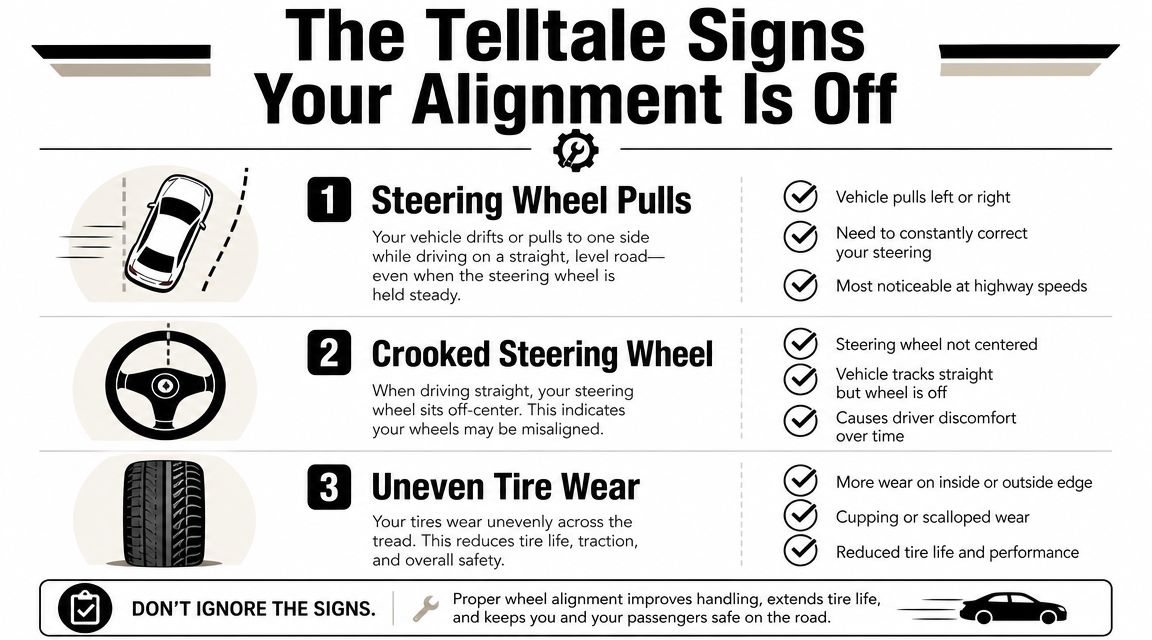
A misaligned car usually tells you something is wrong long before a warning light comes on. The signs are mechanical and visual. You feel them in the steering, and you see them in the tires.
One reason this gets missed is that it's common. A recent car park check found that 8 out of 10 cars needed alignment adjustments, and just a 3mm misalignment can reduce tire life by 20%, according to Absolute Wheel Alignment's wheel alignment facts and figures.
Your steering wheel pulls to one side
This is the complaint I hear most often. You're on a flat road, you ease your grip on the wheel, and the car wants to drift left or right instead of tracking straight.
That pull can be mild or obvious. If you're constantly making small corrections to keep the car in the lane, something is off. It may be alignment, tire pressure, or suspension damage, but it should be checked.
Practical rule: If the car won't hold a straight line on a level road without constant correction, don't treat it like a quirk. Treat it like a handling problem.
The steering wheel is crooked
A centered steering wheel matters more than most drivers think. If the front wheels look straight but the steering wheel sits turned a little left or right, that usually points to alignment geometry being out of spec.
Drivers often adjust to this without realizing it. After a week or two, a crooked wheel starts to feel normal. It isn't normal, and it can be one of the clearest signs that the vehicle needs attention.
You notice uneven or rapid tire wear
Look across the tread of each tire. If one edge is wearing faster than the rest, or if the pattern looks feathered instead of smooth, the tire is not meeting the road correctly.
That matters because tires don't forgive bad alignment for long. Once the wear pattern starts, an alignment can stop further damage, but it won't erase the wear that's already there. If the problem started after a curb hit or impact, it's also smart to consider whether the issue goes beyond alignment and into structural damage. This guide on how to tell if your car frame is bent can help you understand that difference.
Your steering wheel vibrates
Vibration doesn't automatically mean alignment. Tires that are out of balance, damaged wheels, and worn suspension parts can all create a shake through the wheel.
Still, vibration belongs on the list because alignment problems often travel with other front-end issues. If the wheel shakes at speed and the car also pulls or wears tires unevenly, that combination deserves a proper inspection.
A quick symptom check can help:
| Symptom | What it often feels like | Why it matters |
|---|---|---|
| Pulling | Car drifts on a straight road | Steering geometry may be off |
| Crooked wheel | Wheel isn't centered when driving straight | Front wheels may not be tracking evenly |
| Uneven tire wear | Inside or outside edge wears faster | Tires are scrubbing instead of rolling cleanly |
| Vibration | Steering wheel shakes at higher speed | Alignment may be part of a larger front-end issue |
Simple At-Home Checks You Can Perform

You can learn a lot without any tools. The key is to keep the checks simple and safe. You're confirming a suspicion, not trying to do shop work in the driveway.
Do the straight road test carefully
Find a flat, lightly traveled road with good visibility. Make sure your tires are inflated properly first. That step matters because up to 80% of pulling complaints are caused by underinflated tires, and a lateral drift of more than one foot over a 100-foot distance strongly suggests misalignment, according to Firestone's guidance on when it's time for a wheel alignment.
Drive straight at a steady speed and lightly relax your grip for a moment, while staying fully in control. If the car immediately moves off line, that's useful information. Don't do this on a crowned road, in traffic, or in poor weather.
Before blaming alignment, check the simple stuff first. Low air pressure can mimic alignment trouble surprisingly well.
If you're getting the car ready for a longer drive, this fits with the same kind of basic pre-trip check covered in what Salinas drivers should check before summer road trips.
Check the tires and steering wheel position
Park on level ground with the wheels pointed as straight as possible. Sit in the driver's seat and look at the steering wheel. If it's visibly off-center while the car is straight, make note of it.
Then inspect the tires closely.
Look for:
- One-sided tread wear that's heavier on the inside or outside edge
- Feathering where the tread feels smooth one way and sharp the other
- Cupping or patchy wear that can point to suspension or tire issues
- A difference between left and right front tires that doesn't match normal wear
These checks won't tell you the exact angle that's off, but they do tell you whether the car needs a closer look.
Pay attention to what changed and when
The timing helps with diagnosis. If the problem started right after a pothole, curb strike, or minor collision, tell the shop that. A car that drove straight on Monday and pulls on Tuesday usually had a reason.
If the change came on gradually, worn suspension parts may be part of the story. That's why a good inspection matters. Adjusting alignment without checking for loose or bent parts can send the car right back out with the same problem.
What Causes Wheel Misalignment in the First Place?

Alignment doesn't go bad by accident. Something moved, bent, loosened, or wore enough to change how the wheels sit relative to the road. Sometimes it's a sharp impact. Sometimes it's gradual.
Potholes and curb strikes knock parts out of position
A hard pothole hit can jar the steering and suspension enough to change the angles. The same goes for clipping a curb while parking or turning too tight. The impact doesn't have to look dramatic from outside the car.
What the driver feels afterward is usually subtle at first. The wheel may sit a little crooked. The car may start to wander. Then the tire wear shows up.
Suspension wear changes the geometry over time
As steering and suspension parts age, small amounts of looseness add up. Tie rods, ball joints, bushings, and related components hold alignment where it belongs. When those parts wear, the settings can shift even without a single major impact.
That's one reason a simple adjustment isn't always the full answer. If a component has play in it, the vehicle may not hold its alignment for long.
A collision can create more than an alignment problem
Many drivers are caught off guard by this scenario. After a crash, even a moderate one, the wheel may be off center and the car may pull. That sounds like a straightforward alignment issue, but sometimes the actual cause is bent suspension hardware, shifted subframe position, or structural damage that has to be corrected first.
When that happens, a standard tire-store alignment won't tell the whole story. The shop needs to inspect the suspension and the vehicle's structure before adjustment starts. If you're dealing with a recent accident, this overview of what to do after a car accident is a good place to start.
A basic cause-and-effect view looks like this:
| Cause | What it can change | What you may notice |
|---|---|---|
| Pothole | Steering or suspension angle | Pulling, crooked wheel |
| Curb hit | Toe setting or wheel position | Drift, scrub wear |
| Normal wear | Alignment no longer stays consistent | Wandering, uneven wear |
| Collision | Suspension or structural geometry | Pulling plus visible or hidden damage |
If the alignment problem started right after an impact, assume there may be damage behind it until a technician proves otherwise.
What to Expect from a Professional Alignment Service
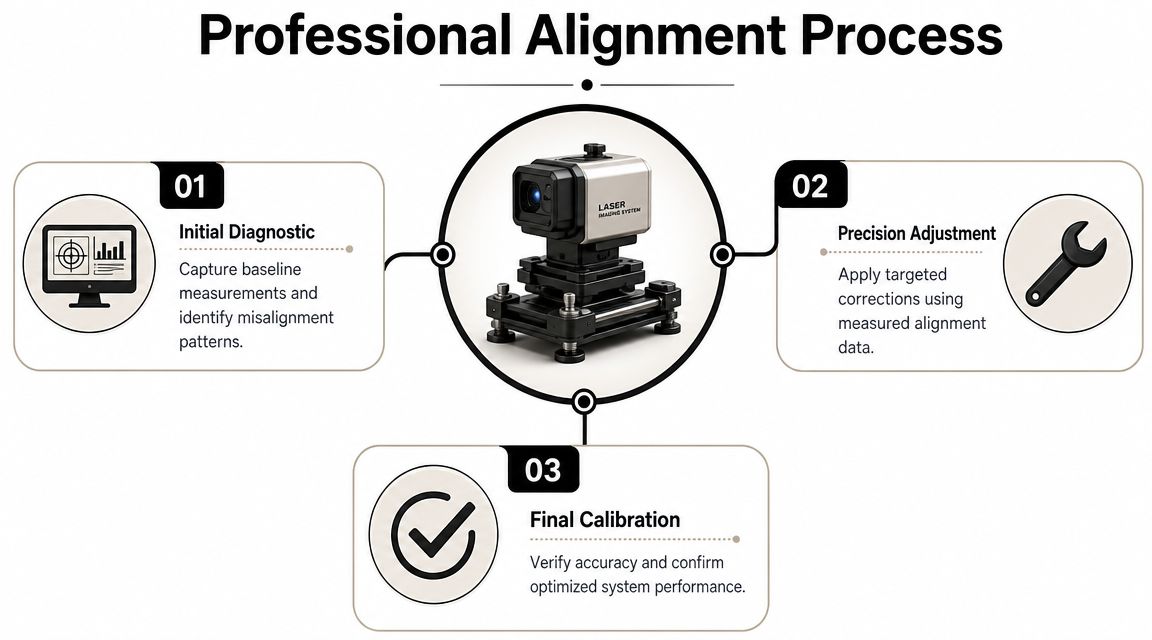
A proper alignment service is part measurement, part inspection, and part repair decision. On a modern vehicle, it's not someone eyeballing the wheels and making a quick tweak.
The shop checks more than steering angle
A technician starts by confirming basics. Tire condition, tire pressure, wheel condition, and obvious suspension concerns all need to be checked before adjustments begin. If something is bent or loose, alignment numbers alone won't solve it.
Modern equipment uses 3D imaging systems to measure the vehicle's angles against factory specifications. The useful part for the customer is the printout. It shows where the readings were before the work and where they ended up after adjustment.
Camber caster and toe are the core measurements
These three angles do the heavy lifting.
Camber is the inward or outward tilt of the wheel when viewed from the front. Toe is whether the tires point slightly inward or outward relative to each other. Caster affects steering stability and return-to-center feel.
According to Honest Accurate Auto's alignment overview, camber should be near 0°, 0.75° out of spec can increase inner tire wear by 50%, and toe misalignment over 0.1° can accelerate wear by 30%. Those aren't small changes. They're exactly why a car can feel mostly normal while wearing out a tire far too fast.
A good technician translates that into plain English. If the toe is out, the tires are scrubbing. If the camber is out, one edge of the tread is carrying too much of the load. If caster is off, the steering can feel unstable or reluctant to return smoothly after a turn.
Why a certified collision shop matters after an accident
If the car has been in a crash, the alignment rack is only part of the job. The bigger question is whether the vehicle is straight and whether all affected parts were repaired correctly first.
That's where collision training matters. An I-CAR Gold Class shop works to current repair standards, and that matters on newer vehicles with complex suspension layouts and driver-assistance systems. Some vehicles also need related calibration work after repairs and alignment, especially when cameras or sensors depend on correct ride height and geometry.
A clean alignment printout is useful, but it doesn't mean much if the underlying damage was never found.
For drivers comparing options, it helps to look at a shop that handles both the measurement side and the repair side. This page on auto alignment and suspension in Salinas shows the kind of work that should happen together when suspension or collision damage is involved.
Your Guide to Finding a Trusted Alignment Shop
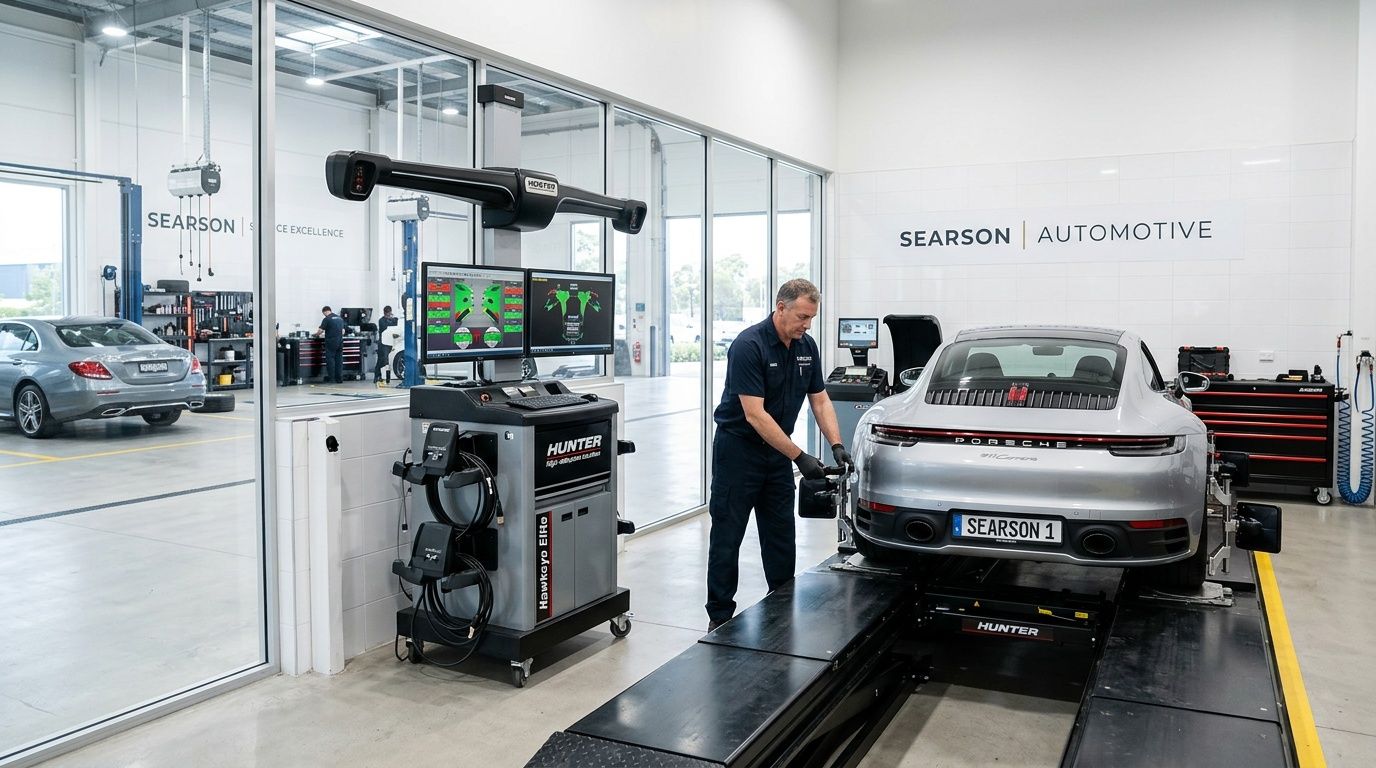
Not every alignment problem belongs at the same kind of shop. If your car just has routine tire wear and no damage history, a general alignment facility may be enough. If the issue started after a collision, you want a shop that understands body, suspension, and structural repair together.
Ask what they inspect before they adjust
This is one of the best questions a customer can ask. If the answer is only about putting it on the rack and setting the angles, keep asking.
A solid shop should talk about inspecting tires, steering parts, suspension components, and any signs of impact damage first. Alignment is the final setting. It isn't the starting point when parts are bent or worn.
Look for collision repair training if the car was hit
Post-accident alignment work is different from maintenance alignment. A collision shop should know how to check whether the suspension mounting points are where they belong and whether the structure is still square.
Credentials help here. I-CAR Gold Class means the shop maintains current collision-repair training. AAA approval is another useful signal because it reflects an outside review of business and repair practices. If you're comparing local options, this guide on how to find a good auto body shop covers what to ask.
Know your right to choose your repair shop in California
If insurance is involved, you are not required to use a shop because an insurer suggested it. California Insurance Code § 758.5 limits insurer steering and protects your ability to choose your repair facility. The practical meaning is clear. You can decide where your car goes for repairs.
The Auto Body Repair Consumer Bill of Rights in 10 CCR § 2695.85 also sets expectations around disclosures and repair choice. For claim-specific questions, it's still smart to confirm details with your insurance provider or a licensed professional.
Here is the trade-off:
- Routine maintenance alignment shop can be fine for normal wear issues with no accident history
- Certified collision center is the better fit when the problem started after impact or when structural or suspension damage may be involved
- Shops that provide printouts and explain findings clearly usually make the process easier for the customer and easier to verify later
Frequently Asked Questions About Wheel Alignment
How often should I have my alignment checked
A good rule is to have it checked when the car starts pulling, the steering wheel sits off center, or the tires show uneven wear. It's also smart after a pothole hit, curb strike, or collision. If your vehicle is driving normally, ask for an alignment check as part of regular maintenance planning.
Can a bad alignment happen after a minor accident
Yes. It doesn't take a major crash to affect alignment. A front corner impact, a hard wheel hit, or suspension movement during a minor collision can change how the car tracks.
Will insurance pay for an alignment after a collision
It may, if the alignment is part of collision-related repairs. Coverage depends on the facts of the claim and your policy. The safest move is to have the damage documented and ask the shop and your insurer how it will be handled.
What's the difference between alignment and tire balancing
Alignment sets the wheel angles so the car tracks correctly and the tires meet the road properly. Balancing corrects uneven weight distribution in the tire and wheel assembly. A car can need one, the other, or both.
Can bad alignment damage other parts of the car
It can definitely shorten tire life and affect how the vehicle handles. It may also put added stress on steering and suspension parts, especially if the root cause is already a worn or damaged component. The longer it goes unchecked, the more likely it is to become a bigger repair.
How do I know whether I need a tire shop or a collision shop
Look at what happened before the symptom started. If the car began pulling after an accident or impact, start with a collision repair shop that can inspect for hidden damage. If there was no impact and the issue developed gradually, a routine alignment check may be the right first stop.
Get a Clear Answer on Your Car's Alignment in Salinas
If you're still unsure how to tell if your car needs alignment, the next step is simple. Have it inspected before tire wear or handling problems get worse. A clear diagnosis can tell you whether you need a straightforward alignment, suspension work, or collision-related repair.
If your car is pulling, wearing tires unevenly, or doesn't feel right after an impact, Searson Collision Center can help you sort out what's really going on. For a free estimate or a straightforward conversation about the repair, call (831) 422-2460 or visit 488 Brunken Ave, Salinas, CA 93901. Hours are Monday–Friday, 7:00 AM–5:00 PM.