Table of Contents
- Quick Answer
- Assessing the Damage What Kind of Dent Do You Have
- The Two Paths for Dent Repair PDR vs Conventional
- How Paintless Dent Repair Really Works
- Your Repair Journey From Estimate to Delivery
- Understanding Cost Insurance and Your Rights in California
- How to Choose a Quality Dent Repair Shop
- Frequently Asked Questions About Dent Repair
- Get a Clear Assessment and a Fair Estimate in Salinas
Quick Answer
A vehicle dent removal service usually involves one of two methods. Paintless Dent Repair works for smaller dents when the paint is still intact, while conventional dent repair is the safer choice for sharper, deeper, or paint-damaged impacts. The right fix depends on the dent's size, location, and paint condition.
You walk out to your car, see a new dent, and immediately start wondering how bad it is, what it'll cost, and whether insurance needs to get involved. That's usually where the stress starts.
A professional vehicle dent removal service should make that situation clearer, not more confusing. Some dents can be worked back out without repainting. Others need full body repair and refinishing to make the vehicle right again.
Assessing the Damage What Kind of Dent Do You Have
The first thing a technician looks at isn't just the dent itself. It's the whole picture. How the metal moved, whether the paint stretched, where the dent sits on the panel, and whether the impact may have affected anything underneath all matter.
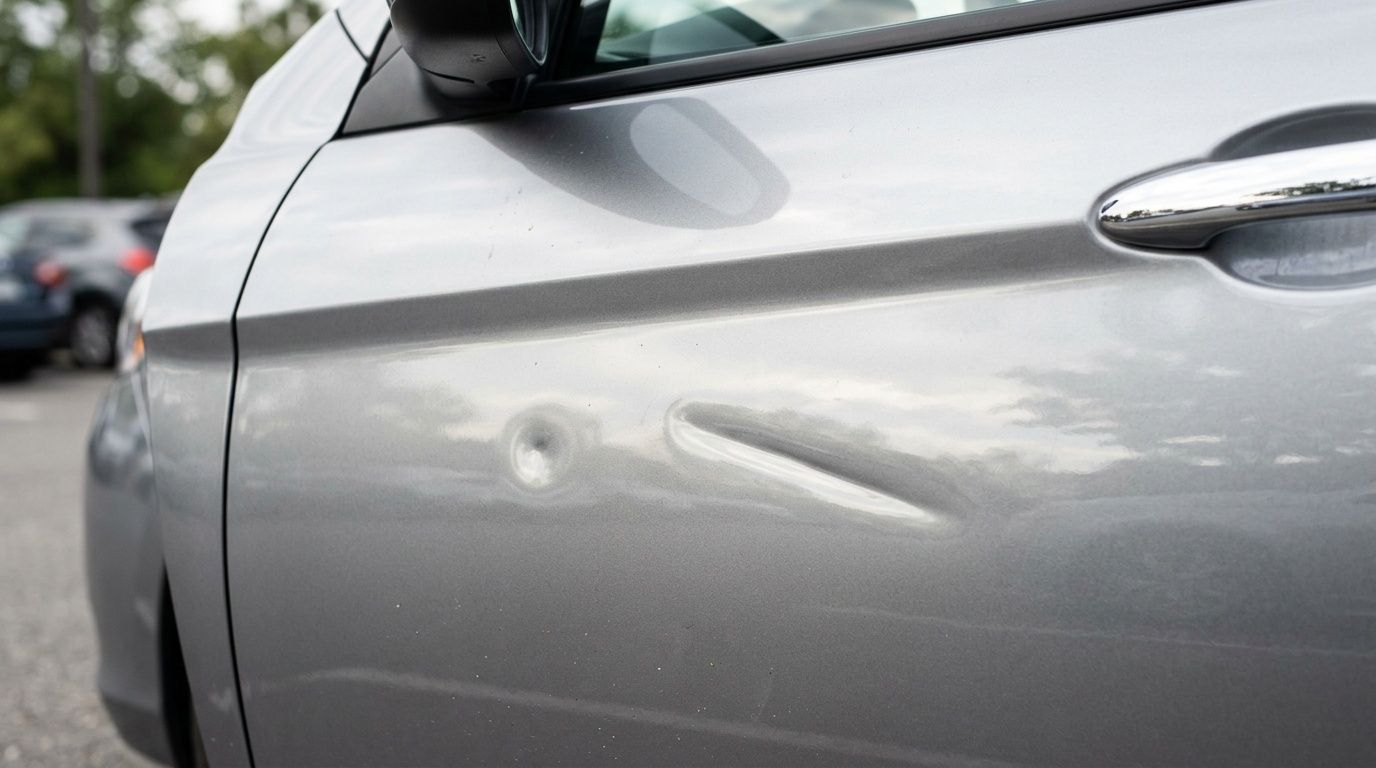
A small round door ding is very different from a long crease across a body line. So is hail damage compared with a dent near the edge of a hood or fender. If you're dealing with storm damage, this guide on whether hail damage on a car can be fixed can help you understand what shops look for.
Common dent types a shop will separate right away
- Small shallow dings are often caused by doors, carts, or minor impacts in parking lots.
- Creases usually come from a more direct hit and are harder to reshape cleanly.
- Edge dents near panel ends can be tougher because the metal is stiffer there.
- Collision dents may look cosmetic at first but can involve bracket, alignment, or structural concerns.
Paint condition is a big dividing line. If the surface is still smooth and intact, repair options stay open. If the paint is cracked, chipped, or scraped through, the repair plan changes because the panel may need refinishing even if the dent itself is small.
Practical rule: Don't judge a dent by its width alone. A smaller sharp crease can be a more involved repair than a larger soft dent.
What you can check before you visit a shop
Stand at an angle and look for distortion in the reflection. Then check these basics:
- Paint damage: Any cracking or broken finish means the panel likely needs more than a simple push-out.
- Panel location: Roofs, hood reinforcements, body lines, and tight edges can limit access.
- Impact severity: If the dent came with a bump, scrape, or wheel hit, ask for a broader inspection.
- Previous repairs: Repaired panels can behave differently than untouched factory metal.
That quick self-check won't replace an in-person estimate, but it helps you ask better questions and understand why one dent can be handled quickly while another needs conventional body repair.
The Two Paths for Dent Repair PDR vs Conventional
Most dent repairs fall into two paths. One preserves the original finish when conditions are right. The other rebuilds the damaged area so the panel is straight, stable, and ready for refinish.
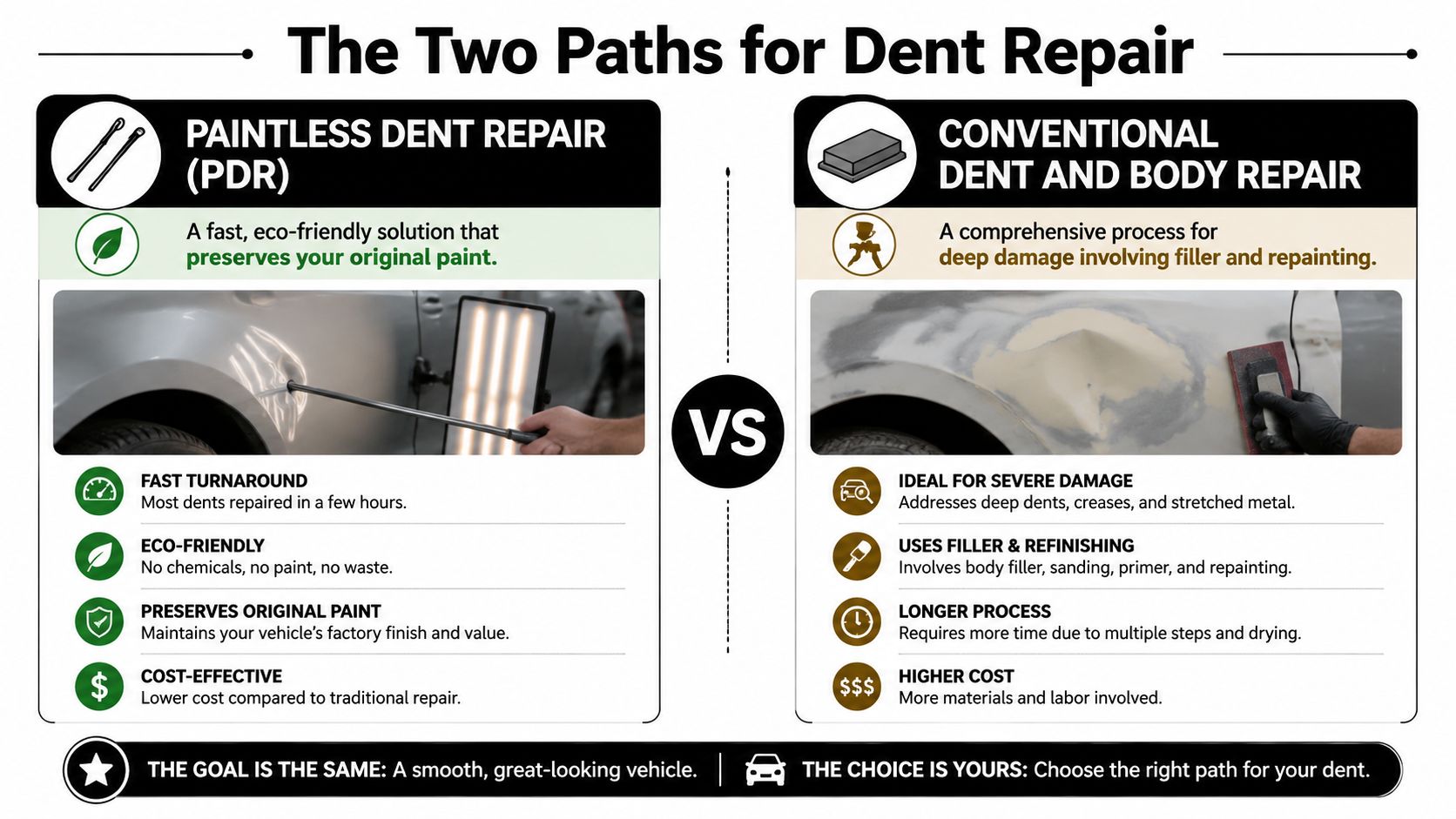
A lot of online advice makes PDR sound like the answer to everything. It isn't. Honest repair starts with knowing when it fits and when it doesn't.
Paintless Dent Repair PDR
Paintless Dent Repair, or PDR, works by reshaping the metal without sanding, filler, or repainting. It's a strong option for minor dents with intact paint, especially when the impact hasn't sharply stretched the panel.
According to CARSTAR's overview of paintless dent repair limits, PDR fails on sharp creases, stretched paint, or large dents where metal has fatigued beyond reshaping, and approximately 30% of dents require conventional repair methods.
That lines up with what experienced body shops see every day. Good PDR candidates are usually shallow, smooth, and accessible. Trouble starts when the metal folds, the edge gets hit, or the finish is already broken.
Conventional Dent and Body Repair
Conventional repair is the right path when the damage is more than cosmetic reshaping can solve. That may involve straightening the panel, performing body repair work, sanding, refinishing, and checking nearby areas for related damage.
This matters after more than a simple parking lot incident. A dent from a low-speed collision can come with panel distortion, bracket movement, or alignment issues that a quick cosmetic fix won't address.
The safest repair isn't always the fastest one. If the dent came from an accident, the panel should be evaluated in context, not by appearance alone.
For drivers in Salinas and the Monterey Bay Area, that's where a full-service body shop matters. Searson Collision Center handles dent and scratch removal as part of broader collision repair work, including paint, structural repair, alignment and suspension, and insurance claim assistance when needed.
How a shop decides between the two
A solid estimate usually comes down to a few practical questions:
| Repair question | If the answer is yes | Likely direction |
|---|---|---|
| Is the paint fully intact? | The finish hasn't cracked or split | PDR may be possible |
| Is the dent shallow and rounded? | The metal still has recoverable shape | PDR is more likely |
| Is there a sharp crease or edge hit? | The panel has a hard fold or tight damage area | Conventional repair is often safer |
| Did the impact involve more than the panel skin? | There may be related collision damage | Conventional inspection and repair |
If a shop pushes one method without explaining why, ask more questions. A reliable estimate should tell you what can be preserved, what needs refinishing, and what the repair is meant to protect long term.
How Paintless Dent Repair Really Works
PDR isn't a suction-cup trick. Done correctly, it's careful metal work. The technician reads the shape of the panel under specialized lighting, finds access behind the dent, and moves the metal back a little at a time.
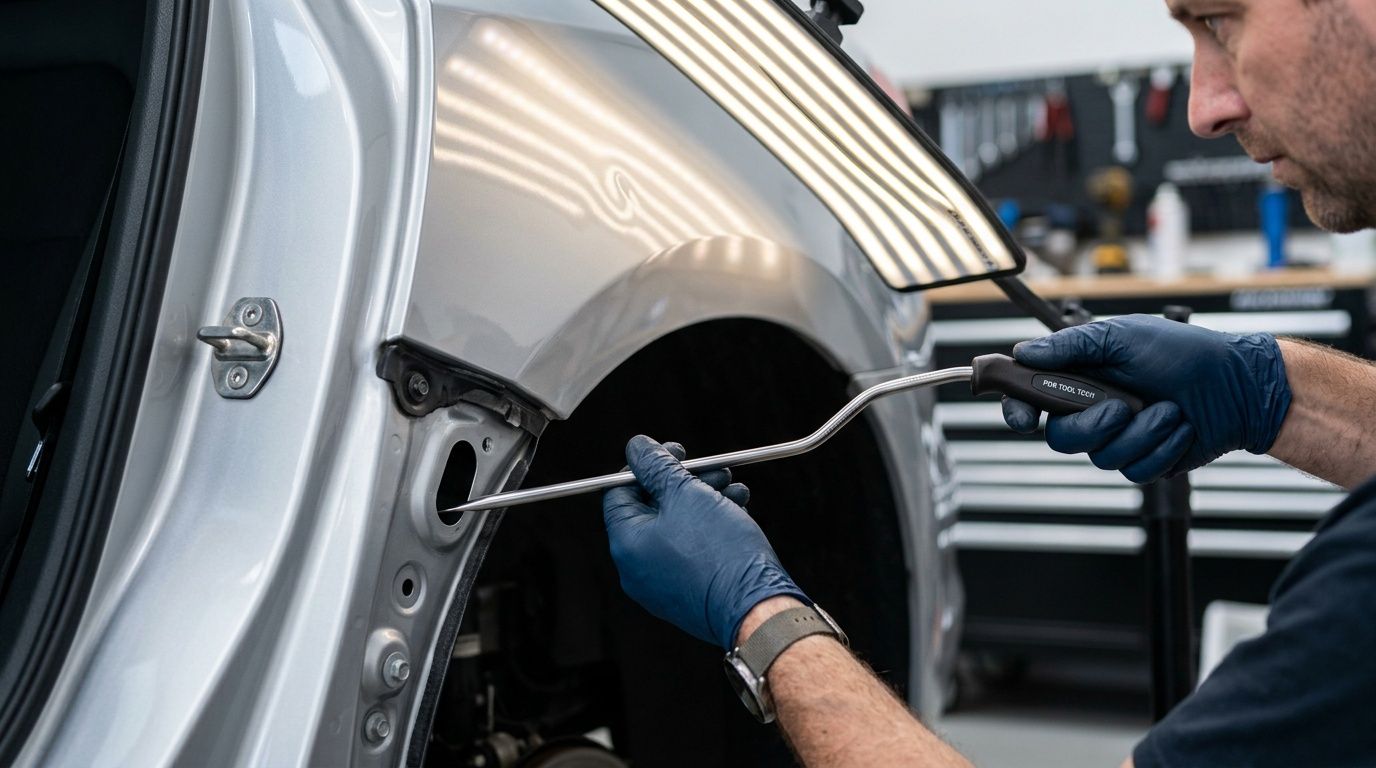
According to Undent's explanation of how paintless dent repair works, technicians use specialized metal rods to apply controlled pressure from the backside of the dent, and success rates exceed 95% for dents under 50 mm in diameter with intact paint.
What the technician is looking for
Before any tool touches the panel, the dent is mapped with reflection boards or LED lights. Those lines show the low spot, any crowns around it, and whether the metal has moved in a way that can be reversed cleanly.
Then the repair becomes very deliberate:
- Access first: Interior trim or nearby panels may need to be moved for tool access.
- Pressure control: Rods, picks, and mechanical advantage tools are used in small movements.
- High spot correction: Knockdown tools tap raised areas back into line.
- Constant checking: The repair is judged by reflected light, not by guesswork.
A good PDR repair is slow on purpose. Rushing is how you create high spots, cracked paint, or a panel that still looks wavy in the sun.
When glue pulling comes into play
Some dents can't be reached from behind. Reinforcements inside hoods, roofs, or tight panel areas may block access. In those cases, technicians may use glue tabs attached to the outside of the dent and pull the damage outward in controlled steps.
That method still requires judgment. Pull too hard and you create a high spot. Pull the wrong area and the dent shape changes in the wrong direction. That's why shop training matters. You want a repairer who understands when to push, when to pull, and when to stop and recommend conventional body repair instead.
A useful checklist is simple. Ask about technician training, ask how the shop decides between PDR and refinishing, and ask what happens if the damage turns out to be beyond paintless correction after closer inspection.
Your Repair Journey From Estimate to Delivery
For most drivers, the hardest part is not knowing what happens after the keys change hands. A good shop should make the process predictable and easy to follow.
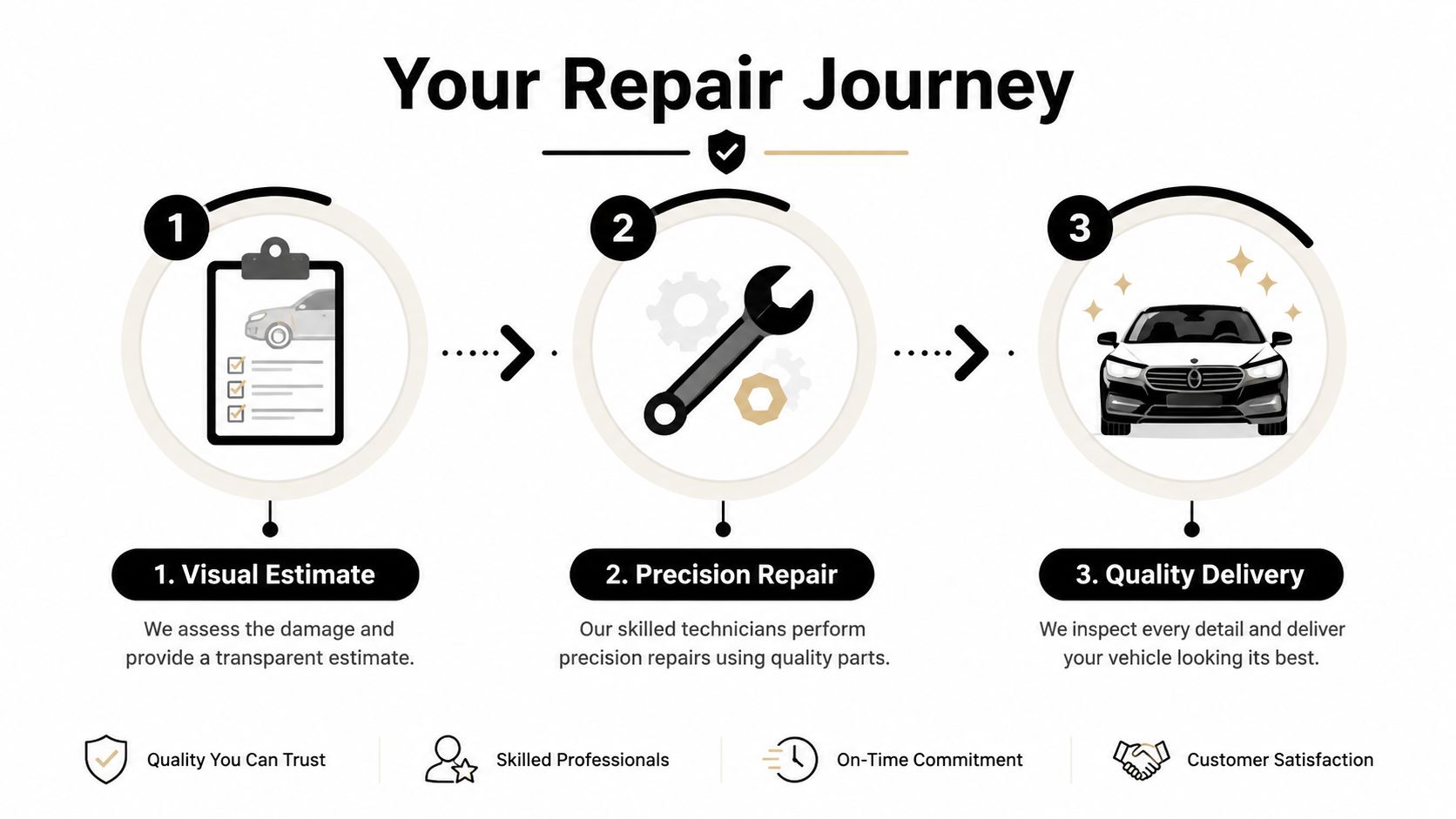
If you want a broader look at the body shop timeline, this article on what happens between drop-off and pickup at a body shop gives a helpful overview.
The initial estimate
The estimate starts with visible damage, but the conversation matters too. The shop will ask how the dent happened, whether anything else was struck, and whether the repair is insurance-related or out of pocket.
That's also when the likely repair path gets narrowed down. Some dents are obvious PDR candidates. Others need disassembly or a closer look before anyone can promise the proper method.
Repair authorization
Once the repair plan is clear, the shop gets approval from you and, if applicable, your insurer. If the vehicle came in after an accident, communication matters most during this stage.
A solid shop explains what's confirmed, what might still be hidden, and when supplements may be needed if additional damage shows up after teardown.
The repair work
This part varies based on the damage. A minor ding may involve precise metal correction and a final quality check. A more involved dent repair may include panel work, surface preparation, refinishing, and checking nearby suspension or alignment concerns if the impact suggests it.
- Minor cosmetic damage: Often stays limited to the panel itself.
- Broader impact damage: May require inspection beyond the visible dent.
- Paint work: Needs careful prep and color matching for a proper finish.
Final inspection
Before delivery, the repair should be checked in proper lighting and from multiple angles. The panel should look right, the finish should match, and anything disturbed during repair should be reinstalled correctly.
If you pick up a vehicle and only inspect it in shade or under shop lights, you can miss waves, mismatched color, or edge issues. Walk around it outside if possible.
A straightforward handoff includes a review of the work performed, any insurance paperwork, and answers to the questions you still have before you drive away.
Understanding Cost Insurance and Your Rights in California
Cost depends on the repair method, the panel involved, the paint condition, and whether there may be hidden damage behind what you can see. That's why a real estimate matters more than an online guess.
If you're starting an insurance claim, this guide on how to file a car insurance claim can help you get organized before the first call.
What affects the estimate
Two dents that look similar in a photo can price out very differently in person. Shops look at access, metal movement, finish condition, repair time, and whether the impact affected anything besides the panel skin.
These are the usual cost drivers:
- Dent shape and location: Flat, open areas are different from tight edges and body lines.
- Paint condition: Intact finish keeps more options on the table.
- Repair scope: Cosmetic-only damage is different from collision-related repair.
- Insurance involvement: Claim handling can add paperwork, approvals, and supplements.
The right estimate should be specific. It should tell you what's known, what still needs confirmation, and why the recommended repair method fits the damage.
What California law means for you
In California, you have the right to choose your own repair shop under California Insurance Code § 758.5. In plain terms, an insurance company can't require you to use a specific shop. They may suggest one, but the decision is yours. You can also review the state's Auto Body Repair Consumer Bill of Rights under 10 CCR § 2695.85 for general consumer protections. For guidance on your specific policy, speak with your insurer or a licensed professional.
According to Dentworks on repair choice and claim steering in California, drivers have the legal right to choose their own repair shop, insurers often steer customers to preferred networks, and post-hail storm claims rose 22% in California.
That matters because a fast claim isn't always the same thing as a complete repair. If the dent came from an actual collision, a proper inspection may need to look beyond the visible panel damage.
Choose the shop that explains the repair, not the one that just says they can “handle it.” Clear answers usually signal better work and fewer surprises.
A trustworthy shop can also help document damage, communicate with the adjuster, and support supplement requests if hidden damage appears once repair begins. That's advocacy, not legal advice, and it can make the process much less frustrating.
How to Choose a Quality Dent Repair Shop
Dent repair has become a bigger category in the auto body world. According to Intent Market Research on the global PDR service market, the global Paintless Dent Repair service market was valued at USD 4.3 billion in 2024. As that market grows, it's worth being careful about who works on your vehicle.
A polished ad or a mobile-only pitch doesn't tell you much about repair standards. What matters is training, equipment, communication, and whether the shop knows when a dent is more than a dent.
What to check before you hand over your keys
If you're comparing options, use a short list:
- Training and certification: Ask whether technicians receive ongoing collision repair training, especially for modern materials and repair procedures.
- Repair scope: Make sure the shop can handle more than cosmetic dent work if the estimate changes after inspection.
- Written documentation: You should get a clear estimate and a clear explanation of the recommended method.
- Recent local reviews: Look for comments about communication, repair quality, and how problems were handled.
- Facility stability: An established shop is easier to reach if you have questions after pickup.
For a practical local comparison, this page on paint and body shops can help you think through what separates a full repair facility from a limited dent-only operation.
A shop should also be honest about limits. If a technician says every dent can be handled paintlessly, that's a red flag. Good repair starts with accurate assessment, not a one-method sales pitch.
Frequently Asked Questions About Dent Repair
A few questions come up in almost every estimate conversation. These are the ones people usually want answered before they decide what to do next.
If you've ever wondered why an approved repair total changes after work starts, this explanation of why a repair estimate can go up after the shop starts working on the car covers one of the most common surprises.
How long does dent removal take
It depends on the damage and the repair method. A minor dent with intact paint can move much faster than a panel that needs body repair and refinishing. The only honest answer comes after the vehicle is inspected in person.
Will a dent repair show up on my CarFax report
It can, but shops don't control vehicle history reporting. Insurance involvement, reporting sources, and who submits repair information all play a role. If that's a concern, ask the shop what documentation will be created during the repair.
Can you fix dents on an aluminum car body
Yes, aluminum panels can be repaired, but they don't behave exactly like steel. The tools, technique, and repair judgment matter more because the metal responds differently under pressure and during refinishing. That's one more reason to use a trained collision repair shop.
Will my insurance rates go up if I file a dent claim
That question is policy-specific, so the shop shouldn't guess. Your insurer can explain how a claim may affect your coverage or premiums. If you're unsure whether to file, get an estimate first so you can make an informed decision.
Do I need an appointment for a free estimate
That depends on the shop's schedule, but calling ahead is usually the safest move. It helps make sure the right estimator is available and gives you a better chance of getting answers on the spot. If the damage came from an accident, bring your claim information if you already have it.
Get a Clear Assessment and a Fair Estimate in Salinas
A good vehicle dent removal service should leave you with fewer questions, not more. The right repair depends on what happened to the metal, what happened to the paint, and whether the damage is cosmetic or part of a larger collision issue.
If you're in Salinas or anywhere in the Monterey Bay Area, the next step is simple. Get the vehicle looked at in person, ask how the shop decided on the repair method, and make sure you understand the estimate before authorizing work.
If you want a straightforward estimate or just want to talk through your options, contact Searson Collision Center at (831) 422-2460 or visit 488 Brunken Ave, Salinas, CA 93901. The shop is open Monday through Friday, 7:00 AM to 5:00 PM.