Table of Contents
- Quick Answer
- Repair or Replace? The First and Most Important Question
- What Determines the Cost of a Simple Windshield Repair
- Factors That Drive the Cost of a Full Windshield Replacement
- How Insurance Covers Your Windshield Damage in California
- Getting an Accurate Estimate in the Salinas Area
- Frequently Asked Questions About Windshield Service
- Get a Clear Answer for Your Vehicle
Quick Answer
A windshield repair for a small chip or short crack is usually far less expensive than replacing the whole windshield. Minor repairs commonly fall in the $50 to $150 range, while full replacement can climb much higher, especially on newer vehicles with driver-assist cameras and recalibration needs.
You’re probably here because a rock hit your windshield, the damage looks small, and now you’re trying to figure out how much is a windshield repair before it spreads. That’s a fair question, and the honest answer depends on one thing first: whether the glass can still be repaired safely or whether it needs full replacement.
Around Salinas and the Monterey Bay Area, the cost surprises usually come from two places. The first is damage that looks minor but sits in a bad location. The second is newer vehicle technology that turns a simple glass job into a much more involved repair.
Repair or Replace? The First and Most Important Question
Before anybody talks price, they need to answer the basic question correctly. Can the windshield be repaired, or does it need replacement? If that call is wrong, the estimate doesn’t mean much.
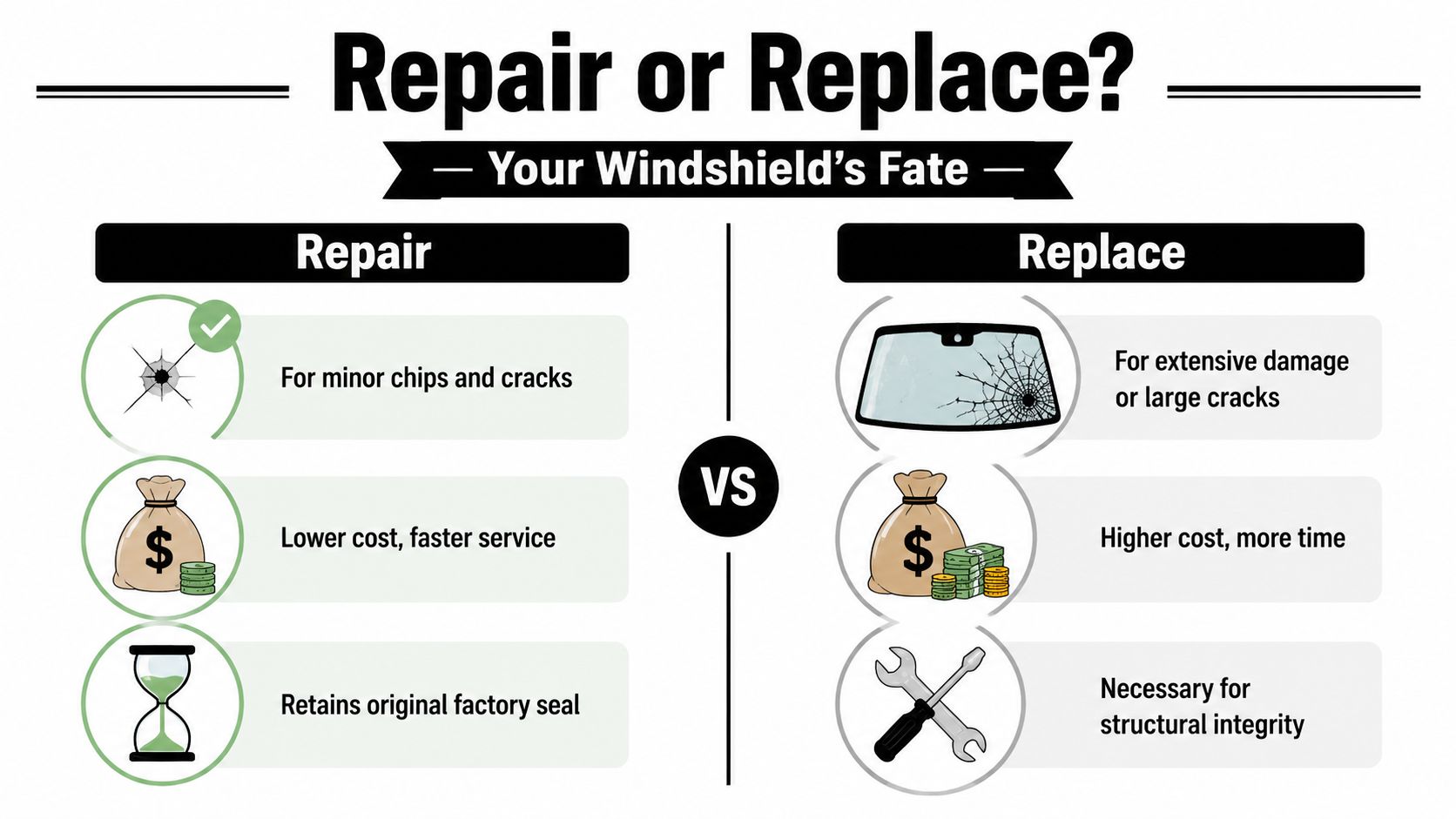
The biggest cost difference starts here. According to AAA’s windshield cost overview, repairing a windshield chip or small crack typically ranges from $50 to $150, while replacement starts at $200 and can exceed $1,000, making repair the more economical option in over 80% of minor damage cases where feasible.
When a repair makes sense
A repair usually makes sense when the damage is small, stable, and away from the driver’s direct line of sight. The goal is to stop the damage from spreading, restore strength to the glass, and avoid disturbing the original factory installation.
That last part matters. Keeping the original windshield in place means you also keep the factory seal if the damage is repairable. In practical terms, that’s one reason shops try to save the original glass when they safely can.
Practical rule: If the damage is small and caught early, repair is usually the cheapest and cleanest path.
A lot of drivers wait because the chip looks harmless. Then temperature changes, road vibration, or a rough pothole turns that small mark into a long crack, and the conversation changes fast.
For a broader look at why repair bills keep climbing across the industry, this explanation of why repair costs keep going up gives useful context.
When replacement is the safer call
Some windshields shouldn’t be repaired. If the damage is too large, too deep, badly shaped, or placed where it interferes with the driver’s view, replacement is often the safer answer.
The same is true when the crack reaches an edge, spreads across a wide area, or affects the structural role of the glass. A windshield does more than block wind and rain. It supports roof strength and helps the vehicle’s safety systems work the way they were designed to.
If the damage compromises visibility or the integrity of the glass, saving money on a repair isn’t worth it.
Repair and replacement side by side
Here’s the plain comparison most drivers want:
| Issue | Repair | Replacement |
|---|---|---|
| Best for | Small chips and limited cracks | Large cracks, edge damage, unsafe locations |
| Cost | Lower in most cases | Higher, sometimes much higher on newer vehicles |
| Time | Usually faster | More involved |
| Original factory seal | Preserved | Removed and replaced |
| ADAS considerations | May be limited or none, depending on vehicle | Often a major factor |
A good shop shouldn’t push replacement when repair is safe. It also shouldn’t promise a repair when the glass has already crossed the line. That’s where a hands-on inspection matters more than any broad price list.
What Determines the Cost of a Simple Windshield Repair
Once the windshield qualifies for repair, the next question is why one chip repair lands near the low end and another costs more. The answer usually comes down to size, location, and damage pattern.
Size changes everything
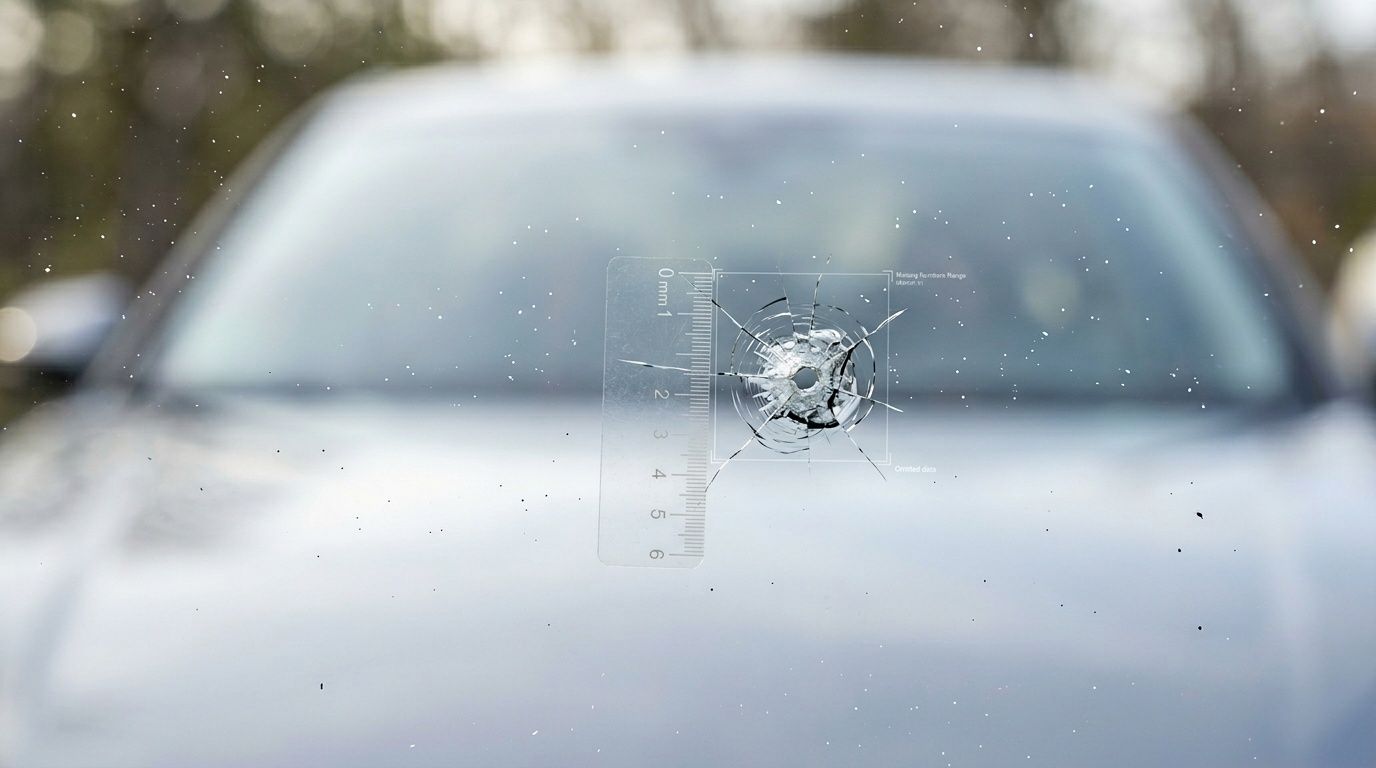
According to Ultrabond’s data on windshield chips and cracks, minor chip repairs typically range from $50 to $150, with chip repairs averaging $50 to $65. That lower end usually applies when the chip is small, clean, and treated before dirt and moisture get into it.
As damage grows, repair gets trickier. The resin has to travel into the break properly, the air has to be removed, and the finished result has to hold. Larger damage often takes more time and has a lower chance of a clean result.
Location matters more than most drivers expect
A chip near the outer area of the glass can be a different conversation than a chip directly in front of the driver. Even when the damage is physically repairable, location affects whether the final result is acceptable.
Ultrabond also notes that chips in the driver’s line of sight or larger than 6 inches often exceed repair limits and may require replacement. That isn’t a shop trying to upsell the job. It’s a visibility and safety issue.
A repair is meant to stop the damage and strengthen the glass. It doesn’t promise invisible results in every location.
Damage pattern affects the labor
Not all chips behave the same way. A simple round break is usually easier to fill than a star-shaped hit with several fine legs running outward. A short crack can also be more complicated than it looks because the stress has already started moving through the laminate.
Shops also look at contamination. If rainwater, dust, washer fluid, or old DIY resin has gotten into the break, the repair can become less predictable.
A proper estimate should account for those details, not just glance at the windshield and name a flat number. That’s the same reason a real inspection is more useful than an online guess. If you want to understand how a shop evaluates visible damage and hidden repair variables, this look at what happens between drop-off and pickup at a body shop gives a good sense of the process.
Factors That Drive the Cost of a Full Windshield Replacement
A lot of drivers find themselves blindsided. They search general pricing, expect an ordinary glass job, and then find out their vehicle needs much more than a piece of glass and adhesive.
The glass itself is only part of the bill
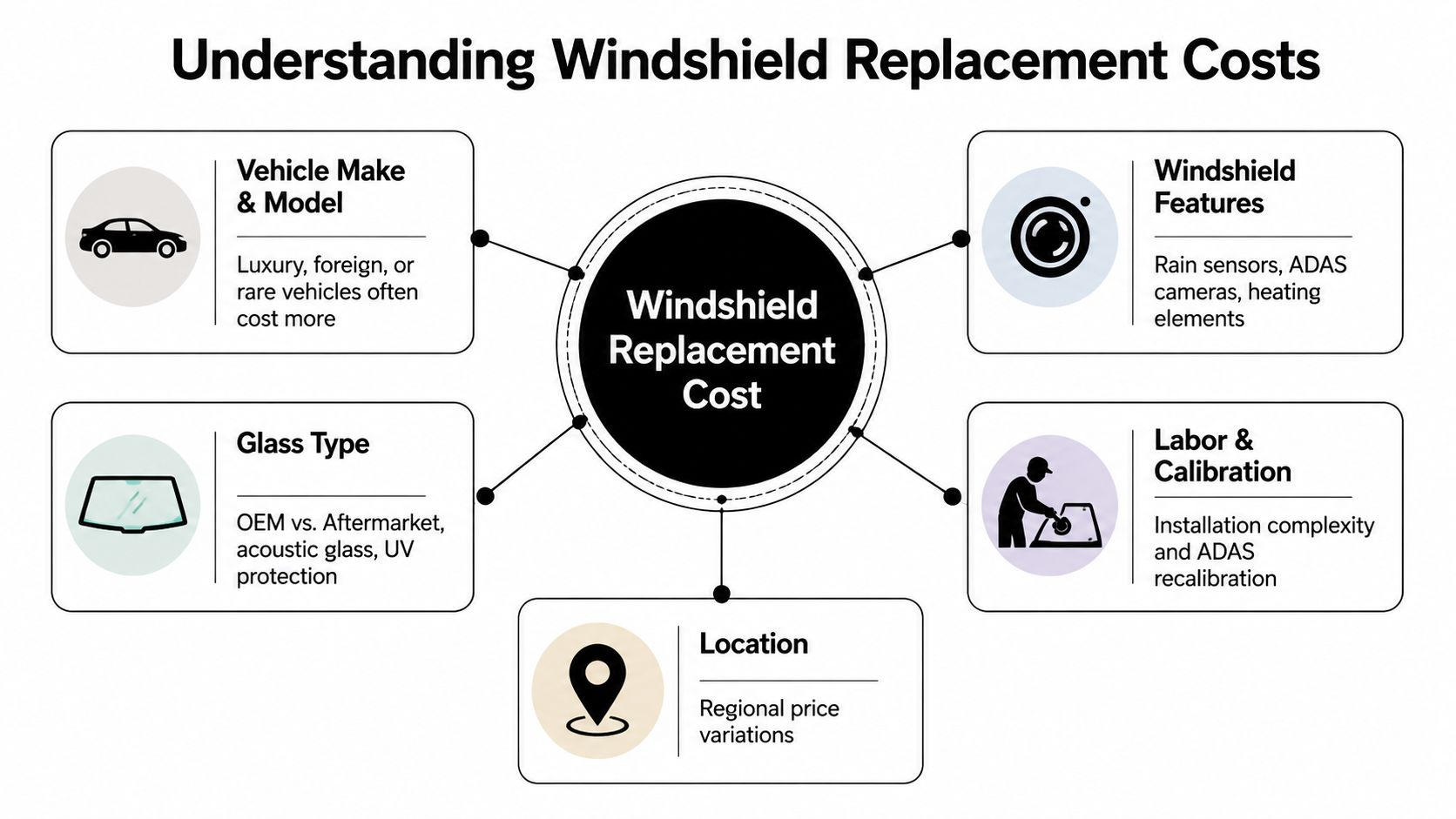
Replacement cost starts with the vehicle. Year, make, model, trim level, and windshield options all matter. Some windshields are basic. Others include acoustic layers, rain sensors, heating elements, special shading, or mounts for forward-facing cameras.
There’s also the question of OEM versus aftermarket glass. Some vehicles tolerate that choice easily. Others are much more sensitive to fit, optical clarity, sensor placement, or manufacturer procedures.
If the fit isn’t right, problems follow. Wind noise, water leaks, trim issues, and sensor performance complaints all start there.
ADAS calibration is where many estimates jump
The biggest shock today is ADAS, short for Advanced Driver Assistance Systems. These are features like lane departure warning, forward collision warning, automatic braking, adaptive cruise control, and similar systems that rely on cameras or sensors mounted at or near the windshield.
According to Kelley Blue Book’s report on rising windshield replacement costs, replacement on newer ADAS-equipped vehicles often exceeds $1,000, compared with the $300 to $500 norm for older models, and this is tied to recalibration requirements for safety systems present in over 90% of 2020 and newer models.
That recalibration is not decorative. It’s not a line item somebody adds because they can. If the camera angle is off, those safety features may not read the road correctly.
Why calibration is not optional
When a windshield is replaced, the mounting relationship between the glass and the camera system has to be checked and, when required, recalibrated. That work may involve targets, scan tools, controlled shop setup, and in some cases a road procedure tied to the manufacturer’s instructions.
Drivers sometimes ask why this matters if the old windshield was just “swapped out.” The answer is simple. Modern driver-assist systems depend on precision. A small change in placement can affect how the vehicle reads lane markings, distance, and objects ahead.
If your vehicle uses the windshield as part of its safety system, calibration belongs in the estimate from the start.
Why online price ranges can miss your real cost
National averages can be useful as a starting point. They’re a poor way to approve a job on a specific vehicle. An online calculator often doesn’t know your trim level, whether you have a camera behind the mirror, what glass is specified, or whether the vehicle requires a calibration procedure after installation.
That’s why two vehicles parked side by side can have very different replacement bills even if the damage looks the same. One may be a straightforward install. The other may involve specialty glass, setup time, scans, and calibration steps that can’t be skipped.
If you’re trying to get your bearings before approving the work, this local Salinas windshield replacement price guide is a useful starting point.
How Insurance Covers Your Windshield Damage in California
For most drivers, the insurance side is almost as stressful as the damage itself. The part that matters most is whether your policy provides coverage for glass damage and whether you carry a deductible that applies.
What part of your policy usually applies
Windshield damage from road debris, falling objects, or similar non-collision events is commonly handled under certain insurance policies. What you pay out of pocket depends on your policy terms, not just the shop invoice.
In California, some drivers carry glass coverage that leaves them with no out-of-pocket cost for a chip repair. As noted earlier in the article’s research base, that can reduce the cost of a qualifying repair to nothing for the vehicle owner when the policy includes zero-deductible glass coverage.
That’s why it’s worth checking your declarations page before assuming you’ll be paying the full amount yourself. If you’re unsure how liability, non-collision damage, and glass-related coverage differ, this explanation of whether liability insurance covers windshield replacement can help clarify the basics.
Your right to choose the shop
California drivers should know one practical point. Under California Insurance Code § 758.5, an insurer can’t require you to use a particular repair shop. They can suggest one. The choice is still yours.
That matters when you’re dealing with glass tied to safety systems, collision-related damage around the opening, or questions about related body damage. You’re allowed to choose the shop you trust to inspect the vehicle and coordinate the repair properly.
California also has an Auto Body Repair Consumer Bill of Rights under 10 CCR § 2695.85. In plain language, that rule requires insurers to give consumers written notice of important rights during the claim process. For advice on your exact coverage, claim handling, or legal rights in your situation, talk with your insurer or a licensed professional.
What to ask before you approve anything
Before you authorize repairs, ask these questions plainly:
What part of my policy applies
Make sure you know whether the claim is going through the relevant part of your policy and whether a deductible applies.Is this a repair or a replacement
The insurance path and out-of-pocket amount can change depending on which one is needed.Does my vehicle need calibration or related procedures
If the windshield is tied to cameras or sensors, ask whether those steps are required and whether they’re included in the estimate.
Get the estimate and the insurance explanation to match. That prevents surprises later.
Getting an Accurate Estimate in the Salinas Area
The fastest way to get the wrong number is to rely on a generic online calculator. It can’t inspect the damage, confirm the equipment on your vehicle, or tell whether the surrounding area has related collision damage that changes the job.
What a real estimate should include
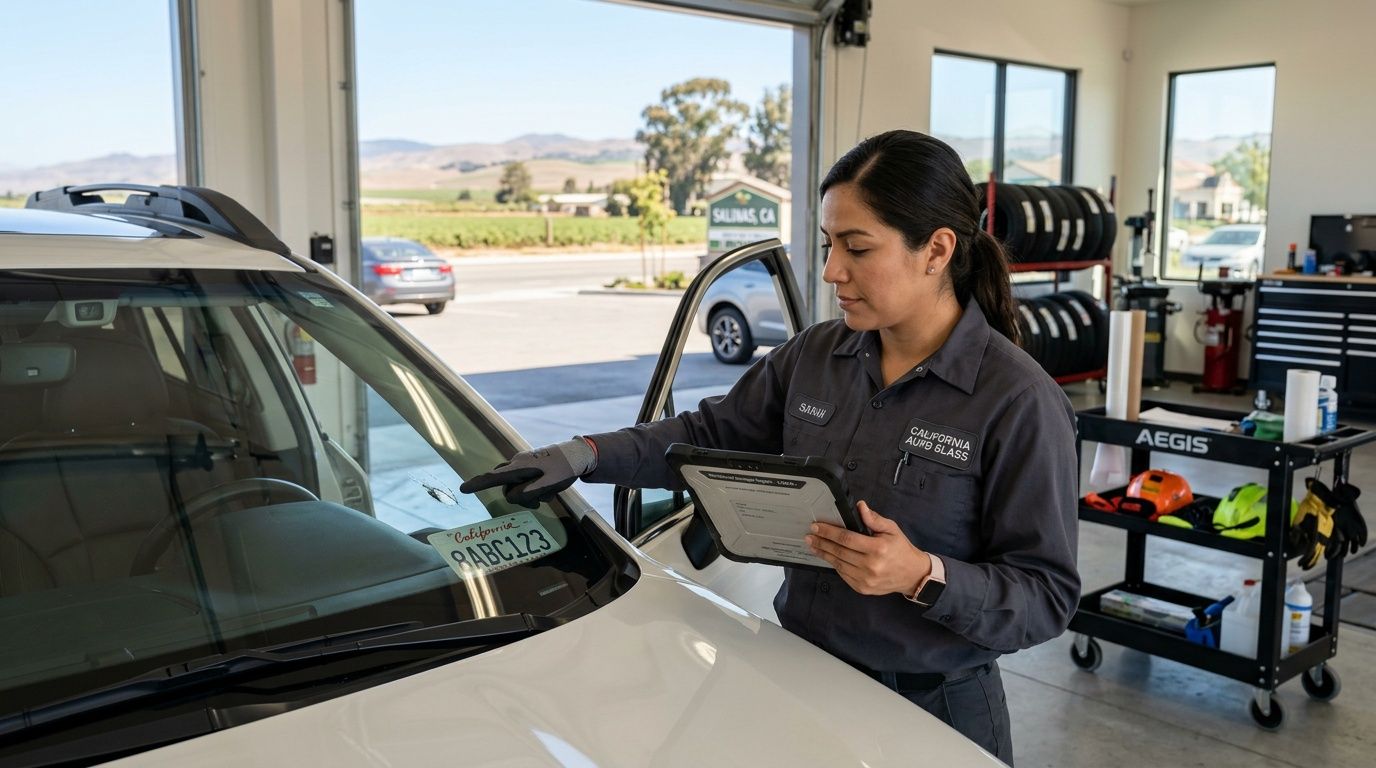
A proper estimate starts with eyes on the vehicle. The technician should inspect the size and location of the damage, verify the year, make, model, and trim, and check whether the vehicle has camera-based safety features or special glass requirements.
If the damage happened in a collision, the shop should also look around the windshield opening and related panels. On some vehicles, what looks like a simple glass problem can sit next to alignment or structural issues that need attention first. That’s part of collision repair judgment, not a pricing gimmick.
One local option for a hands-on estimate is Searson Collision Center, which assists Salinas-area drivers with collision-related estimates and insurance questions.
Why local inspection beats an online calculator
A Salinas driver doesn’t need a national average nearly as much as a clear answer for their own vehicle. Labor market differences, parts availability, and vehicle equipment can all affect the final number in ways an online form won’t catch.
A good estimate should tell you what’s included, what may still need confirmation, and whether insurance approval affects the next step. If a quote is vague about the glass type, calibration, or claim handling, ask for clarification before you approve the work.
Frequently Asked Questions About Windshield Service
Can a small chip really turn into a full crack
Yes. It happens all the time. Heat, cold, vibration, and ordinary road impact can spread a chip faster than expected, especially once the outer layer has already been weakened.
How long does windshield repair usually take
Simple chip repairs are usually much quicker than replacement. The exact time depends on the damage and the repair method, but minor repairs are often handled in a short visit if the glass is otherwise a good candidate.
Will insurance pay for a windshield repair
Sometimes, yes. If your policy includes the right coverage (such as glass coverage), insurance may cover some or all of the repair, but you need to confirm your deductible and policy terms with your carrier.
Can a long crack be repaired or is replacement the only option
It depends on the length, direction, and location of the crack. Once the crack is too large, too close to the driver’s line of sight, or otherwise outside accepted repair limits, replacement is usually the safer call.
Is mobile windshield service a good idea
Mobile service can be convenient for simple situations, but it’s not ideal for every vehicle. If the job involves calibration, controlled setup, or questions about surrounding collision damage, an in-shop inspection is usually the better route.
Will a repair make the windshield look brand new
Usually not. A good repair is meant to restore strength and stop spreading damage. In many cases the mark is reduced, but you may still see some trace of the original impact.
Get a Clear Answer for Your Vehicle
If you’re still asking how much is a windshield repair, the honest answer is that the price depends on the damage, the location of the break, and whether your vehicle has newer safety technology tied to the glass. A small chip and a full ADAS-related replacement are completely different jobs.
If you want a straight answer based on your vehicle, get the damage looked at in person and ask questions before approving anything.
If you need help sorting out collision-related damage, insurance questions, or a repair estimate, contact Searson Collision Center at (831) 422-2460 or stop by 488 Brunken Ave, Salinas, CA 93901. We’re open Monday through Friday, 7:00 AM to 5:00 PM.