Table of Contents
- Quick Answer
- Immediate Steps to Take After a Collision
- Starting an Insurance Claim and Knowing Your Rights
- How to Get an Accurate Car Accident Repair Estimate
- Choosing a Certified Shop What to Ask
- Understanding the Repair Process and Timelines
- Navigating Final Costs, Rentals, and Vehicle Pickup
- Frequently Asked Questions About Car Accident Repair
- Call to Action
Quick Answer
After a crash, car accident repair starts with safety, good photos, clear insurance reporting, and choosing a qualified shop you trust. A proper repair is more than replacing visible damage. Modern vehicles often need scanning, repair planning, structural checks, and calibration work before they can be returned safely to the road.
A collision rattles people. Even when everyone is okay, you're suddenly dealing with photos, tow decisions, insurance calls, and a damaged vehicle you depend on every day.
The good news is that car accident repair is manageable when you take it one step at a time. The most important early decision is where the vehicle will be inspected and repaired, because that choice affects the estimate, the communication, and the quality of the work that follows.
Immediate Steps to Take After a Collision
The first hour matters. Not because you need to become an insurance expert at the scene, but because a few calm choices will make the repair process much cleaner later.
Handle safety first
If the vehicle can be moved safely, get it out of traffic and turn on the hazards. Check yourself, your passengers, and the other people involved before you think about bumpers, lights, or insurance.
If the car isn't safe to drive, don't force it. A dragging tire, leaking fluid, warning lights, or a steering wheel that's no longer centered can point to suspension or structural damage.
Practical rule: If you wouldn't trust the car on Highway 101, don't trust it for "just a short drive" across town.
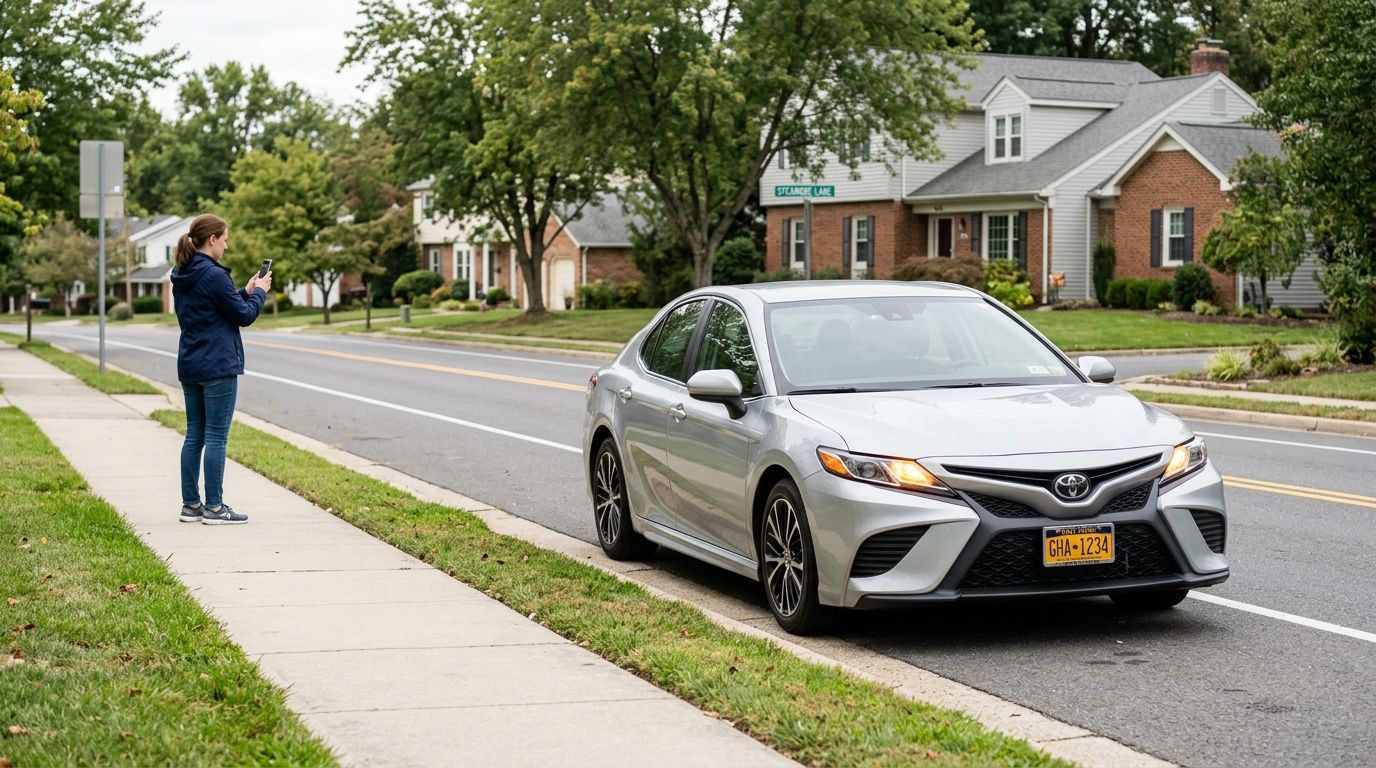
Document the scene like a repairer would
Take wide photos first, then move closer. Start with the position of the vehicles, road conditions, intersections or landmarks, and then photograph each damaged area from multiple angles.
Also photograph:
- The other vehicle's plate and damage
- Your vehicle's damage from all sides
- Any warning lights on your dash
- The VIN label if available
- Insurance cards and driver's licenses, if exchanged
For a minor impact, it helps to understand what damage can hide behind a small-looking hit. This short guide on what a fender bender can really involve is worth reading if the damage seems light but something feels off.
What to save before the tow truck leaves
Keep all the information in one place on your phone or in a small folder. You want the claim number, tow destination, the other driver's details, and the time and location of loss easy to find.
Write down anything that may fade from memory by the afternoon:
- Where the impact landed
- Whether airbags deployed
- Whether the wheel was turned at impact
- Whether the vehicle was drivable afterward
Those details can help explain hidden suspension, steering, or frame-related issues once the car reaches the shop.
Starting an Insurance Claim and Knowing Your Rights
The insurance call usually feels simple at first. Then the questions start. Where is the vehicle? Which shop is handling it? Has anyone inspected it yet?
What to have ready when you call
Have the basic facts in front of you before you report the loss. That keeps the first conversation clear and reduces mistakes that lead to delays.
A good starter list includes:
- Date, time, and location of the collision
- Your policy information
- Other driver's information
- Photos of the damage
- Tow location or current vehicle location
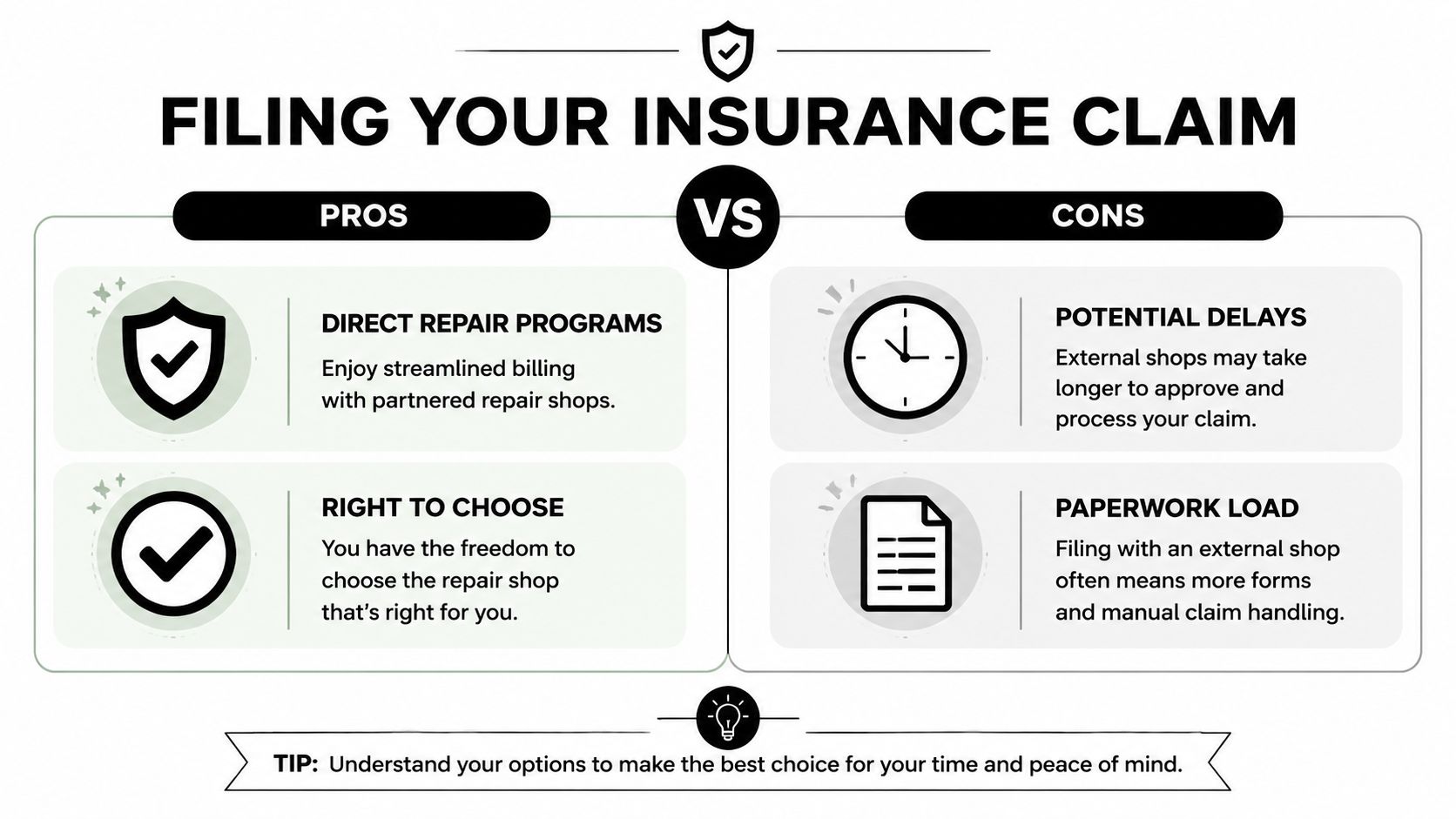
If you're not sure how the reporting side works, this overview of how to file a car insurance claim gives a practical walk-through of the usual steps.
Your right to choose a shop in California
In California, Insurance Code Section 758 says an insurer can't require you to use a specific repairer. That matters because people are often steered before they realize they have a choice. A Consumer Reports survey found 42% of drivers felt pressured to use preferred shops, and only 28% knew they could choose independently, as noted in this summary on drivers' right to choose their own repair shop.
That doesn't mean every insurer-recommended shop is a bad shop. It means the choice is yours, and you should make it based on the repair process, the training, and the communication you'll receive.
Ask one direct question early: "Am I free to have my vehicle repaired at the shop I choose?" You should hear yes.
Why shop choice matters to the repair itself
A rushed first look can shape the whole job in the wrong direction. If the initial estimate misses structural checks, scanning, or hidden damage, the repair gets harder for everyone involved.
Independent shops often spend more time explaining the trade-offs. They can also communicate directly with the insurer while still answering to the vehicle owner, not to a network agreement.
In Salinas and the Monterey Bay Area, that's often what people need most after a crash. Straight answers, clean documentation, and someone willing to explain why a part, a repair method, or an approval step matters.
How to Get an Accurate Car Accident Repair Estimate
You get one estimate in ten minutes from a parking lot photo, then another after the shop removes the bumper and scans the car. Those numbers are often different for a good reason. A proper car accident repair estimate is the start of a repair plan, not a flat quote pulled from visible damage alone.
A quick look and a real repair plan are not the same thing
On modern vehicles, the outer panel is only the first layer. A scuffed bumper cover can hide damage to the absorber, brackets, sensors, mounting points, alignment angles, or inner structure. You do not know the full scope until the vehicle is scanned and, in many cases, partially disassembled.
Pre-repair scanning matters for another reason. Many late-model cars carry driver-assist systems that can be affected by even a modest hit. If the shop does not check fault codes, review factory repair procedures, and inspect what sits behind the visible damage, the first estimate can come in low and the repair can stall later.
That is why I tell Salinas drivers to be cautious with fast quotes. Speed feels good on day one. Accuracy saves time in the shop.
What happens inside a thorough estimate
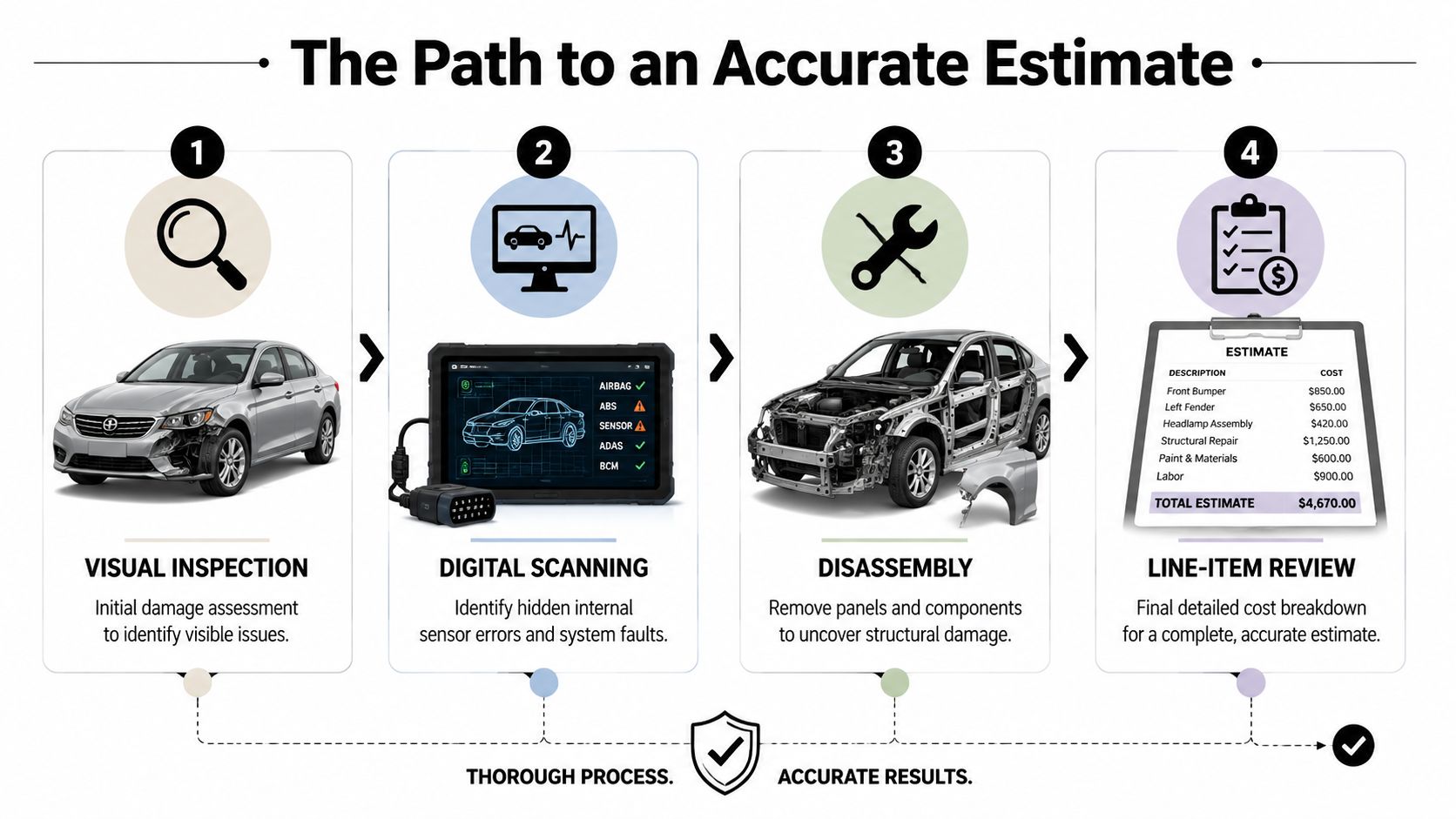
A careful estimate usually starts with a visual inspection, but it should move well beyond that before anyone acts as if the whole job is known.
Typical steps include:
- Initial inspection to identify visible damage and drivability concerns
- Diagnostic scan to catch electronic faults and safety-system issues
- Partial disassembly so hidden damage can be found
- OEM procedure review to confirm approved repair methods
- Line-item estimate that matches the actual work required
This is also why a supplement is not automatically a red flag. In collision work, supplements are often the result of finding hidden damage after covers, lamps, trim, or panels come off. The problem is not the supplement itself. The problem is a shop or insurer pretending the first glance told the whole story.
If you want to see how that difference plays out, this explanation of the collision estimate process and why fast quotes often miss hidden damage lays it out clearly.
A low first number can look attractive. It often turns into a longer repair once the full extent of the damage is revealed.
At Searson Collision Center, that repair-planning work includes documenting damage, checking structural areas, coordinating insurer approvals, and writing the job from what the vehicle needs, not from what can be seen in two minutes from the parking lot.
Choosing a Certified Shop What to Ask
People often ask me how to judge a body shop if they don't work in the trade. Start with the answers you get when you ask plain questions.
Questions worth asking at the front counter
You don't need fancy terminology. Ask the manager or estimator these questions and listen carefully to how they respond.
- Are your technicians trained for modern collision work? You want a shop that can explain current repair procedures, not just cosmetic fixes.
- Do you follow manufacturer repair information? If the answer is vague, that's a problem.
- How do you handle supplements with the insurance company? The shop should have a clear process for documentation and approvals.
- What kinds of parts will you use? Ask them to explain OEM, aftermarket, and recycled parts in plain language.
- What warranty comes with the work? Get the terms in writing.
If you want a practical checklist before you commit, this guide on how to find a good auto body shop covers the questions that separate careful shops from rushed ones.
Listen for clear answers, not vague promises
A qualified shop should be able to describe its process without dodging. If they can't explain how they inspect hidden damage, verify structural repair, or manage final quality checks, keep looking.
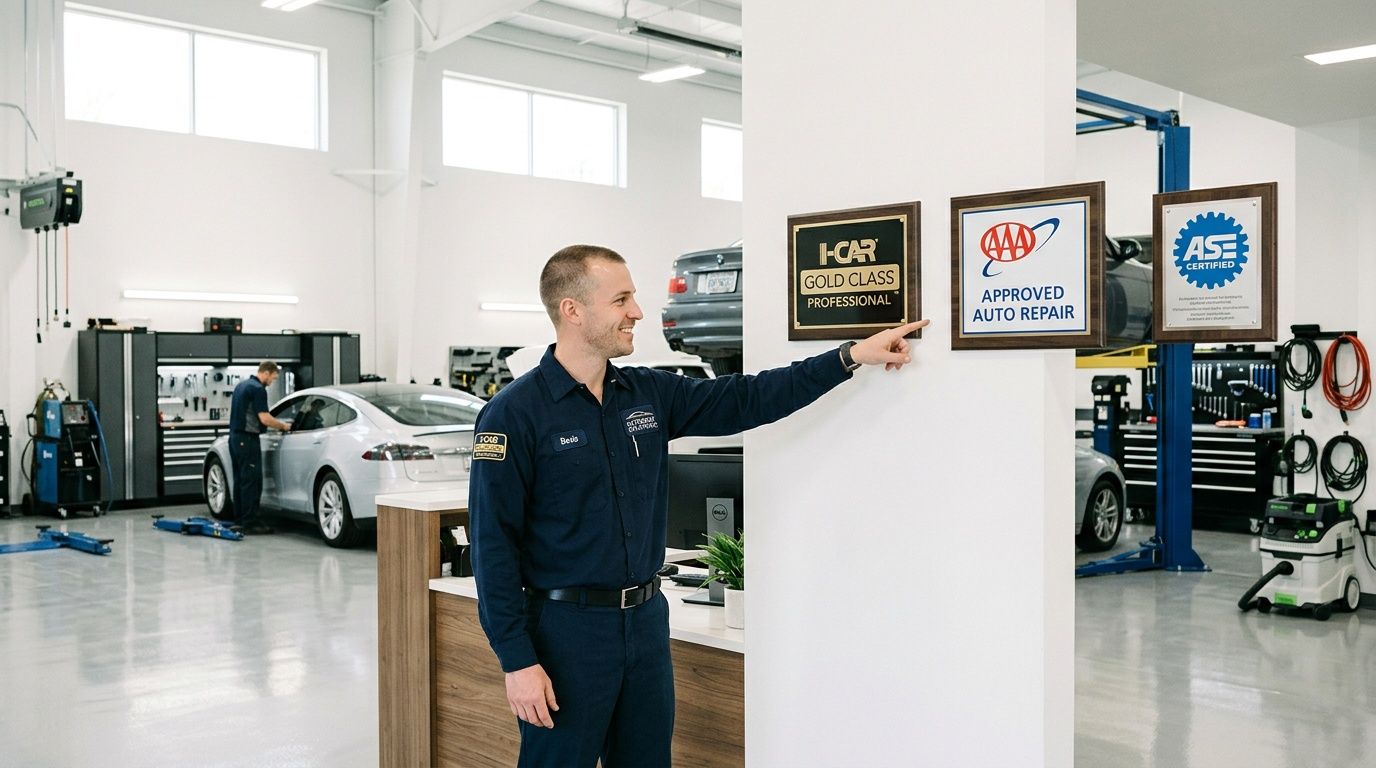
Certifications matter because they tell you the shop invests in training. So do approvals from outside organizations. But paperwork on a wall isn't enough by itself. What matters is whether the staff can tie that training to the way your vehicle will be repaired.
Here are good signs:
- They explain the repair plan before talking about speed
- They discuss parts choices openly
- They document what they find
- They tell you where delays usually come from
- They welcome questions instead of brushing them off
A careful shop doesn't mind being asked hard questions. That's usually a sign they have solid answers.
Understanding the Repair Process and Timelines
You drop the car off on Monday after what looked like a straightforward front-end hit. By Wednesday, the shop calls and says the damage goes deeper than the outside panels suggested. That kind of update rattles people, but it is common in collision repair, especially on newer vehicles with sensors, brackets, and hidden structural points packed behind the bumper cover.
The main stages of repair work
Once a vehicle enters production, the job usually starts with teardown. Parts come off so the technician can see what the impact reached, not just what is visible from the parking lot. On a light repair, that may lead to panel work, dent correction, prep, paint, reassembly, and final inspection. On a heavier hit, the process can include structural measuring, pulls, parts replacement, suspension checks, wheel alignment, scanning, and calibration before the vehicle is ready to leave.
That sequence matters because modern cars are built in layers. A bumper cover can look mildly damaged while the absorber, reinforcement bar, mounting points, radar bracket, or cooling components behind it are not.
Drivers rarely get to see that part of the job. This walkthrough of what happens to your car between drop-off and pickup at a body shop gives a clear picture of how the work moves through the shop.
Why timelines change after the first estimate
The first estimate is based on what can be seen before full disassembly. After teardown, the shop may find bent inner structure, cracked tabs, damaged sensors, or one-time-use parts that also need replacement. In California, that does not take away your right to choose your repair shop. It does mean the repair plan may change once the car is opened up and documented.
Insurance delays can add time. So can parts backorders. So can calibration requirements, especially on vehicles with lane departure warning, blind spot monitoring, adaptive cruise control, and parking sensors.
Here is the plain version of what usually controls the clock:
| Repair situation | What usually controls the schedule |
|---|---|
| Minor cosmetic damage | Part arrival, paint booth scheduling, curing time |
| Moderate collision damage | Hidden damage found at teardown, supplement approval, reassembly steps |
| Structural or suspension damage | Measuring, pull setup, replacement parts, alignment, calibrations |
Paint work also has its own rhythm. Panels have to be repaired, primed, blocked, sealed, painted, and cured. Some colors take more time to match well than others. Pearl, tri-coat, and certain metallic finishes can require extra spray-out time and blending into adjacent panels so the repair does not stand out in daylight.
A careful shop will not promise a pickup date just to keep the conversation easy. It should give you a working timeline, explain what could change it, and update you once teardown is complete. That is the kind of communication that helps you make decisions without getting pushed around by the insurer or left guessing about your own car.
Navigating Final Costs, Rentals, and Vehicle Pickup
The end of the job is where people finally exhale, and it's also where details matter. Don't rush the pickup just because you're tired of driving the rental.
What affects the final bill
Modern repair costs have climbed because vehicles are more complex to restore properly. In the U.S., the average total cost of repair exceeded $4,730 in 2024, and replacement parts now represent over 51% of repair cost while estimate operations have increased 20% since 2019, according to this report on rising repair complexity and cost.
That doesn't tell you what your repair will cost. It explains why a free estimate matters and why final totals can shift when hidden damage, parts choices, or required procedures change.
Before pickup, make sure you understand:
- What insurance paid
- What your deductible is
- Whether any items were not covered
- Whether the rental return timing has changed
What to check before you drive away
Walk around the vehicle slowly in good light. Look at panel fit, paint match, trim alignment, warning lights, wheel position, and how the doors, hood, and trunk open and close.
Ask for:
- A final invoice
- Warranty paperwork
- Any scan or calibration documentation the shop provides
- An explanation of anything that still needs follow-up
If something doesn't look right, say it before you leave. A good repair manager would rather address a concern on the spot than have you drive home wondering if you should've asked.
Frequently Asked Questions About Car Accident Repair
Do I have to use the shop my insurance company suggests
No. In California, you have the right to choose your own repair shop. Your insurer may recommend a shop, but they can't require you to use one. For guidance specific to your claim, confirm the details with your insurer or a licensed professional.
Why did the estimate change after teardown
Because hidden damage often isn't visible until parts come off. Brackets, reinforcements, mounting points, suspension components, and electronic items can be damaged behind panels that look only lightly hit from the outside.
How long will car accident repair take
It depends on the severity of damage, parts availability, insurer response time, and whether more damage appears during disassembly. Some repairs move quickly. Others take longer because the vehicle needs structural work, paint time, alignment checks, or additional approvals.
When is a car considered a total loss
That decision usually comes from the insurer after comparing the vehicle's value with the expected repair cost. Total loss frequency has been high, reaching 22.8% in the U.S. through October 2025, and 26% of drivers now carry deductibles of $1,000 or more, which has changed how smaller claims are handled, according to this analysis of repairable claims and total loss trends.
Can I pay out of pocket instead of filing a claim
Sometimes, yes. That choice depends on the size of the damage, your deductible, the other parties involved, and your policy terms. Before deciding, get a written estimate so you understand the repair scope instead of guessing from the outside.
Call to Action
If you need help sorting out car accident repair after a crash, the next step doesn't have to be complicated. A clear estimate and a straight conversation can tell you what the vehicle needs and what the claim process is likely to look like.
If you'd like to talk through the damage or get an estimate, contact Searson Collision Center at (831) 422-2460 or visit 488 Brunken Ave, Salinas, CA 93901. Hours are Monday-Friday, 7:00 AM-5:00 PM.